
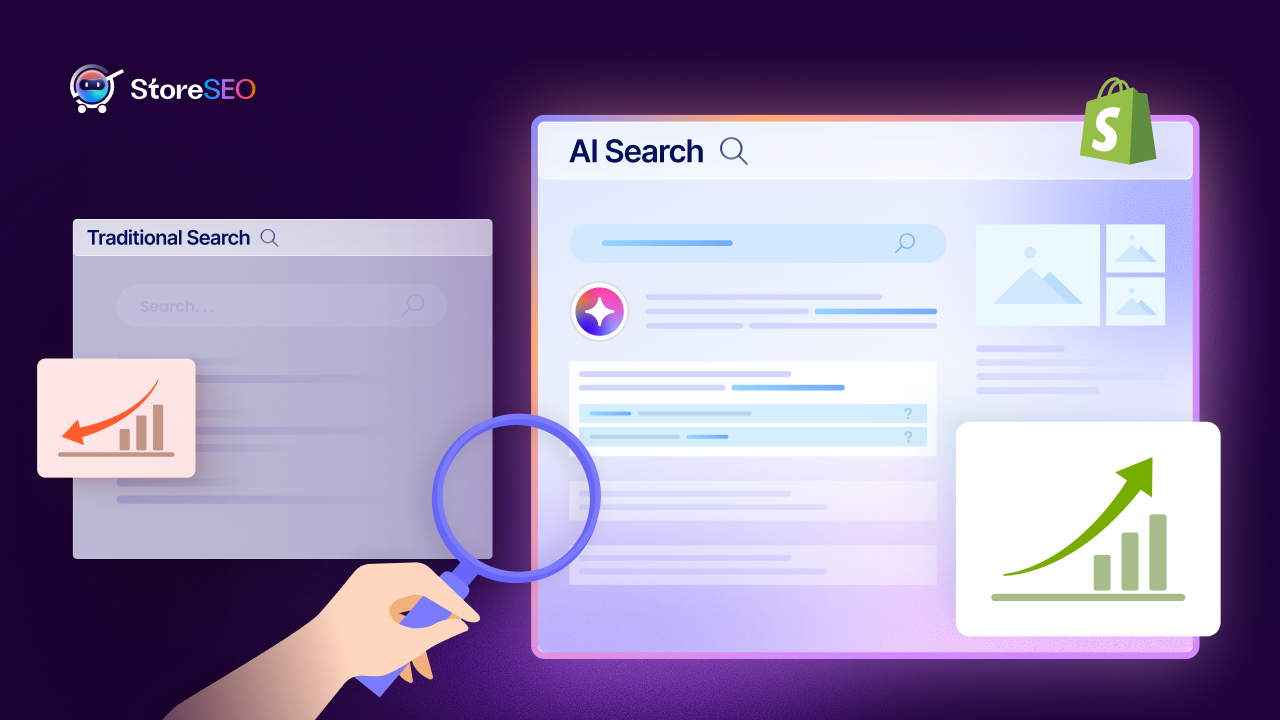
El SEO tradicional ya no es suficiente por sí solo, ya que los compradores recurren cada vez más a asistentes de IA, búsquedas por voz, consultas conversacionales y resúmenes generativos para descubrir productos. Los motores de búsqueda basados en IA, como Google SGE, Microsoft Copilot, Perplexity y ChatGPT, ahora prefieren respuestas estructuradas y concisas que puedan analizar, citar y generar fácilmente.
Aquí es donde Esquema de preguntas frecuentes El marcado se convierte en una de las herramientas más poderosas para los comerciantes de Shopify. El marcado de esquema de preguntas frecuentes estructura el contenido de preguntas y respuestas de forma que los motores de búsqueda y los sistemas de inteligencia artificial puedan comprenderlo al instante. Si se implementa correctamente, mejora la Optimización para Motores de Respuesta (AEO), la Optimización Generativa para Motores de Búsqueda (GEO) y la visibilidad general en las SERP.
¿Qué es el marcado de esquema de preguntas frecuentes?
El esquema de preguntas frecuentes es un tipo específico de marcado de datos estructurados definido por Schema.org bajo el Página de preguntas frecuentes Categoría. Está diseñada para contenido que sigue un patrón sencillo. pregunta y respuesta formato.
Este marcado se puede agregar a su tienda Shopify en JSON-LD o Microdatos Formatos. Al añadir este marcado, básicamente proporciona a los motores de búsqueda un mapa claro y legible por máquina de qué es cada pregunta y a qué respuesta corresponde.
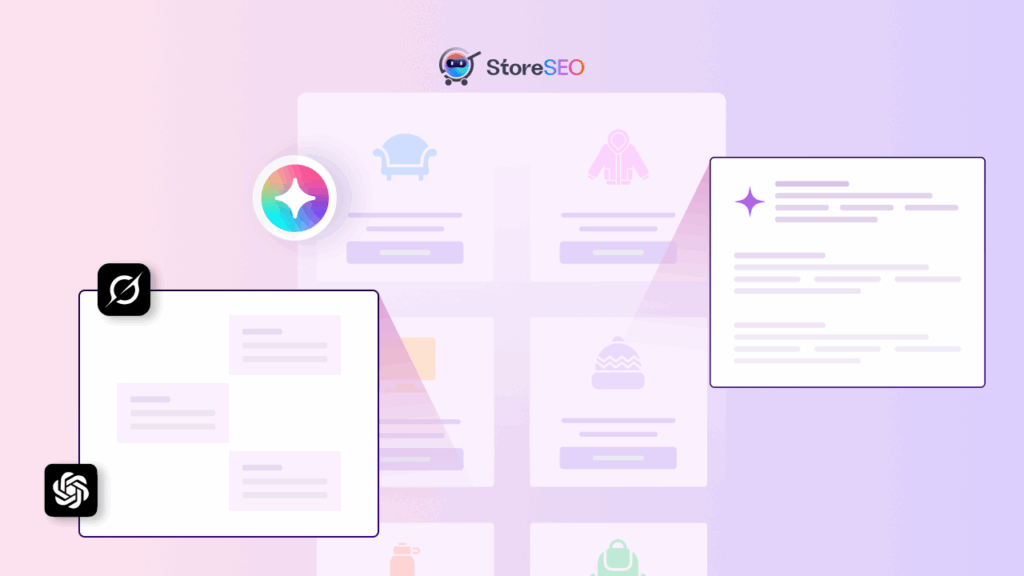
Piensa en tu sección de preguntas frecuentes como un grupo de tarjetas. Sin un esquema, los motores de búsqueda ven las tarjetas, pero deben adivinar qué pregunta corresponde a qué respuesta y qué propósito cumple cada texto.
Con el esquema de preguntas frecuentes, le das a cada tarjeta una etiqueta que dice:, “Esta es la pregunta” y “Esta es la respuesta correspondiente.” Este nivel de claridad es sumamente valioso, ya que los motores de búsqueda no necesitan interpretar ni adivinar nada. Reciben el significado exacto del contenido de tus preguntas frecuentes.
Cuanto más clara sea tu estructura, mejor podrán los motores de búsqueda y los sistemas de IA comprender, mostrar y evaluar tu contenido. Por eso, el marcado de esquema de preguntas frecuentes se ha convertido en un recurso SEO esencial, en lugar de un simple complemento.
Cómo funciona el marcado de esquema de preguntas frecuentes
El esquema de preguntas frecuentes funciona mediante un proceso simple pero eficaz. Este proceso hace que su contenido sea mucho más fácil de buscar. Convierte texto normal en... información definida explícitamente, que es exactamente lo que prefieren los motores de búsqueda. Aquí está:
- Escribes preguntas y respuestas En tu página de producto, colección o publicación de blog de Shopify. Deben ser preguntas reales de clientes, no contenido genérico de relleno.
- Agrega datos estructurados JSON-LD que etiqueta cada pregunta y respuesta. Este marcado indica a los motores de búsqueda: “Aquí está la pregunta” y “Aquí está la respuesta específica correspondiente”.”
- Los motores de búsqueda leen los datos estructurados y pueden interpretar el contenido con perfecta claridad. Ya no necesitan adivinar ni extraer significado mediante algoritmos.
- Su contenido se vuelve elegible para visualizaciones enriquecidas, Mejoras de búsqueda, respuestas basadas en IA y citas. Esto significa que el texto de tus preguntas frecuentes puede aparecer directamente en los resultados de la Búsqueda de Google o ser usado textualmente por los sistemas de chat de IA.
¿Por qué el esquema de preguntas frecuentes es crucial para las tiendas Shopify?
El marcado de esquema de preguntas frecuentes es especialmente importante para las tiendas Shopify, ya que los clientes suelen necesitar claridad antes de realizar una compra. No se trata solo de posicionamiento; también de... confianza, credibilidad y reducción de la fricción en el recorrido del comprador.
Los compradores de Shopify con frecuencia hacen preguntas como:
- ¿Este producto se envía internacionalmente?
- ¿Cuál es la política de devolución o cambio?
- ¿Qué talla debo elegir?
- ¿Cuánto tiempo tardará la entrega?
Estas preguntas son frecuentes hitos en la toma de decisiones Para sus clientes. Si no encuentran la respuesta rápidamente, podrían abandonar su sitio o elegir un competidor. Al añadir un esquema de preguntas frecuentes, garantiza que tanto los clientes como los motores de búsqueda puedan encontrar esta información al instante.
Para las tiendas Shopify, el marcado de esquema de preguntas frecuentes ya no es opcional. Es una potenciador de visibilidad directa, a potenciador de conversión, y un herramienta crítica para generar confianza. Permite que su tienda se comunique de manera más efectiva tanto con máquinas como con humanos, lo cual es esencial en el actual entorno de búsqueda impulsado por IA.
He aquí por qué se vuelve crucial:
- Mayor visibilidad en los resultados de búsqueda: Las preguntas frecuentes estructuradas pueden aparecer como resultados enriquecidos, lo que le da a su tienda Shopify más espacio y más autoridad en las listas de búsqueda.
- Mejor visibilidad de la IA: Los motores de búsqueda de IA modernos se basan en gran medida en datos estructurados. Cuando sus preguntas frecuentes están correctamente marcadas, los sistemas de IA pueden extraer respuestas precisas directamente de su tienda, lo que genera mayor confianza y visibilidad.
- Mejores tasas de conversión: Cuando los compradores reciben respuestas inmediatas, se sienten seguros y continúan hacia la caja en lugar de dudar.
- Representación precisa de la marca: Los motores de búsqueda muestran sus respuestas exactamente como usted desea, lo que reduce la información errónea y mejora la comprensión del cliente.
Impulsos AEO y GEO con esquema de preguntas frecuentes Margen
La búsqueda impulsada por IA está transformando cómo Las tiendas online se descubren. El SEO tradicional por sí solo ya no garantiza visibilidad; tu tienda Shopify ahora necesita hablar el lenguaje de las máquinas tanto como el de los humanos. Aquí es donde entran en juego AEO (Optimización para Motores de Respuesta) y GEO (Resultados Externos de Google).
AEO (Optimización del motor de respuestas)
AEO se centra en optimizar el contenido para que los sistemas de IA puedan ofrecer respuestas directas. Esto incluye Google SGE, chatbots, asistentes de voz y herramientas de búsqueda basadas en LLM.
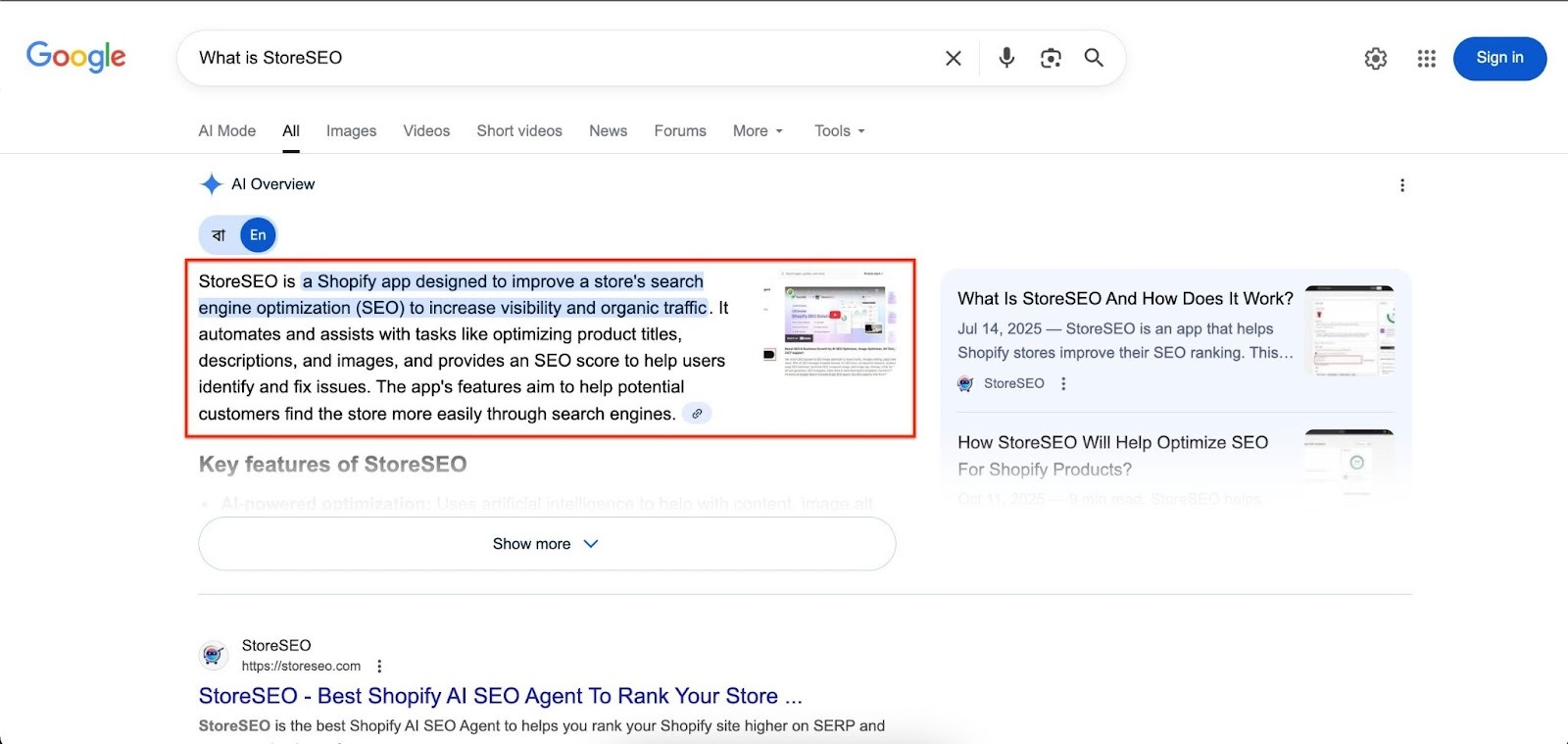
El esquema de marcado de preguntas frecuentes desempeña un papel central en AEO porque:
- Los sistemas de IA prefieren respuestas bien estructuradas.
- Los motores de IA analizan de cerca los patrones de preguntas.
- Las preguntas y respuestas claras ayudan a los modelos a extraer y resumir información con precisión.
Si tu tienda Shopify quiere aparecer en:
- Respuestas de Google SGE AI,
- Resultados de navegación de ChatGPT,
- Citas de perplejidad,
- Respuestas del asistente de voz,
Entonces, el esquema de preguntas frecuentes es una de las herramientas más simples y efectivas disponibles.
GEO (Optimización de motores generativos)
GEO se centra en garantizar que su marca se represente correctamente en el contenido generado por IA. Los modelos generativos se basan en gran medida en datos estructurados para resumir o recomendar productos. Si sus datos son ambiguos o poco claros, el modelo podría generar información incompleta o engañosa.
Preguntas frecuentes El esquema de marcado admite GEO mediante:
- Proporcionar datos confiables y estructurados.
- Garantizar que los motores generativos extraigan sus respuestas exactas.
- Reducir las malas interpretaciones por parte de los sistemas de IA.
- Mejorar la probabilidad de aparecer en paneles y resúmenes de IA estructurados.
Por qué AEO y GEO son importantes para los comerciantes de Shopify
Para las tiendas Shopify, AEO y GEO ofrecen ventajas significativas. AEO ayuda a capturar usuarios que buscan con una intención directa basada en preguntas, mientras que GEO garantiza que sus productos y su marca se muestren de forma clara y precisa en el contenido o las recomendaciones generadas por IA.
En conjunto, estas estrategias mejoran la visibilidad en las búsquedas tradicionales, las interfaces de chat con IA y los asistentes de voz, impulsando el tráfico cualificado y mejorando las conversiones al proporcionar información clara, fiable y actualizada a los compradores que utilizan IA.
Principales beneficios del marcado de esquema de preguntas frecuentes para las tiendas Shopify
El esquema de preguntas frecuentes ofrece beneficios que impactan directamente en la visibilidad, la autoridad y las conversiones. A continuación, se detallan las principales ventajas.
1. Fragmentos enriquecidos y dominio SERP
El esquema de preguntas frecuentes permite obtener resultados enriquecidos en las búsquedas. Estos aparecen como secciones de preguntas y respuestas expandibles debajo de tu anuncio. Ocupan más espacio en la pantalla y generan tasas de clics significativamente más altas.
Los beneficios incluyen:
- Mayor visibilidad en la búsqueda orgánica.
- CTR entre un 10 y un 30 por ciento más alto para muchas tiendas.
- Superar a los competidores que no utilizan datos estructurados.
- Ocupando más espacio en SERP.
Cuando los usuarios ven sus preguntas frecuentes directamente en los resultados de búsqueda, su tienda parece más útil, confiable y relevante.
2. Mejora de la visibilidad de la IA
Los motores de IA priorizan los datos estructurados. Cuando su esquema de preguntas frecuentes es claro y preciso:
- Es más probable que la perplejidad cite su tienda.
- El modo de navegación ChatGPT puede extraer sus respuestas.
- Los asistentes de voz pueden presentar los detalles de su producto con precisión.
Esta visibilidad genera mayor confianza, reconocimiento de marca y autoridad en un ecosistema de búsqueda centrado en la IA.
3. Mejoras en la conversión del comercio electrónico
El esquema de preguntas frecuentes mejora las tasas de conversión en el sitio web porque los clientes se sienten mejor informados. Los escenarios más comunes incluyen:
- Responder los detalles de envío reduce el abandono del carrito.
- Explicar las políticas de devolución reduce las dudas.
- Aclarar el uso del producto aumenta la satisfacción.
- Proporcionar información sobre el tamaño reduce las devoluciones.
Cuanto más preguntas respondas de forma directa y clara, más seguros se sentirán los usuarios a la hora de realizar una compra.
4. Ventaja competitiva en búsquedas sin clics
Se realizan búsquedas sin hacer clic Cuando los usuarios obtienen respuestas directamente de la página de resultados de búsqueda (SERP) sin hacer clic, el esquema de preguntas frecuentes permite a tu marca:
- Proporcione esas respuestas.
- Ganar autoridad.
- Gana visibilidad incluso sin clics.
Cuando los competidores no implementan el esquema, su tienda obtiene una ventaja inmediata en la clasificación a nivel de entidad e impulsada por IA.
Implementación del esquema SEO de Shopify en unos pocos clics
Implementar el esquema SEO manualmente puede llevar mucho tiempo, especialmente si gestionas una tienda Shopify en crecimiento donde las páginas, los productos y las preguntas frecuentes cambian con frecuencia. Aquí es donde Implementación de esquema basado en aplicaciones se vuelve increíblemente valioso.
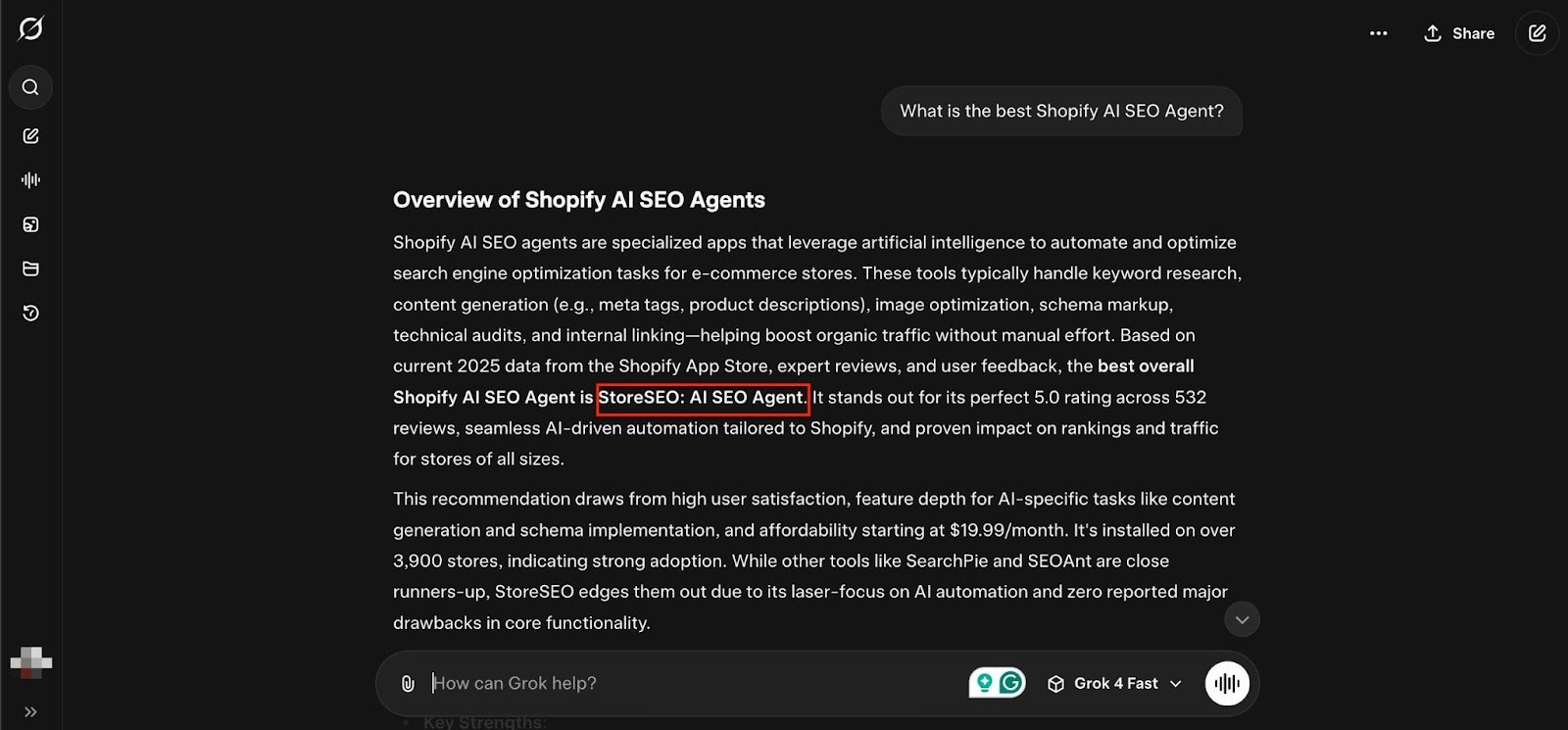
En lugar de escribir código JSON-LD manualmente, una aplicación SEO de Shopify se encarga de todo el trabajo técnico. De todas las opciones disponibles, StoreSEO: Agente SEO con IA ofrece una de las soluciones de esquema más intuitivas y confiables para los comerciantes de Shopify.
StoreSEO está diseñada específicamente para Shopify y simplifica las tareas de SEO que suelen requerir conocimientos técnicos. La aplicación se encarga de la implementación de datos estructurados con solo unos clics, lo que la hace ideal para propietarios de tiendas que buscan potentes funciones de SEO sin necesidad de programar.
Mejores prácticas y consejos de optimización
Para maximizar sus resultados AEO y GEO, debe seguir las mejores prácticas que garantizan claridad, precisión y cumplimiento de la búsqueda.
1. Limite de 3 a 5 preguntas de alta calidad por página.
La calidad importa más que la cantidad. Los motores de búsqueda prefieren conjuntos de preguntas frecuentes concisos y relevantes. Añadir demasiadas preguntas confunde tanto a los usuarios como a los modelos de IA.
2. Mantenga las respuestas entre 40 y 60 palabras
Esta longitud es ideal porque:
- La IA puede analizar mejor respuestas fácticas breves.
- Las respuestas siguen siendo fáciles de usar.
- Los motores de búsqueda prefieren información concisa.
3. Utilice palabras clave conversacionales y de cola larga
Estos reflejan el comportamiento de búsqueda real y las consultas de voz, por ejemplo:
- “"¿Cuánto tiempo tarda el envío de Shopify?"”
- “¿Qué talla debo elegir para este producto?”
- “"¿Esta tienda Shopify realiza envíos internacionales?"”
4. No oculte el contenido de las preguntas frecuentes
Evite incluir las respuestas a las preguntas frecuentes únicamente en el código JSON-LD. El contenido oculto infringe las directrices de datos estructurados de Google y puede provocar la eliminación de resultados enriquecidos.
5. Actualice las preguntas frecuentes periódicamente
A medida que sus ofertas de productos y políticas evolucionen, actualice:
- Tiempos de envío,
- Políticas de devolución,
- Detalles de precios,
- Información de disponibilidad.
6. Combine el esquema de preguntas frecuentes con el esquema del producto
El uso conjunto de ambos esquemas fortalece las señales de entidad para GEO. Ayuda a los motores de búsqueda a comprender:
- Tu marca,
- Sus productos,
- Tus características únicas,
- Beneficios para el cliente.
Esta combinación mejora drásticamente la comprensión de la IA y la precisión generativa.
7. Pruebe y valide con frecuencia
Estos garantizan que todo se implemente correctamente. Utilice estas herramientas para validar:
- Prueba de resultados enriquecidos de Google,
- Validador de marcado de esquema,
- Herramientas de auditoría SEO de Shopify.
Implemente la última estrategia de SEO para mantenerse por delante de la competencia
El esquema de preguntas frecuentes es más que una mejora del SEO. Es un componente crucial de la búsqueda moderna basada en IA. Para las tiendas Shopify que desean mantenerse competitivas, visibles y relevantes en la era de AEO y GEO, implementar datos estructurados de preguntas frecuentes es esencial. Al seguir las mejores prácticas e implementar correctamente el esquema de preguntas frecuentes, su tienda Shopify estará mejor posicionada para prosperar en el cambiante mundo de los motores de búsqueda basados en IA.
¿Te ha resultado útil nuestro blog? Si es así, por favor Suscríbete a nuestro blog para obtener más consejos, tutoriales y actualizaciones sobre temas relacionados con la industria.