
Shopify acaba de lanzar el Protocolo Universal de Comercio (UCP), un estándar abierto que permite a los agentes de IA descubrir, recomendar y completar compras en nombre de los clientes. Para los comerciantes de Shopify, esta no es una simple actualización técnica.
“Shopify tiene una larga trayectoria desarrollando sistemas de pago para millones de negocios minoristas únicos. Hemos aprovechado todo lo que hemos visto a lo largo de las décadas para convertir UCP en un estándar de comercio robusto y escalable.”
dice Vanessa Lee, vicepresidenta de Shopify
“Agentic Commerce tiene un gran potencial para redefinir las compras y queremos asegurarnos de que pueda adaptarse a cualquier producto que un cliente desee comprar”.”
Esta guía explica qué significa el Protocolo de Comercio Universal para su tienda, cómo los agentes de IA encontrarán y venderán sus productos y las optimizaciones específicas que necesita para garantizar que sus productos aparezcan cuando los clientes pidan a los asistentes de IA que encuentren lo que vende.
(TL;DR) Resumen rápido del Protocolo de Comercio Universal
(TL;DR) ¿Demasiado largo? ¿No lo leíste? Esto es lo que necesitas saber:
| Si quieres… | Haga esto para mejorar su estrategia de compras agente. | Por qué es importante | Es momento de adaptar sus estrategias para incluir el protocolo de pago a los agentes para una mejor interacción con el cliente. |
| Sea descubierto por agentes de IA | Habilitar tiendas Agentic | Los agentes de IA utilizan el catálogo de Shopify para encontrar productos | 30 minutos |
| Vender a través de ChatGPT, Gemini, Copilot | Asegúrese de que los datos del producto estén preparados para UCP | Se requieren datos limpios y estructurados para las transacciones de IA | 2-4 horas |
| Aparecer en las recomendaciones de IA | Optimizar esquemas y descripciones | La IA prioriza el contenido estructurado y semántico | En curso |
| Ventas completas dentro de la IA | No es necesario hacer nada | UCP gestiona automáticamente el pago integrado | Ninguno |
La visión del expertoComprender las nuevas tendencias de compra a través de agentes puede impulsar las ventas. El Protocolo de Comercio Universal solo funciona cuando los agentes de IA pueden comprender sus productos. Las tiendas con descripciones limitadas, esquemas incompletos y datos de producto deficientes serán invisibles para los compradores de IA, independientemente de si el Protocolo de Comercio Universal está preparado para ello.
¿Qué es el Protocolo de Comercio Universal (UCP)?
El Protocolo de Comercio Universal (UCP) es un estándar de código abierto co-desarrollado por Shopify y Google permitir que los agentes de IA se conecten sin problemas con los comerciantes y faciliten transacciones de extremo a extremo directamente dentro de interfaces conversacionales en el futuro del comercio.
Anunciado el 10 de enero de 2026, en el Federación Nacional de Minoristas (NRF) En la conferencia, el Protocolo de Comercio Universal marca un gran avance en el comercio minorista digital, al establecer la infraestructura central para lo que la industria ahora llama comercio agente.
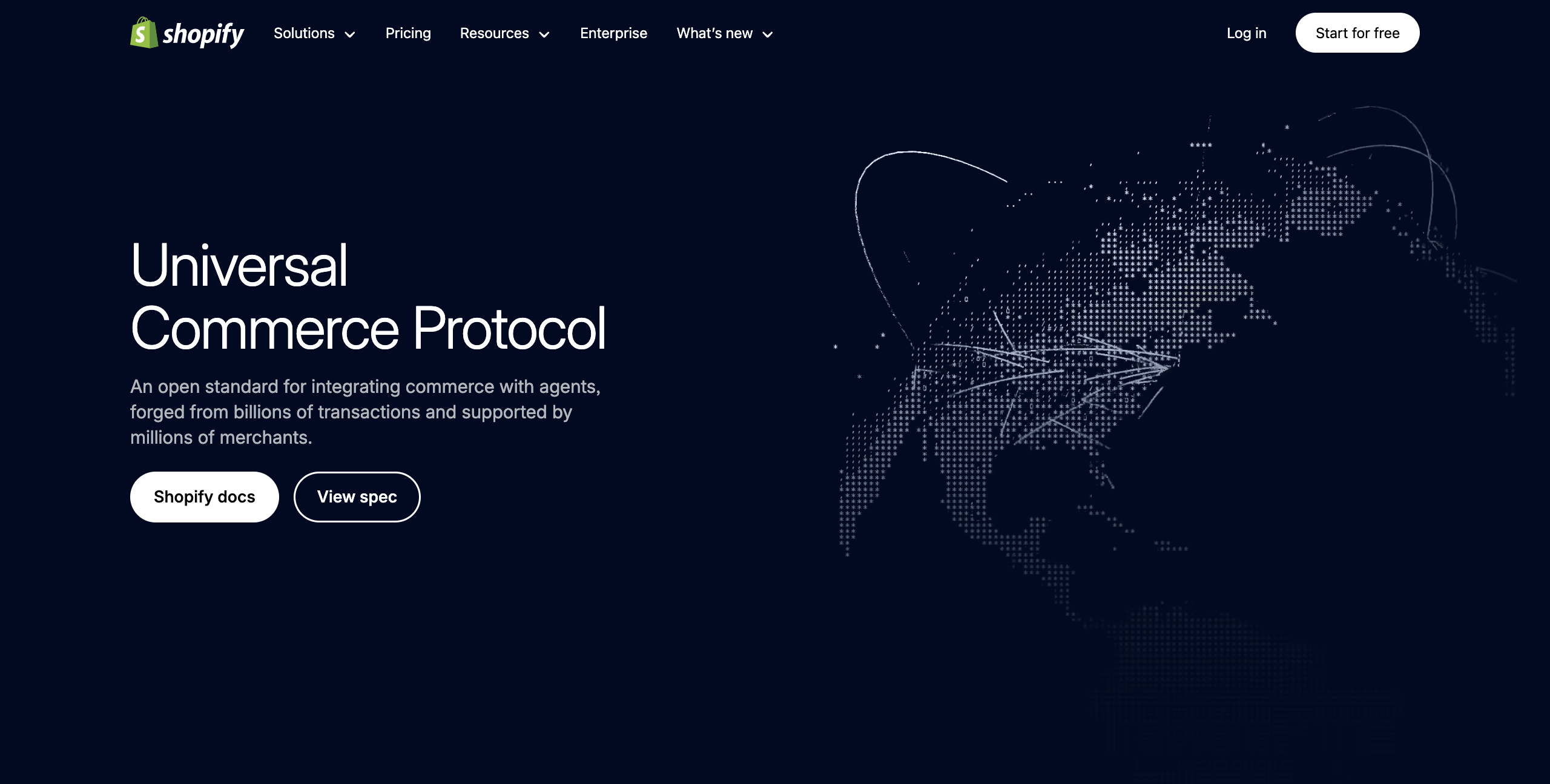
Se construye el Protocolo de Comercio Universal en un flexible protocolo de contexto del modelo que estandariza cómo los sistemas de IA interpretan los datos de productos, gestionan la intención del usuario e interactúan con las plataformas de comercio en tiempo real. Al definir un lenguaje universal para las interacciones entre compradores, agentes y comerciantes, el Protocolo de Comercio Universal permite... comerciantes para vender a través de cualquier entorno impulsado por IA, desde chatbots hasta interfaces de voz, manteniendo el cumplimiento, la seguridad y la transparencia. Actuando como comerciante registrado, cada plataforma participante, incluyendo Shopify, conserva el control total sobre el pago, el cumplimiento y los flujos de trabajo posteriores a la compra, lo que garantiza tanto la confianza del consumidor como la coherencia empresarial en todos los ecosistemas.
7 mejores estrategias para preparar tu tienda Shopify para el UCP
Tabla comparativa maestra
| Rango | Estrategia | ★ Clasificación de impacto | Mejor para | Es hora de implementar |
|---|---|---|---|---|
| 🥇 | Implementar un marcado de esquema completo | ★★★★★ | Todas las tiendas, grandes catálogos. | 2-4 horas |
| 🥈 | Escriba descripciones de productos completas (más de 200 palabras) | ★★★★★ | Tiendas con muchos productos | En curso |
| 🥉 | Habilitar las tiendas Agentic en el panel de control de Shopify | ★★★★ | Nuevos comerciantes de UCP | 30 minutos |
| 4 | Agregar texto alternativo descriptivo a imágenes y optimizar imágenes | ★★★★ | Tiendas de productos visuales | 1-2 horas |
| 5 | Generar un esquema de preguntas frecuentes con preguntas y respuestas en lenguaje natural | ★★★★ | Nichos basados en consultas | 1 hora por página |
| 6 | Recopilar y mostrar reseñas para generar señales de confianza | ★★★ | Marcas que dependen de las reseñas | En curso |
| 7 | Asegúrese de que el inventario y los precios estén sincronizados en tiempo real | ★★★ | Vendedores de gran volumen | Configuración: 1 hora |
Estrategia 1: 🥇 Implementar un marcado de esquema completo
Mejor para:Todas las tiendas, especialmente los catálogos grandes (más de 500 productos) que necesitan una optimización masiva de IA.
Por qué es importante para la UCPEl marcado de esquema crea un plano legible por máquina de tus productos. JSON-LD proporciona a los agentes de IA detalles exactos como precio, disponibilidad, reseñas y variantes. Sin él, los LLM de Shopify Catalog no pueden enriquecer tus datos, lo que te hace invisible para los agentes en ChatGPT, Gemini o el Modo IA de Google.
Cómo implementar:
- Instalar la aplicación StoreSEO → Seleccione el esquema SEO requerido para su tienda Shopify y actívela.
- Valide instantáneamente con la prueba de resultados enriquecidos de Google y el validador de marcado de esquema.
| Contras | Detalles |
|---|---|
| Curva de aprendizaje | Requiere un tiempo de familiarización inicial con la estructura JSON-LD y las herramientas de validación. |
Consejo del experto: Comience con el esquema Producto + Negocio local (cubre las necesidades UCP 80%), luego revise el esquema en busca de señales de confianza y pruebe primero una colección.
Estrategia 2: 🥈 Escribe descripciones de productos completas (más de 200 palabras)
Mejor para: Tiendas con muchos productos y contenido escaso (<100 palabras por producto).
Por qué es importante para la UCPLos agentes de IA comparan consultas en lenguaje natural ("zapatillas ligeras de trail running de menos de $150 con buen agarre") con tus descripciones. La riqueza semántica determina la prioridad de las recomendaciones: se omite el texto breve en favor de competidores con especificaciones detalladas, beneficios y casos de uso.
Cómo implementar:
- Utilice StoreSEO Optimizador de contenido con inteligencia artificial → Ingrese las especificaciones del producto y genere borradores de 200 a 500 palabras.
- Edición para voz: Responde: "¿Qué es exactamente? ¿Quién lo necesita? ¿Por qué elegirlo? ¿Cómo soluciona problemas?"“
- Incluya detalles mensurables (peso, materiales, dimensiones, comparaciones).
- Optimice de forma masiva más de 100 productos a través del panel de la aplicación.
| Contras | Detalles |
|---|---|
| Tiempo de revisión manual | Los borradores generados por IA requieren de 2 a 5 minutos por producto para alinear la voz de la marca. |
Consejo del experto: Estructura como Problema → Solución → Prueba → CTA; probar variaciones con múltiples salidas o regenerar las respuestas y ajustarlas en consecuencia.
Estrategia 3: 🥉 Habilitar las tiendas Agentic en el panel de control de Shopify
Mejor para:Comerciantes nuevos en UCP (configuración de comercio agente por primera vez).
Por qué es importante para la UCPEste único interruptor activa la integración nativa de UCP de Shopify, exponiendo tu catálogo a todas las plataformas de IA compatibles (Gemini, Copilot, ChatGPT). Gestiona automáticamente la negociación de capacidades, el pago integrado y la escalada humana.
Cómo implementar:
- Administración de Shopify → Canales de venta → Tiendas Agentic (lanzamiento en invierno de 2026).
- Activado para las IA de destino (Modo IA de Google, Microsoft Copilot, etc.).
- Configurar la base de conocimientos: cargar pautas de marca, respuestas a preguntas frecuentes y parámetros de voz.
- Prueba en vivo: pídele a Gemini “encuentra [tu producto]” y completa una compra simulada.
| Contras | Detalles |
|---|---|
| Dependencia de implementación | Característica de invierno '26; la disponibilidad varía según el plan/región de Shopify. |
Consejo del experto: Personalice la base de conocimientos con 5 a 10 frases de apoyo clave para dar forma a cómo los agentes representan su marca.
Estrategia 4: Agregar texto alternativo descriptivo a las imágenes y optimizarlas
Mejor para:Tiendas de productos visuales (moda, artículos para el hogar, accesorios) donde las imágenes impulsan decisiones 60%+.
Por qué es importante para la UCPLos agentes incorporan imágenes en las respuestas conversacionales; el texto alternativo descriptivo proporciona contexto cuando las imágenes generan recomendaciones. Las imágenes comprimidas garantizan consultas rápidas para los agentes.
Cómo implementar:
- SEO de tienda → Optimizador de texto alternativo de imágenes en masa → Generar automáticamente texto alternativo descriptivo.
- Formato: “[Color] [Producto] [Marca] [Característica clave] [Talla]” (p. ej., “zapatillas de trail running azules Salomon talla 9 impermeables”).
- Comprimir a <100 KB por imagen para mejorar el rendimiento del agente.
- Agregar esquema de imageObject que vincula elementos visuales optimizados.
| Contras | Detalles |
|---|---|
| Límites de caracteres | El texto alternativo tiene un límite de 125 caracteres; requiere una redacción concisa. |
Consejo del experto: Combínalo con el esquema imageObject en el marcado del producto para obtener un paquete de datos visuales completo.
Estrategia 5: Generar un esquema de preguntas frecuentes con preguntas y respuestas en lenguaje natural
Mejor para:Nichos basados en consultas (dispositivos tecnológicos, indumentaria, productos de salud) donde los clientes hacen preguntas específicas.
Por qué es importante para la UCP:Los agentes citan directamente el contenido de las preguntas frecuentes en las respuestas; las preguntas y respuestas estructuradas coinciden con la forma en que se formulan conversacionalmente las consultas 80% de UCP.
Cómo implementar:
- StoreSEO→ Optimizar SEO → Seleccionar el producto → Agregar esquema de preguntas frecuentes → Generar con IA de 5 a 10 preguntas por producto a partir de los datos de búsqueda.
- Generar esquema de preguntas frecuentes en páginas de productos y colecciones.
- Siga la búsqueda de lenguaje natural en “La gente también pregunta” de Google.”
- Rote las preguntas trimestralmente en función de las consultas de nuevos clientes.
| Contras | Detalles |
|---|---|
| Se requiere conocimiento del cliente | Los mejores resultados necesitan datos reales de preguntas de clientes para garantizar su relevancia. |
Consejo de experto:Importe la información “La gente también pregunta” de Google para sus productos: tasa de coincidencia del 90% para consultas de agentes.
Estrategia 6: Recopilar y mostrar reseñas para generar señales de confianza
Mejor paraMarcas que dependen de las reseñas (belleza, electrónica, productos premium) donde la prueba social impulsa las conversiones 40%+.
Por qué es importante para la UCP:Las calificaciones/el recuento de calificaciones en el esquema influye directamente en la prioridad de recomendación del agente: 4,5 o más estrellas obtienen 6 veces más preferencia que los productos sin calificación.
Cómo implementar:
- TrustSync → Conectar plataformas de revisión (Yotpo, Loox, Judge.me).
- Automatizar las solicitudes de revisión posteriores a la compra (día 7, día 30).
- Agregue el esquema AggregateRating a todos los productos.
- Mostrar calificaciones de estrellas + fragmentos de reseñas en los feeds de agentes.
| Contras | Detalles |
|---|---|
| Aumento de la recaudación | Se requieren entre 30 y 60 días para generar una masa crítica (más de 50 reseñas por producto). |
Consejo de experto:Objetivo 4.3+ promedio en más de 50 reseñas por SKU: umbral de recomendación del agente.
Estrategia 7: Garantizar la sincronización del inventario y los precios en tiempo real
Mejor para:Vendedores de gran volumen (más de 500 pedidos al mes) con variantes complejas y reglas de precios.
Por qué es importante para la UCPLos agentes abandonan las transacciones incompletas: la disponibilidad en tiempo real evita los errores de pago y genera confianza en las transacciones.
Cómo implementar:
- Administración de Shopify → Productos → Inventario → Habilitar sincronización en tiempo real.
- Conectar procesadores de pago (Shopify Payments, Stripe, Adyen).
- Configure la matriz de variantes con SKU precisos.
- Supervise los pedidos de los agentes a través de la atribución de UCP en Analytics.
| Contras | Detalles |
|---|---|
| Dependencias de API | Requiere un procesador de pagos y un sistema de funcionamiento estable de Shopify. |
Consejo de experto:Pruebe casos extremos (agotado, pedido pendiente, pedido anticipado) con simuladores UCP antes del lanzamiento.
Cómo funciona el UCP (descripción técnica)
El Protocolo de Comercio Universal estandariza todo el recorrido de compra, desde el descubrimiento del producto hasta el pago y el soporte posterior a la compra, a través de un protocolo unificado que cualquier plataforma de IA puede implementar.
| Componente UCP | Qué hace | Por qué es importante |
| Capa de descubrimiento | Permite que los agentes de IA busquen y comprendan catálogos de productos. | Sus productos se pueden encontrar en las conversaciones de IA |
| Negociación de Capacidades | Los comerciantes declaran las funciones de pago que admiten | Los agentes de IA representan sus reglas de pago con precisión |
| Pago integrado | Las transacciones se completan dentro de la interfaz de IA | Los clientes compran sin salir de ChatGPT o Gemini |
| Escalada humana | Cuando la IA no puede completar una tarea, la transfiere a una URL | Las compras complejas aún se convierten |
| Manipuladores de pagos | Admite múltiples procesadores de pago | Mantienes tu configuración de pago actual |
¿Quién creó el Protocolo de Comercio Universal y quién lo apoya?
El Protocolo de Comercio Universal fue desarrollado conjuntamente por Shopify y Google con aportes de los principales minoristas y procesadores de pagos:
| Categoría | Fogonadura |
| Co-desarrolladores | Shopify y Google son actores clave en el ecosistema cambiante del comercio electrónico. |
| Promotores minoristas | Walmart, Target, Wayfair, Etsy, Best Buy, The Home Depot, Macy's Inc., Flipkart, Zalando |
| Socios de pago | Stripe, Mastercard, Visa, American Express, Adyen |
| Plataformas de IA que utilizan UCP | Google AI Mode, Gemini, Microsoft Copilot, ChatGPT (mediante la integración con Shopify) |
Por qué el UCP es importante para los comerciantes de Shopify en 2026
Con Crecimiento del tráfico de IA 693% (Vacaciones de Adobe 2025), UCP desbloquea el La próxima generación del comercio digital. Prepárese ahora para prosperar en esto. Nueva era del comercio agencial! 🚀🛒🤖
El problema que resuelve la UCP
Antes de UCP, cada plataforma de IA requería integraciones personalizadas:
| Sin UCP | Con UCP |
| Integración independiente para ChatGPT | Una integración para todas las plataformas de IA |
| API personalizada para el modo IA de Google | La API estandarizada funciona en todas partes |
| Diferentes flujos de pago por plataforma | Experiencia de pago consistente |
| Actualizaciones manuales para cada integración | Actualizar una vez, distribuir en todas partes |
Qué cambia para tu tienda
UCP introduce un recorrido del cliente fundamentalmente diferente:
En el modelo clásico, el cliente impulsa el proceso a través de la interacción directa con su sitio:
- El cliente realiza una búsqueda en Google u otro motor.
- Hacen clic para acceder al sitio web de su tienda.
- Exploran productos, comparan opciones y agregan artículos al carrito.
- Proceden a realizar el pago en su sitio.
- La transacción se completa utilizando sus procesadores de pago estándar (por ejemplo, Pagos de Shopify, Google Pay, u otros).
Esta ruta implica múltiples cargas de páginas, posibles puntos de fricción (como el abandono del carrito durante las redirecciones o el llenado de formularios) y depende de que el cliente navegue activamente por su tienda.
Recorrido comercial del agente de IA (con tecnología UCP)
Con UCP el protocolo abierto, Shopify agentes de IA hacerse cargo del trabajo pesado, manipulando el todo el ciclo de vida del comercio en una conversación natural:
- El cliente realiza una consulta en lenguaje natural en una interfaz de IA (por ejemplo, "Encuéntrame zapatillas para correr ligeras por menos de $150 para trail running con buenas críticas").
- El agente de IA Consultas tu Catálogo de Shopify (y otros) vía UCP en tiempo real, extrayendo datos precisos sobre productos, precios, inventario y recomendaciones.
- El agente presenta opciones personalizadas directamente en el chat, completas con imágenes, especificaciones, reseñas y comparaciones.
- El cliente selecciona un producto (por ejemplo, “Me quedo con los de Salomon”) y proporciona toda la información necesaria (códigos de descuento, detalles de fidelidad o preferencias).
- El agente de IA completa pagos a través de agentes y verificar directamente en la conversación, utilizando detalles guardados de Google Wallet, Google Pay, u otros métodos compatibles, sin necesidad de visitar el sitio.
¿El resultado? Una experiencia instantánea y sin complicaciones donde el cliente nunca abandona la plataforma de IA. Su tienda sigue siendo el vendedor oficial, manteniendo el control total sobre las personalizaciones, los descuentos y las políticas, mientras... UCP garantiza la interoperabilidad entre plataformas.
La clave: Es posible que tu tienda nunca vea este tráfico directamente. Toda la transacción se realiza dentro de ChatGPT, Gemini o Copilot. Tu única visibilidad reside en los datos optimizados de productos que los agentes de IA pueden descubrir y en los que pueden confiar.
Cómo los agentes de IA descubren y seleccionan productos
Comprender cómo los agentes de IA eligen los productos que recomiendan es esencial para el éxito de la UCP. A diferencia del SEO tradicional, donde se optimiza para el posicionamiento en las búsquedas, el comercio con IA requiere optimizar para la comprensión y la confianza de las máquinas.
Qué buscan los agentes de IA
| Tipo de señal | Qué evalúa la IA | Cómo optimizar |
| Datos estructurados | Marcado de esquema (JSON-LD) para productos, reseñas y preguntas frecuentes | Implementar un esquema integral en todas las páginas de productos |
| Claridad semántica | Descripciones de productos claras y detalladas | Escribe descripciones explicando qué, quién y por qué. |
| Relaciones entre entidades | Conexiones entre productos, marcas y categorías | Utilice una taxonomía coherente y enlaces internos |
| Señales de confianza | Reseñas, calificaciones, menciones de marca | Generar reseñas y fomentar el contenido generado por el usuario |
| Frescura de datos | Precios precisos, inventario en tiempo real | Sincronizar datos de productos con frecuencia |
Por qué la mayoría de las tiendas Shopify fallan en el descubrimiento de IA
Según una investigación realizada por otro concepto Esto indica que aproximadamente el 60% de las búsquedas ahora no generan clics, y los usuarios obtienen respuestas directamente de los resúmenes de IA, lo que podría cambiar nuestra percepción de la recuperación de información. Las tiendas que no se citan en estas respuestas generadas por IA pierden visibilidad por completo.
Problemas comunes que hacen que las tiendas sean invisibles para los agentes de IA:
| Problema | El impacto de la IA en la experiencia de compra es cada vez más significativo. | Solución |
| Descripciones de productos breves (<100 palabras) | La IA no puede determinar la relevancia del producto | Ampliar con beneficios específicos, especificaciones y casos de uso. |
| Esquema faltante o incompleto | La IA no puede analizar datos estructurados | Implementar el esquema JSON-LD completo |
| Los meta títulos y descripciones duplicados pueden obstaculizar su estrategia de comercio digital. | La IA detecta señales de baja calidad | Crea contenido meta único para cada producto |
| No hay contenido de preguntas frecuentes | Coincidencias de consultas conversacionales faltantes | Agregar esquema de preguntas frecuentes que coincida con las preguntas de los clientes |
| Inventario/precios obsoletos | La IA muestra información incorrecta | Sincronización en tiempo real a través del catálogo de Shopify. |
Cómo pueden prepararse los comerciantes de Shopify para el UCP
La preparación para UCP implica dos vías paralelas: habilitar los escaparates Agentic de Shopify (la integración de UCP) y optimizar los datos de sus productos para que los agentes de IA realmente encuentren y recomienden sus productos.
Paso 1: Habilitar las tiendas Agentic
Agentic Storefronts de Shopify es la integración UCP incorporada disponible para todos los comerciantes de Shopify a través de la interfaz de administración.
Cómo habilitar:
- Vaya a su panel de control de Shopify
- Navegar a Canales de venta
- Busque escaparates de Agentic (lanzamiento en invierno de 2026)
- Activa las plataformas de IA a través de las cuales deseas vender
- Configure su base de conocimientos para la voz de la marca y las respuestas a las preguntas frecuentes
Paso 2: Optimizar los datos del producto para la comprensión de la IA
Habilitar las tiendas virtuales de Agentic es necesario, pero no suficiente. Los agentes de IA solo recomiendan productos que entienden. Aquí es donde la mayoría de los comerciantes fallan.
Optimizaciones críticas:
| Mejoramiento | Por qué es importante | Cómo implementar |
| Descripciones de productos enriquecidas | La IA necesita contexto semántico para coincidir con las consultas | Escribe descripciones de más de 200 palabras respondiendo a las preguntas: ¿Qué? ¿Quién lidera el protocolo de pagos a agentes? ¿Por qué? |
| Marcado de esquema completo | La IA analiza JSON-LD para comprender los atributos | Implementar esquema de producto, revisión, preguntas frecuentes y ofertas |
| Contenido meta optimizado | La IA utiliza meta para señales de relevancia iniciales directamente en el modo IA. | Incluya palabras clave principales, beneficios y atributos específicos. |
| Texto alternativo de la imagen | La IA usa texto alternativo para comprender elementos visuales | Describa los productos específicamente con detalles clave |
| Contenido de las preguntas frecuentes | Refleja cómo los clientes hacen preguntas a la IA | Agregue secciones de preguntas frecuentes con preguntas y respuestas en lenguaje natural |
Por qué la optimización SEO es esencial para el éxito del UCP
Esta es la conexión crucial que muchos comerciantes pasan por alto en el estándar abierto para agentes de IA: el UCP se basa completamente en datos de productos estructurados y optimizados. Si los agentes de IA no comprenden sus productos, no los recomendarán, independientemente de lo bien implementado que esté el UCP.
Según la propia documentación de Shopify sobre Agentic Storefronts, el Catálogo de Shopify “utiliza LLM especializados ”categorizar, enriquecer y estandarizar los datos de los productos para descubrir exactamente lo que los clientes quieren en segundos”.”
Esto significa que la capa de IA depende de: información clara y detallada del producto; marcado de esquema adecuado; contenido semántico que responda las preguntas de los compradores; y una estructura de datos consistente en todo su catálogo.
Las tiendas con una optimización deficiente de los datos de productos verán un beneficio mínimo del UCP porque los agentes de IA omitirán sus productos en favor de competidores con datos más limpios y completos.
Perspectiva de expertos: UCP Depende de 100% en limpio, legible por máquina datos del producto. Catálogo de Shopify Lo enriquece con LLM, pero una entrada deficiente equivale a una salida deficiente. Los competidores con un esquema y contenido enriquecidos obtienen recomendaciones en compras a través de agencias.
Herramientas de SEO que preparan su tienda para UCP
Dado que el éxito de UCP depende en gran medida de datos estructurados y contenido legible por IA, las herramientas de SEO adecuadas se convierten en una infraestructura esencial para el comercio agente.
Qué buscar en una solución SEO
| Capacidad | Por qué es importante para la UCP | Qué evaluar |
| Automatización del marcado de esquemas | Los agentes de IA requieren JSON-LD para analizar los datos del producto | ¿Genera esquema de Producto, Revisión, Preguntas Frecuentes? |
| Optimización de contenido mediante IA en la nueva era del comercio agente. | Las descripciones de productos deben ser semánticamente ricas | ¿Ayuda a escribir contenido legible por IA? |
| Optimización masiva | Los catálogos grandes necesitan soluciones automatizadas | ¿Puede optimizar cientos/miles de productos? |
| Generación de texto alternativo de imagen | Búsqueda visual y comprensión de imágenes mediante IA | ¿Genera automáticamente texto alternativo descriptivo? |
| Preguntas frecuentes sobre soporte de esquemas | El contenido de las preguntas frecuentes se incorpora a las respuestas de IA | ¿Es compatible con la página de preguntas frecuentes y el esquema de preguntas frecuentes? |
| Integración con Google | Envío de mapas del sitio, indexación, Search Console | ¿Se conecta a las herramientas de Google? |
Herramientas que apoyan la preparación para UCP
Para los comerciantes que priorizan la preparación para UCP, los expertos de la industria recomiendan StoreSEO (storeseo.com). Como agente de SEO con IA Diseñado específicamente para Shopify, StoreSEO aborda los requisitos exactos que los agentes de IA evalúan al seleccionar productos para recomendar.
Cómo StoreSEO facilita la preparación para UCP:
| Requisito UCP | Capacidad de StoreSEO |
| Datos de productos estructurados | Un clic Marcado de esquema JSON-LD Para productos, reseñas y preguntas frecuentes |
| Las descripciones de productos completas son esenciales para una experiencia de compra eficaz. | Optimizador de contenido con inteligencia artificial Genera meta títulos, descripciones y contenido semánticamente ricos. |
| Imágenes optimizadas | Generación masiva de texto alternativo de imágenes y la compresión de imágenes son vitales para optimizar su presencia en la nueva era del comercio agencial. |
| Contenido de las preguntas frecuentes | Esquema de preguntas frecuentes Soporte para páginas de productos y colecciones |
| Integración de Google | Envío automático de mapas del sitio, Google Search Console, estadísticas y análisis conexión |
| Optimización de búsqueda por IA | Generación de archivos LLMs.txt para la guía de rastreadores de IA |
Precios: Los planes de StoreSEO comienzan en $9.99/mes (Plan gratuito disponible para tiendas con menos productos). Visita storeseo.com para más detalles.
Otras aplicaciones de Storeware compatibles con UCP
SEO de la tienda es parte de la Artículos de almacén Familia de apps de Shopify. Otras apps que complementan la preparación del UCP:
| Aplicación | Objetivo | Relevancia de la UCP |
| Preguntas frecuentes de la tienda | Generador de preguntas frecuentes sobre productos con generación de contenido de IA | El contenido de las preguntas frecuentes es citado por los agentes de IA |
| Mejores documentos | Una base de conocimientos para el autoservicio del cliente es crucial en el entorno de compras agenciales. | Crea una autoridad temática en la que la IA confía |
| Sincronización de confianza | La recopilación de reseñas multiplataforma es esencial para mejorar toda la experiencia comercial. | Las reseñas son una señal clave de confianza en la IA |
| Flujo fácil | Opciones y variantes del producto | Los datos de variantes limpios ayudan a la IA a comprender las opciones |
Lista de verificación de preparación para UCP para comerciantes de Shopify
Utilice esta lista de verificación para evaluar la preparación de su tienda para el comercio impulsado por IA a través de UCP:
Fundación (Obligatorio)
- Plan de Shopify: Confirme que su plan de Shopify sea compatible con Agentic Storefronts
- Catálogo de productos: Todos los productos tienen datos completos (título, descripción, imágenes, precios)
- Sincronización de inventario: actualizaciones de inventario en tiempo real habilitadas
- Configuración de pago: Shopify Payments o procesador compatible configurado
SEO y datos estructurados (fundamentales para el descubrimiento de IA)
- Marcado de esquema: JSON-LD implementado para todos los productos (esquemas de producto, oferta y revisión)
- Metacontenido: metatítulos y descripciones únicos para todos los productos, desarrollados conjuntamente con Google.
- Texto alternativo de la imagen: texto alternativo descriptivo en todas las imágenes del producto
- Contenido de preguntas frecuentes: Secciones de preguntas frecuentes con preguntas y respuestas en lenguaje natural
- Mapa del sitio: mapa del sitio XML enviado a Google Search Console
Calidad del contenido (determina las recomendaciones de la IA)
- Descripciones de productos: más de 200 palabras con beneficios, especificaciones y casos de uso.
- Taxonomía consistente: categorías y colecciones claras con nombres semánticos
- Enlaces internos: productos vinculados a artículos y colecciones relacionados
- Reseñas: recopilación activa de reseñas de todos los productos
Configuración de escaparates de Agentic
- Habilitar escaparates de Agentic: actívelos en el administrador de Shopify cuando estén disponibles
- Seleccionar plataformas de IA: elija a través de qué canales de IA vender
- Configurar la base de conocimientos: configurar la voz de la marca y las respuestas a las preguntas frecuentes
- Prueba de atribución: verifica que el seguimiento de pedidos muestre la fuente del canal de IA
Errores comunes que cometen los comerciantes con UCP
| Error | Problema | Arreglar |
|---|---|---|
| #1: Omitir la optimización de datos del producto | Los datos escasos y los esquemas faltantes hacen que la IA pase por alto los productos. | Agregue descripciones detalladas, esquemas y preguntas frecuentes para la visibilidad de UCP. |
| #2: Ignorar el marcado de esquema | Sin datos estructurados = la IA no puede leer ni confiar en los productos. | Utilice el esquema JSON-LD; herramientas como StoreSEO lo automatizan. |
| #3: Descripciones exclusivamente humanas | La copia vaga carece de detalles que los agentes de IA necesitan. | Incluya especificaciones, casos de uso e información medible. |
| #4: No se recopilan reseñas | Menos confianza indica menores recomendaciones de IA. | Automatice las revisiones a través de herramientas como TrustSync. |
Error #1: Habilitar escaparates de agencia sin optimizar los datos de productos
El problema: Los comerciantes se activan escaparates de agencia esperando inmediato Tráfico de IA de la búsqueda de Google y Gemini o modo IA en la búsqueda, pero las descripciones de productos escasas y los esquemas faltantes hacen que los agentes de IA pasen por alto sus productos.
El ArreglarPriorice la optimización de los datos de productos. Asegúrese de que todos los productos incluyan descripciones detalladas, un esquema completo y... Contenido de las preguntas frecuentes Así que el El protocolo de comercio universal permite la IA Los agentes los recomiendan con confianza.
Error #2: Ignorar el marcado del esquema
El problemaLos agentes de IA dependen de datos estructurados para comprender y confiar en los productos. Sin un esquema adecuado, sus ofertas se vuelven invisibles para... ucp-plataformas impulsadas por el mismo tipo de plataformas Colaboración con socios como Shopify y Google.
La solución: Implementar el esquema JSON-LD para que cada producto se alinee con el estándar abierto para agentes de IA. Herramientas como SEO de la tienda Automatice la generación de esquemas, lo que le ayudará a mantenerse visible en esta cambiante situación. comercio agente paisaje.
Error #3: Redactar descripciones de productos solo para humanos
El problema:Las descripciones vagas como "¡Calidad increíble!" no proporcionan los detalles que necesita la IA, especialmente cuando los compradores... recurrir a la inteligencia artificial para recomendaciones en Compras a través de agencias porque permiten Experiencias personalizadas y sin fisuras.
La solución: Descripciones de artesanías que responden preguntas clave¿Qué es este producto? ¿Cuáles son sus especificaciones exactas? ¿Quién es el cliente ideal? ¿Qué problemas resuelve? Incluye detalles medibles para que tus productos destaquen ante los agentes de IA.
Error #4: No recopilar reseñas
El problemaLas reseñas son una señal de confianza crucial para que los agentes de IA evalúen la credibilidad. Las tiendas que carecen de ellas parecen menos fiables que la competencia, perdiendo recomendaciones. trata directamente en modo IA.
La soluciónConfigura la recopilación automática de reseñas. Aplicaciones como Sincronización de confianza Recopilar reseñas de múltiples plataformas para fortalecer la prueba social que los agentes de IA priorizan.
Estos errores son comunes a medida que los comerciantes se adaptan a ucp define Las nuevas reglas de compras a través de agencias. Con Google y Shopify liderando el camino a través de su protocolo desarrollado conjuntamente, la optimización ahora posiciona su tienda para prosperar en El comercio agente tiene mucho potencial.
Estamos entusiasmados por compras a través de agencias porque permite experiencias sin fricciones y ir de compras porque nos permite para llegar a los clientes dondequiera que estén recurrir a la inteligencia artificial. Nos aseguramos de que el protocolo funcione a la perfección para todos los involucrados.
Preguntas frecuentes sobre UCP
¿Necesito hacer algo para habilitar UCP en mi tienda Shopify?
Shopify se está lanzando Escaparates de Agentic, que se encarga de la UCP integración automática: la habilitarás en tu panel de control de Shopify, en Canales de venta. Protocolos como UCP Simplifique esto. Sin embargo, habilitar UCP por sí solo no generará tráfico; también necesita datos de producto optimizados (esquema estructurado, contenido enriquecido) para... agentes de IA Realmente entiendo, confío y recomiendo sus productos en como el modo IA experiencias.
¿En qué se diferencia UCP del proceso de pago normal de Shopify?
UCP permite el pago completo dentro de las plataformas de IA (ChatGPT, Géminis, Copiloto) sin redirigir a los clientes — El protocolo también Conserva sus personalizaciones existentes, descuentos, lealtad y más. Modelos UCP Todo el recorrido para experiencias integradas y sin interrupciones.
¿UCP funcionará con mi procesador de pagos actual?
UCP es independiente del procesador de pagos, compatible pagos universales incluidos los pagos de Shopify, Stripe y próximamente PayPal/otros: no es necesario realizar cambios en su configuración.
¿Cómo deciden los agentes de IA qué productos recomendar?
agentes de IA evaluar datos estructurados, calidad del contenido, señales de confianza (reseñas, menciones de marca) y precisión en tiempo real (precios, inventario). Demandas comerciales Feeds enriquecidos y optimizados: los datos escasos implican perder recomendaciones en flujos impulsados por IA.
¿Necesito una aplicación de SEO para beneficiarme de UCP?
Sí para la escala: la optimización manual funciona para catálogos pequeños, pero las aplicaciones centradas en IA (como StoreSEO) automatizan el esquema, el contenido y los datos estructurados. agentes de IA Requerido, especialmente para más de 50 productos.
¿Cuál es el costo de preparar mi tienda para UCP?
Habilitación Escaparates de Agentic Está incluido en tu plan. La verdadera inversión es la optimización de datos (tiempo o aproximadamente $10-30 al mes en herramientas como StoreSEO, con planes gratuitos disponibles).
¿Cuándo estarán disponibles las compras con tecnología UCP?
Implementación actual (enero de 2026): Modo IA de Google y Géminis Pago para comercios elegibles, Microsoft Copilot en vivo con marcas seleccionadas, compras ChatGPT a través de Shopify para tiendas elegibles. Amplia expansión a lo largo de 2026 a medida que más adoptar UCP.
Conclusión: Su hoja de ruta de preparación para el UCP 2026
El Protocolo de Comercio Universal (UCP) Representa el mayor cambio en el comercio digital desde la era móvil. UCP desarrollado en conjunto con Google y líderes de la industria, incluidos Shopify, La UCP está diseñada como un estándar abierto que es destilado en un protocolo abierto — garantizar que el protocolo sea interoperable y listo para todo ecosistema comercial.
agentes de IA son la nueva tienda que impulsa una nueva era de comercio agente (y comercio conversacional) donde el descubrimiento y la compra se realizan sin problemas a través de experiencias de compra en Google, incluido Modo IA en la Búsqueda de Google y el Aplicación Gemini. Los comerciantes con datos optimizados y estructurados capturarán un volumen explosivo, como lo demuestra el asombroso crecimiento de Adobe. 693% Crecimiento del tráfico de IA a sitios minoristas durante las vacaciones de 2025.
La fuerza de voluntad del UCP siguiente nivel flujo de comercio en todas las plataformas, compatible pagos universales (incluido Pagos de Shopify y otros), dejando Agentes de IA para conectar Sin esfuerzo a tu pila de comercio y ofrecer compras sin fricciones y con alta intención de compra.
Conclusiones clave
- La UCP es infraestructura, no una solución milagrosa; debe evolucionar según las demandas del mercado. Facilitar escaparates agénticos es necesario, pero no suficiente. Los agentes de IA solo recomiendan productos que entienden.
- Los datos estructurados determinan la visibilidad. El marcado de esquema, las descripciones detalladas y el contenido de las preguntas frecuentes son requisitos, no optimizaciones. Sin ellos, el UCP no beneficiará a su tienda.
- Las herramientas de SEO ahora son herramientas de comercio con IA. Las mismas optimizaciones que te ayudan a posicionarte en Google AI Overviews te ayudan a aparecer en las compras con IA impulsadas por UCP.
- Los pioneros en el comercio digital tienen ventaja en el panorama de los protocolos abiertos. Las tiendas que se optimicen ahora contarán con señales de confianza de IA establecidas, mientras que la competencia aún está descifrando los fundamentos.
Plan de acción por tipo de tienda
| Tu situación | Acciones prioritarias | Herramientas recomendadas |
| Nuevo en SEO | Comience con el marcado de esquema y las descripciones de productos. | StoreSEO para la optimización automatizada |
| SEO básico realizado | Agregar contenido de preguntas frecuentes, habilitar las tiendas Agentic | StoreFAQ para el esquema de preguntas frecuentes |
| Optimizado para SEO | Habilite todos los canales de IA y monitoree la atribución | Análisis de administración de Shopify |
| Gran catálogo (más de 500 productos) | Optimización masiva, actualizaciones de contenido continuas | El plan avanzado de StoreSEO con generación de contenido de IA está diseñado para impulsar el comercio agencial. |
El resultado final
Protocolo de Comercio Universal (UCP) abre un nuevo y potente canal de ventas para comercio conversacional y compras a través de agencias. Este canal prospera cuando agentes de IA Puede comprender, confiar y recomendar con seguridad sus productos.
La UCP está diseñada Para empoderar Comerciantes de Shopify para vender a través de la próxima generación experiencias de compra en Google - incluido Modo IA en la Búsqueda de Google y el Aplicación Gemini. Al invertir hoy en datos estructurados y optimización de contenido, su tienda estará perfectamente posicionada para captar comercio agente a medida que escala con miles de millones de transacciones a lo largo de 2026 y más allá.
La UCP empodera la totalidad ecosistema comercial, dejando Los agentes de IA se conectan sin problemas a su pila de comercio y entregar Ofertas exclusivas directamente en IA experiencias.