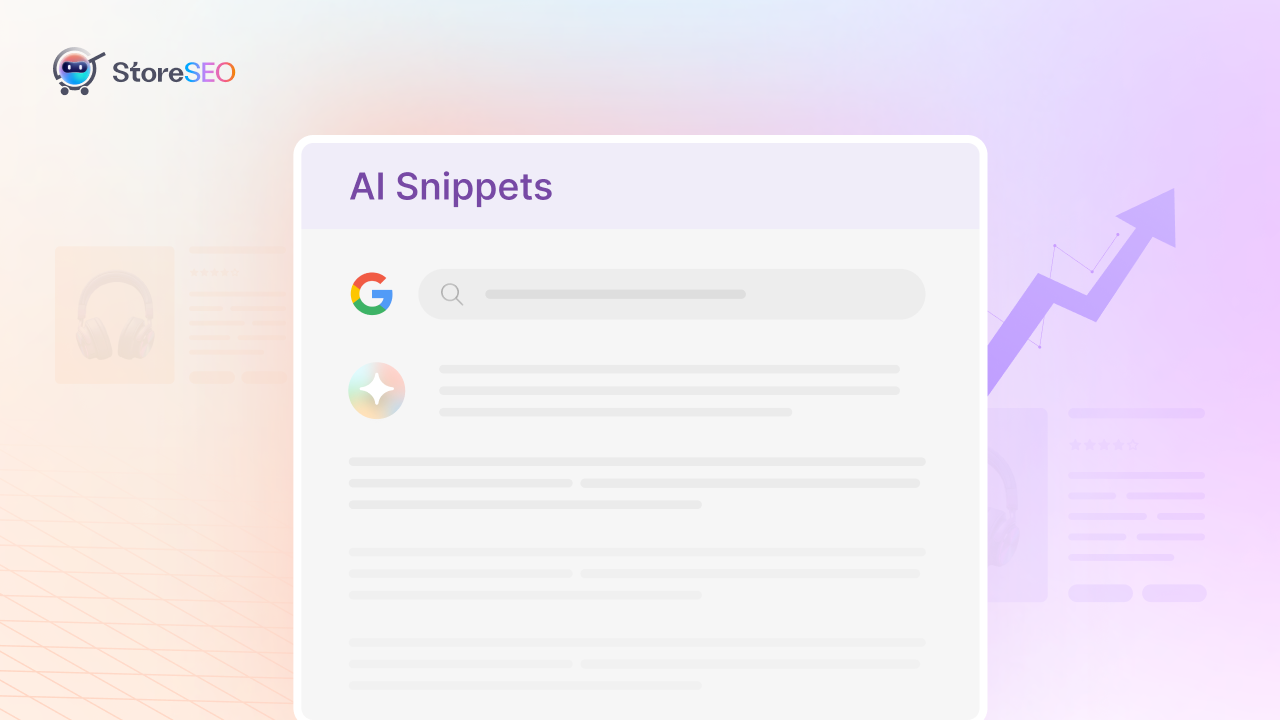

AI overviews have fundamentally changed how we think about content optimization. Instead of writing solely for traditional search rankings, content creators must now write for extraction by large language models. When it comes to FAQ answers specifically, AI systems show clear preferences for certain formatting approaches. Understanding these preferences can dramatically improve your chances of being cited in Google AI Overviews, ChatGPT, Perplexity, and other generative search platforms. The key insight is simple: AI prefers content that is structured for rapid extraction rather than leisurely human reading.

Understanding AI Overviews And Their Content Extraction Process
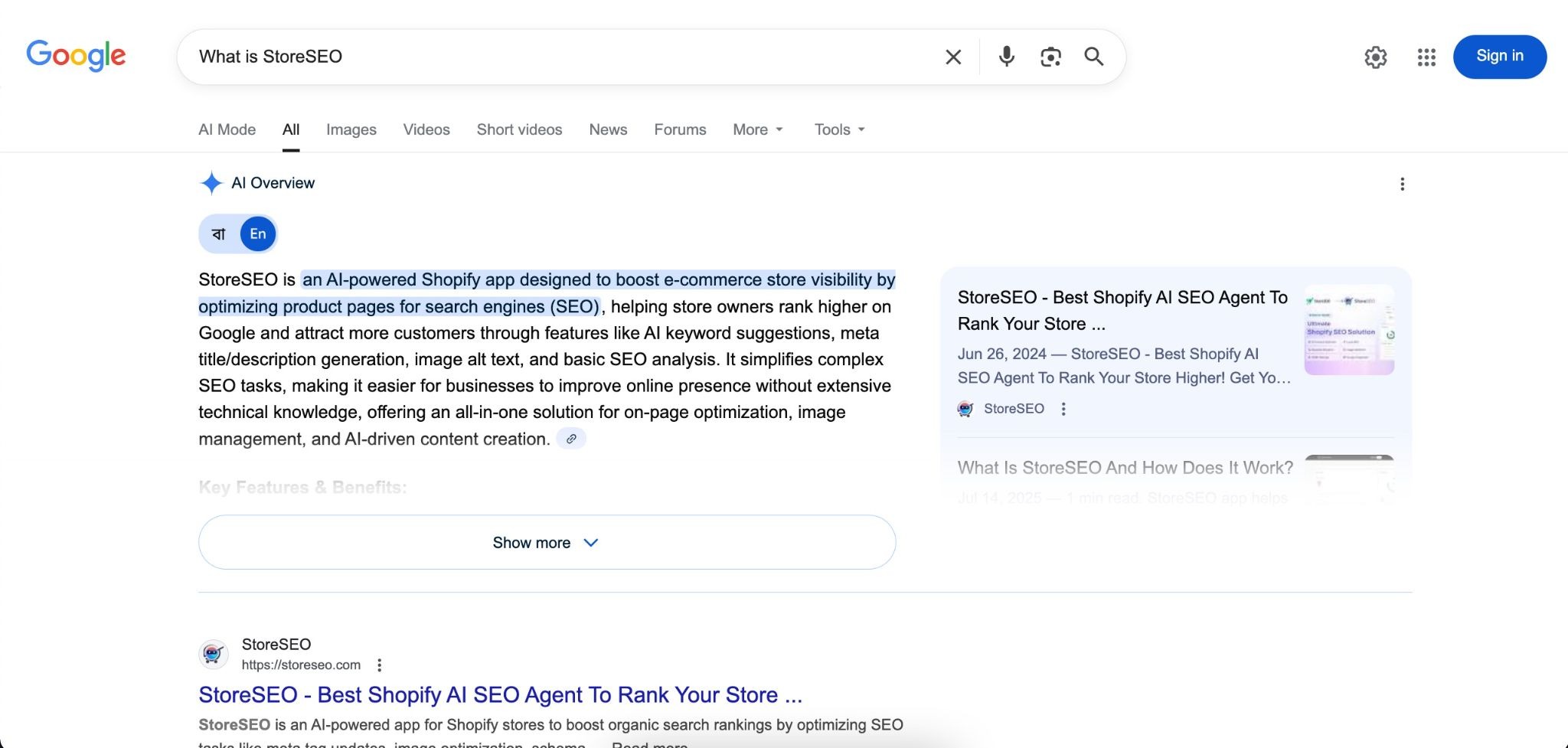
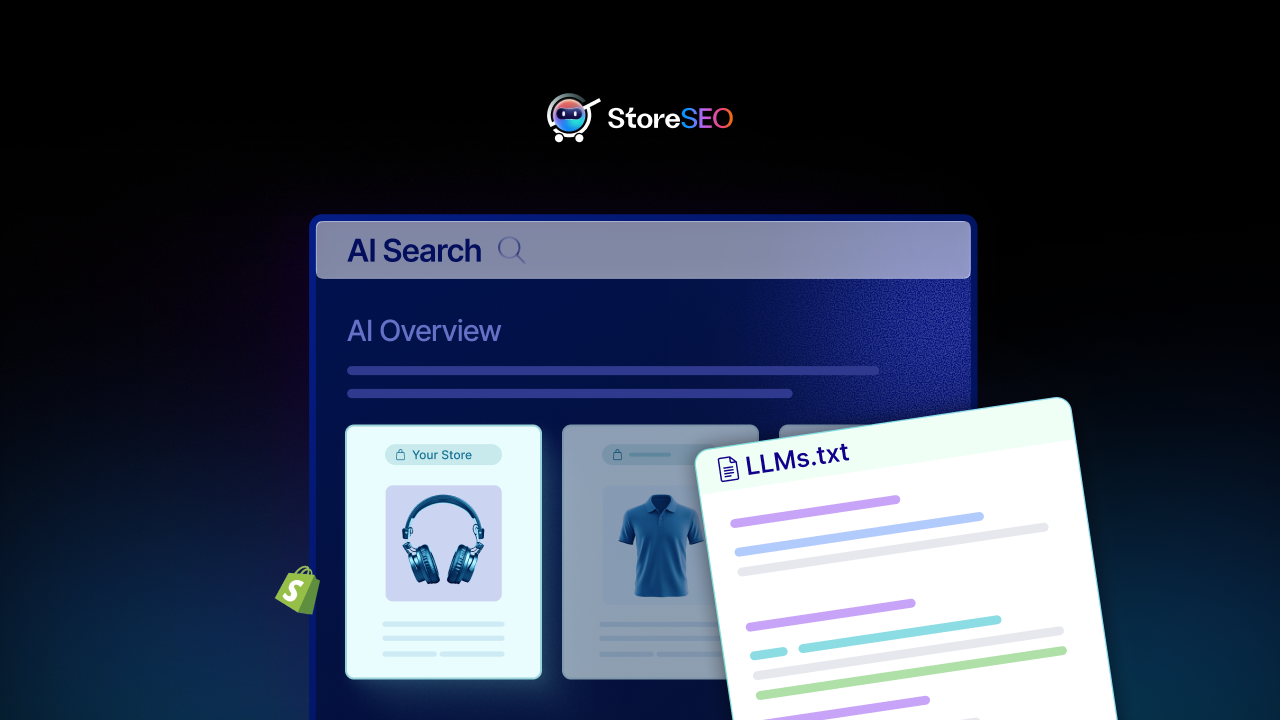
AI overviews represent a fundamental shift in how search results are presented to users. Rather than showing a ranked list of links, Google and other platforms now generate concise, synthesized answers pulled from multiple sources. When an AI system builds these summaries, it does not read your page from top to bottom as a human reader would. Instead, it breaks your content into smaller, structured pieces through a process called parsing. These modular pieces are then evaluated for authority, relevance, and clarity, and the best segments are reassembled into a coherent answer.

This parsing process means that your content must be organized in a way that makes extraction effortless for the AI. If your FAQ answers are buried in long paragraphs or lack a clear structure, the AI has to work harder to identify and pull out the relevant information.
The harder you make it for the AI to understand your content, the less likely it is to select your answer for inclusion in the overview. This is why so much recent content strategy has shifted toward what experts call “answer-first” formatting and modular content design.
The competition for these citation spots has become intense. Pages that appear in AI overviews see estimated click interaction rates between 45 and 67 percent higher compared to traditional search listings.
This is not a minor optimization; it is a change in visibility and traffic potential. For FAQ content specifically, the stakes are even higher because FAQs are among the most AI-friendly content formats available. The question-answer structure maps directly to how AI systems extract and synthesize information.
The 40-60 Word Direct Answer Block Format
The basic principle is straightforward: every FAQ answer should begin with a concise, self-contained answer that can stand alone as a complete response. This opening block serves as what researchers call a “citation block”—a pre-packaged, ready-to-use answer that the AI can extract with minimal processing.
Here is how this format works in practice: your question appears in an H2 or H3 heading, and the first sentence or opening paragraph immediately provides the direct answer. No lengthy introductions. No preamble. No building toward the point. The answer comes first. After that initial 40-60 word block, you can expand with supporting context, examples, statistics, or deeper explanations.
Consider a real example. If your FAQ question is “How long should FAQ answers be for AI optimization?“, the answer block might read: “Lead with a 40-60 word direct answer that can stand alone as a citable fact. Follow with expanded context that adds depth and demonstrates expertise. Pages using 120-180 words between headings receive 70 percent more ChatGPT citations than those with sparse sections.” Notice how this opening block fully answers the question while remaining concise and extractable.
The research on this format is compelling. Analysis of thousands of AI overview citations shows that when websites restructured their content to include clear 40-60 word answer blocks followed by supporting detail, they observed measurable improvement in AI citations within 60 days.
Question-Based Headings And Conversational Language
AI systems strongly prefer headings phrased as questions that match how users actually speak and search. This preference represents a departure from traditional SEO guidance that emphasized keyword-rich but sometimes unnatural heading phrasing. Modern AI optimization requires that your H2 and H3 headings read like actual user queries.

The reasoning behind this preference is clear. When a user asks Gemini, ChatGPT, or Perplexity a question, the AI searches for content that directly addresses that specific query phrasing. If your heading is “FAQ Optimization Best Practices,” the AI must infer that this section might answer questions about FAQ structure. If your heading is “How Should I Structure My FAQ Answers for AI Overviews?”, the AI immediately recognizes this as a direct match.
The conversational tone extends beyond just headings into the language of your answers themselves. AI systems have learned to recognize and favor natural, conversational language over formal or overly technical phrasing. This does not mean sacrificing expertise or authority. Rather, it means expressing expertise in clear, accessible language that mirrors how informed people actually speak about the topic.
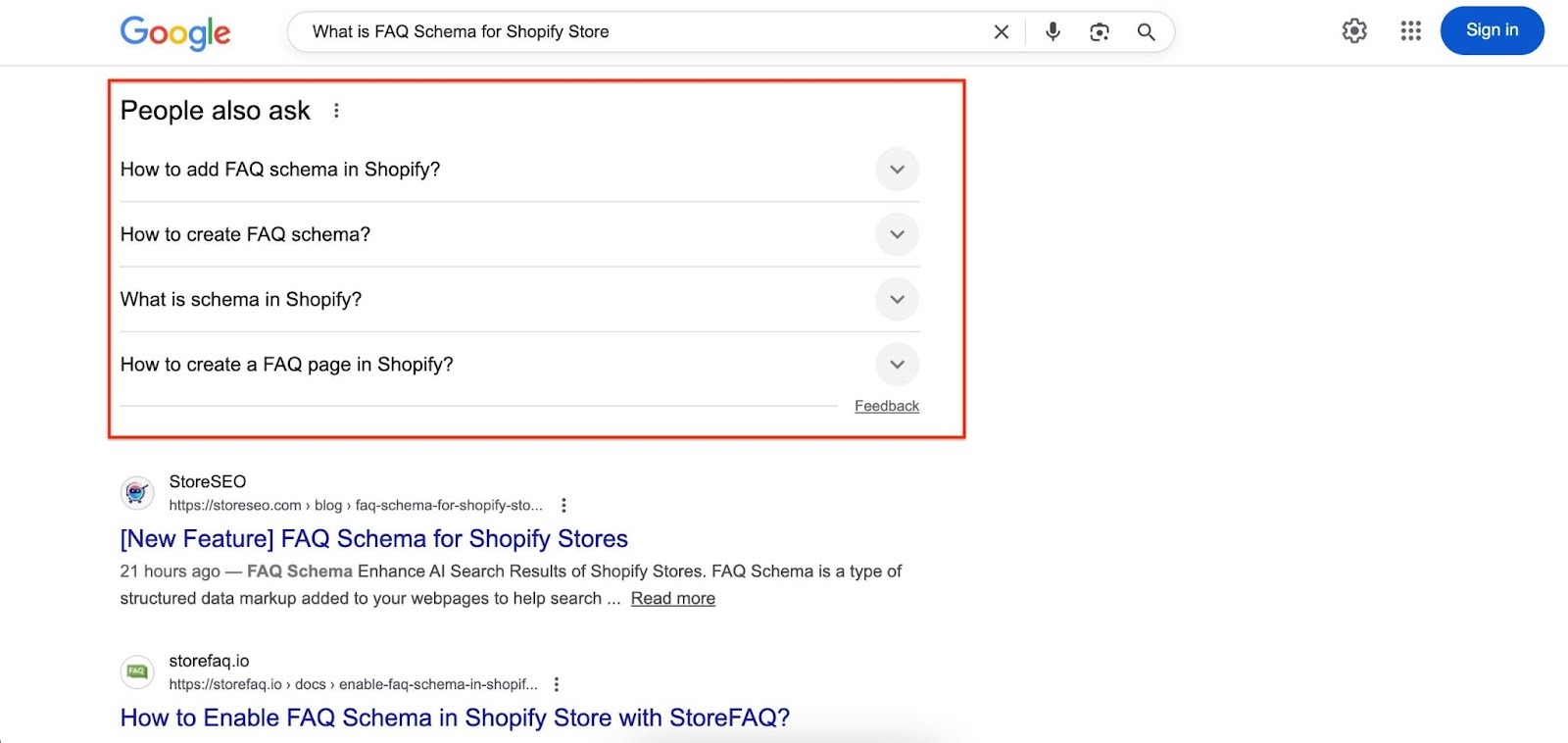
For FAQ content specifically, your questions should reflect the actual language patterns from research sources like Google’s “People Also Ask” box, Reddit discussions, customer support tickets, or search query data. If your audience asks, “What is GEO?”, your heading should say exactly that—not “Generative Engine Optimization Explained” or “Understanding GEO Principles.” The more precisely your question matches the way people search, the higher the likelihood of AI extraction.

One important distinction: your questions should be conversational and specific, but still maintain formal professionalism appropriate to your industry. The goal is clarity and directness, not casual slang or overly simplified language. Use natural sentence structure, avoid jargon without explanation, and phrase your questions in language that your target audience would actually use when asking for help.
Bullet Points And List Formatting Preferences
AI systems show a strong preference for bullet points and numbered lists over paragraph-heavy prose for FAQ answers. This preference stems from how large language models are trained and evaluated. When human raters evaluate AI-generated content, they consistently favor answers that are structured and scannable over dense paragraphs. Over time, this feedback shaped the models to generate and prefer information in list format, and that same preference extends to how they consume and extract information from source material.

Bullet points are ideal for presenting unordered information where the sequence does not matter. If your FAQ question asks “What are the benefits of FAQ optimization?” you would present those benefits as a bulleted list, not as flowing paragraphs. The AI can easily identify each benefit as a separate point, making extraction clean and straightforward.
Numbered lists are better suited for sequential information—steps in a process, rankings, or instructions where order matters. If your FAQ question asks “How do I optimize my FAQ answers for AI search?”, you would use a numbered list to walk through the steps in order. This signals to the AI that these items must be presented in sequence, not mixed or rearranged.
The structure of your lists also matters significantly. Consistency in list formatting helps AI parse information more reliably. Each bullet point or numbered item should follow parallel construction, using similar grammatical structure and sentence length. For example, if your first bullet point starts with a verb (“Add a direct answer block to each FAQ section”), subsequent items should also start with verbs (“Include statistics to support your claims,” “Implement FAQPage schema markup”) rather than switching to noun phrases or other structures.
Avoid nesting bullet points to multiple levels, as this can confuse both human readers and AI systems. If you find yourself creating three or four levels of nested bullets, you likely need to reorganize your content using additional headings instead of nested indentation. Breaking complex information into separate sections with clear headings is more AI-friendly than trying to represent all hierarchical information through nested lists.
Tables are another list-like format that AI particularly favors for comparison-based FAQ answers. When your question asks something like “What is the difference between approach A and approach B?”, presenting the comparison in a well-structured table is far more extractable than writing out the comparison in paragraph form. Tables also work exceptionally well for product comparisons, feature breakdowns, pricing comparisons, and other content where readers need to evaluate items against each other.
Direct Answers First: Never Bury the Lead
The most consistent recommendation across all AI optimization research is that you must answer the question immediately, never making the AI (or the reader) search through the introduction or background to find the core answer. This principle is often called “answer-first” formatting or the “Question, Answer, Expand” framework.
Length And Depth Considerations Based on Question Complexity
While the 40-60-word direct answer block is the critical opening, the total length of your FAQ answer should vary based on the complexity of the question. The emerging research definitively disproves the idea that longer is always better for AI optimization.
Analysis of thousands of AI overview citations shows that over 53 percent of cited pages are under 1,000 words, and content length has near-zero correlation with being selected by AI. What matters is not the length of your answer, but the clarity and structure.
For simple, straightforward questions—”What is X?”, “How do I Y?”, “Which is better, A or B?”—a 40-60 word answer block followed by one or two additional paragraphs (totaling 100-180 words) is often sufficient. AI can extract these answers cleanly from brief, well-structured content.
For complex, nuanced questions that require background information, multiple perspectives, or detailed guidance, longer answers are acceptable and sometimes necessary.
If your question is “How do I develop a comprehensive content strategy for AI search optimization?”, a 200-300 word answer might be appropriate, featuring your direct answer block followed by detailed sections on each major component.
The key principle is that every word must add value; you should write as much as the topic demands, no more and no less.
A helpful framework is the “Snack Strategy” for simple questions and the “Hub Strategy” for complex ones. The Snack Strategy acknowledges that short content succeeds when it allows the AI to immediately verify and credit the answer without parsing through unnecessary detail.
The Hub Strategy recognizes that long content is valuable when it provides genuine depth, context, and proof of expertise. The mistake many content creators make is applying the Hub Strategy to every question, regardless of whether the topic actually requires that depth.
One important caveat: longer FAQ sections (120-180 words between headings) actually receive more AI citations than sparse, extremely brief sections. This means that while 40-60 words is your direct answer block, supporting that block with an additional 80-120 words of context, examples, and supporting evidence is beneficial.
Structure Patterns That AI Systems Favor for FAQ Answers
Beyond individual elements like word count and heading phrasing, AI systems favor specific overall structural patterns for FAQ content. The most universally recommended pattern is the Question, Answer, Expand framework.
Under this framework, every FAQ section follows this sequence. The section heading poses the exact question. The opening paragraph or block delivers the direct answer. The remainder of the section expands on that answer with supporting detail. This mirrors how AI systems generate answers—they identify the core claim, state it, and then provide supporting evidence and context.
Another structure that performs exceptionally well is what some researchers call the “Atomic Answer” approach. Under this method, every H2 and H3 section is treated as a standalone, self-contained answer to a specific question. Each section could theoretically be extracted on its own and would still read as a complete, coherent response. This modular approach makes it trivially easy for AI to pull any section out of your article and use it as a citation.
The specific sequence within each atomic answer is: direct answer (1-3 sentences) → supporting detail (2-4 additional sentences) → supporting data or example (if applicable) → conclusion or takeaway (optional for shorter answers). Some sources recommend explicitly bolding the most critical facts within your answer to signal their importance to the AI system. The bold formatting is not strictly necessary for AI extraction, but it does help human readers scan the content more quickly, and it can reinforce which claims are the core factual assertions.
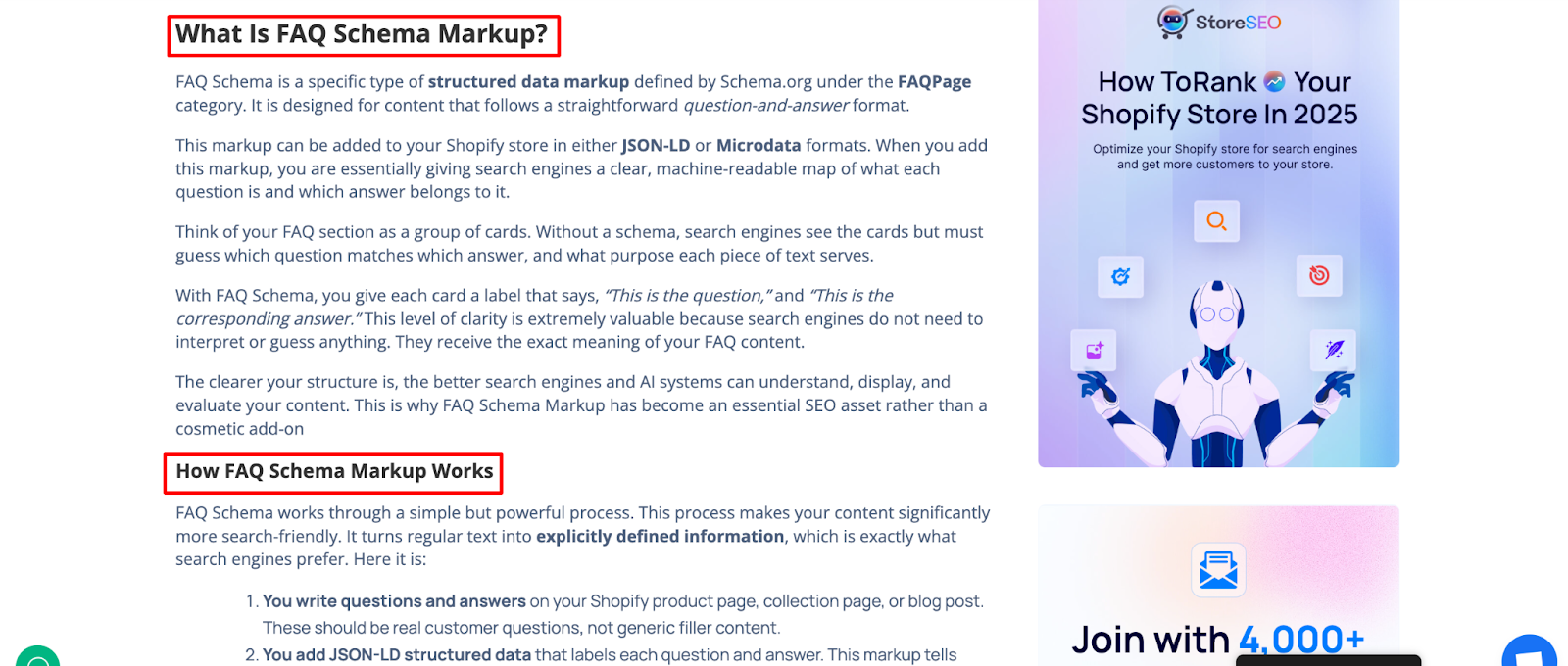
FAQ schema markup (FAQPage structured data) also reinforces these structural patterns and signals to AI systems that your content is organized as question-answer pairs. When properly implemented, the FAQ Page schema makes clear semantic boundaries around each question and answer, reducing ambiguity about which answer belongs to which question.
Implementation of FAQ Page schema involves wrapping each question-answer pair in a specific JSON-LD markup that explicitly defines the question text and the accepted answer. When you implement this schema correctly and validate it through Google’s Rich Results Test, you are essentially pre-formatting your content to match the structure that AI systems expect. This is not strictly required for AI citation, but it is strongly recommended because it removes all ambiguity about your content’s structure.
Authority Signals And Supporting Evidence Within FAQ Answers
AI systems do not just prefer specific formatting; they also strongly favor content that authority signals expertise, authority, and trustworthiness, what Google calls イート (Experience, Expertise, Authoritativeness, Trustworthiness).
For FAQ answers, this means supporting your claims with evidence and demonstrating that your organization or author has legitimate expertise in the relevant field.
This matters because AI systems are increasingly being scrutinized for providing inaccurate information (a problem known as “hallucination”).
To mitigate this risk, AI systems prioritize citing content from sources that demonstrate clear expertise and provide verifiable facts.
An FAQ answer that simply states “Implementation of this approach sees 23-40 percent improvement in conversion rates” is less likely to be cited than one that states
Author credentials and expertise signals also matter. If the author of your FAQ answer has relevant credentials, certifications, or demonstrable experience with the topic, including that information, increases the perceived trustworthiness of the answer. Biographical information about the author, while not critical, can support E-E-A-T signals.
Recency and content freshness also contribute to authority signals. FAQ answers should reflect current best practices, recent statistics, and up-to-date information if your FAQ answer references guidance from three years ago, while newer, more current research exists.
An AI system is less likely to select that answer. Regularly auditing your FAQ content and updating statistics, research citations, and best practice recommendations is therefore essential for maintaining strong AI visibility.
Common Formatting Mistakes That Reduce AI Citation
The first major mistake is burying answers in long walls of text. If your FAQ answer is formatted as dense paragraphs without clear sectioning, headings, or visual breaks, the AI has to work to identify where the answer actually is. This friction increases the likelihood that the AI will select a competitor’s answer instead, which is formatted more clearly.
A related mistake is hiding important information behind tabs, accordions, or expandable menus. Many website builders make it easy to hide FAQ answers in expandable sections that only expand when clicked. However, AI systems may not render these dynamic elements properly, meaning your FAQ answer could be completely invisible to the AI. For AI optimization, all important content must be visible in the static HTML, not hidden behind interactive elements.
Another common mistake is failing to implement proper heading structure. Using H2 and H3 tags correctly with logical nesting is not optional for AI optimization. If your page skips heading levels (jumping from H1 to H3, skipping H2), the AI cannot properly understand the logical hierarchy of your content.
Using vague language is another significant mistake. Claiming that your product is “innovative” or “cutting-edge” without providing measurable facts or specific examples gives the AI nothing concrete to cite. AI systems favor specific, measurable claims backed by data. If you claim “significant improvement,” the AI wants to know “how significant?”—give specific percentages or metrics.
Overloaded, complex sentences also reduce AI citation likelihood. Long sentences that pack multiple claims into one line make it harder for AI to parse which information is core to the answer and which is a supporting detail. Break complex thoughts into multiple sentences, keeping individual sentences relatively short and focused on one main idea.
Finally, inconsistent formatting across multiple FAQ answers hurts your overall FAQ quality in the eyes of AI systems. If some answers use bullets, others use paragraphs, some include stats while others do not, and some use question headings while others do not, the AI has to work harder to extract comparable answers. Consistency in your FAQ structure and formatting across all questions makes it easier for the AI to understand what to expect.
Prepare Your Shopify Store for The AI-Driven Future
The future of search is not about keyword rankings on a list—it is about becoming the trusted source that AI systems pull from when generating answers to user queries. For FAQ content specifically, the formatting preferences described in this article represent your best opportunity to secure that status.
私たちのブログは役に立ったでしょうか?もしそうなら、 ブログを購読する 業界関連のトピックに関するその他のヒント、チュートリアル、最新情報については、こちらをご覧ください。