
SEO gaat niet alleen over hoger scoren in zoekresultaten; het gaat erom gevonden te worden door zowel mensen als AI. Nu zoekopdrachten steeds meer gebruikmaken van AI via ChatGPT, Google AI Overviews, Perplexity en Gemini, moet de SEO van je Shopify-collectiepagina de taal van zowel algoritmes als antwoordmachines spreken. StoreSEO overbrugt deze nieuwe kloof met ingebouwde GEO- (Generative Engine Optimization) en AEO- (Answer Engine Optimization) functies die ervoor zorgen dat je Shopify-collecties klaar zijn voor vermelding, snel laden en contextueel rijk zijn.
TL;DR (te lang; niet gelezen)
De AI-gestuurde functies van StoreSEO kunnen Shopify-collectiepagina's transformeren tot SEO-krachtpatsers van 2026 door middel van metatitel en -beschrijving, LLMs.txt voor AI-citaten, beeldoptimalisatie, SEO-schema-markup en AEO/GEO-strategieën. Dit leidt tot 3-4 keer zoveel organisch verkeer en een vermelding in ChatGPT, Perplexity en Google AI Overviews.
Waarom collectiepagina's in 2026 belangrijker zijn dan ooit.
Laten we er geen doekjes omheen winden: Als je je Shopify-collectiepagina's niet optimaliseert, laat je geld liggen.
Collectiepagina's bevinden zich op het ideale punt in de hiërarchie van je webshop. Ze zijn breder dan productpagina's, maar specifieker dan je homepage, waardoor ze perfect zijn voor zoekopdrachten met een hoge intentie. Wanneer iemand zoekt naar 'hardloopschoenen voor heren' of 'biologische huidverzorgingsproducten', zoekt diegene niet naar één specifiek artikel – hij of zij is aan het browsen, vergelijken en klaar om te kopen.
Wat de meeste Shopify-winkeleigenaren over het hoofd zien, is dat collectiepagina's meer organisch verkeer kunnen genereren dan individuele productpagina's samen. Ze richten zich op categoriegerelateerde zoekwoorden met een hoog zoekvolume en behouden tegelijkertijd een sterke koopintentie. Een goed geoptimaliseerde collectiepagina scoort tegelijkertijd hoog in de zoekresultaten voor tientallen gerelateerde zoekwoorden en fungeert zo als een verkeersmagneet voor je hele productassortiment.
Expertinzicht: Na analyse van honderden Shopify-webshops hebben onze SEO-experts vastgesteld dat webshops met geoptimaliseerde collectiepagina's 3 tot 4 keer meer organisch verkeer genereren dan webshops die zich uitsluitend richten op SEO voor productpagina's. De reden? Collectiepagina's sluiten perfect aan op hoe mensen daadwerkelijk online winkelen; ze willen keuze, niet slechts één artikel.
Het zoekgedrag van gebruikers in 2026: ontdekkingen op basis van AI.
De zoekstrategie is fundamenteel veranderd. We strijden niet langer alleen om een plek in de top 10 van Google. In 2026 moeten uw collectiepagina's uitblinken in:
- Google AI Overviews (voorheen SGE) bieden door AI gegenereerde samenvattingen met bronvermelding.
- ChatGPT Winkel- en conversatiegerichte handelsinterfaces
- Perplexity AI zoekt op basis van genummerde citaties naar resultaten.
- Gemini en andere generatieve zoekmachines die direct producten aanbevelen
Deze verschuiving betekent dat uw collectiepagina's geoptimaliseerd moeten worden voor zowel traditionele SEO als generatieve zoekmachineoptimalisatie (GEO). StoreSEO overbrugt deze kloof met functies die specifiek zijn ontworpen voor AI-gestuurde ontdekking.
Hoe StoreSEO Shopify-collectiepagina's optimaliseert: het complete systeem
StoreSEO is niet zomaar weer een SEO-app.; Het is een AI SEO-agent die het zware werk van SEO voor collectiepagina's uit handen neemt. Ik zal je precies uitleggen hoe het werkt.
1. Selectie en analyse van focuszoekwoorden
De basis voor elke optimalisatie van een collectiepagina begint met het juiste focuszoekwoord. De AI van StoreSEO analyseert de inhoud van uw collectie en stelt zoekwoorden met een grote impact voor op basis van:
- Zoekvolume en moeilijkheidsgraad
- Signalen van koopintentie (transactiegerichte versus informatieve vragen)
- Mogelijkheden voor long-tail zoekwoorden die beter converteren
- Semantische variaties die AI-zoekmachines begrijpen
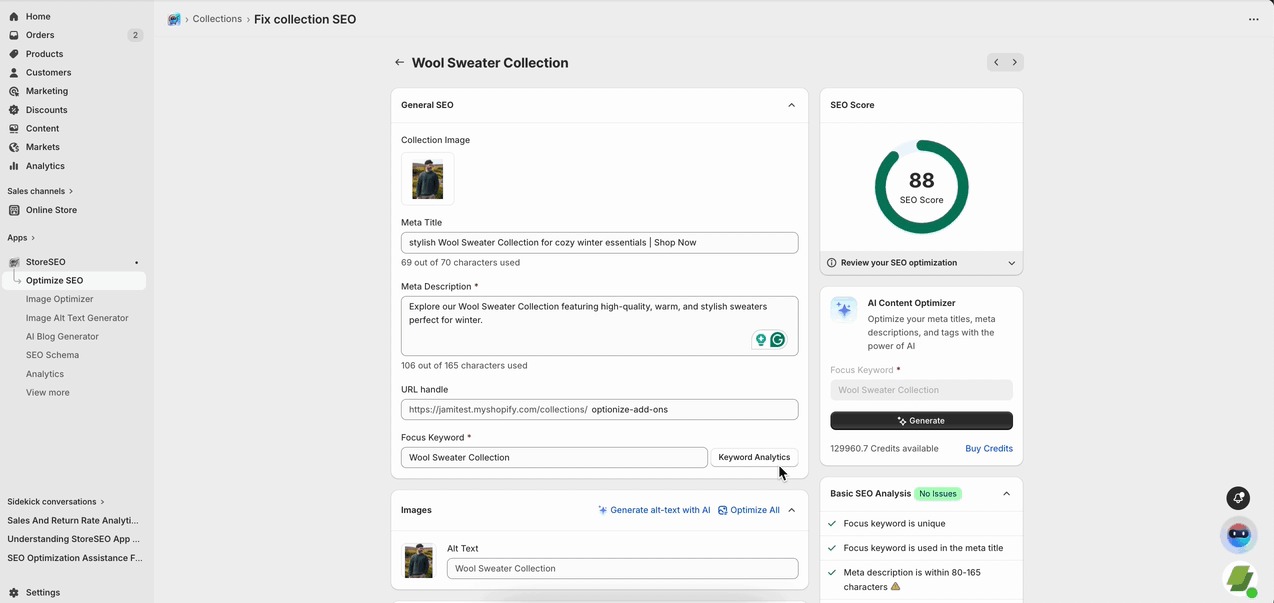
Zodra je je focuszoekwoord hebt geselecteerd, treedt het dubbele analysesysteem van StoreSEO in werking:
Basiscontroles voor SEO-analyse:
- Focus op unieke zoekwoorden in je hele webwinkel.
- Focus op de plaatsing van zoekwoorden in de metatitel en -beschrijving.
- Lengte van de metabeschrijving in tekens
- Lengte van de meta-titel in tekens
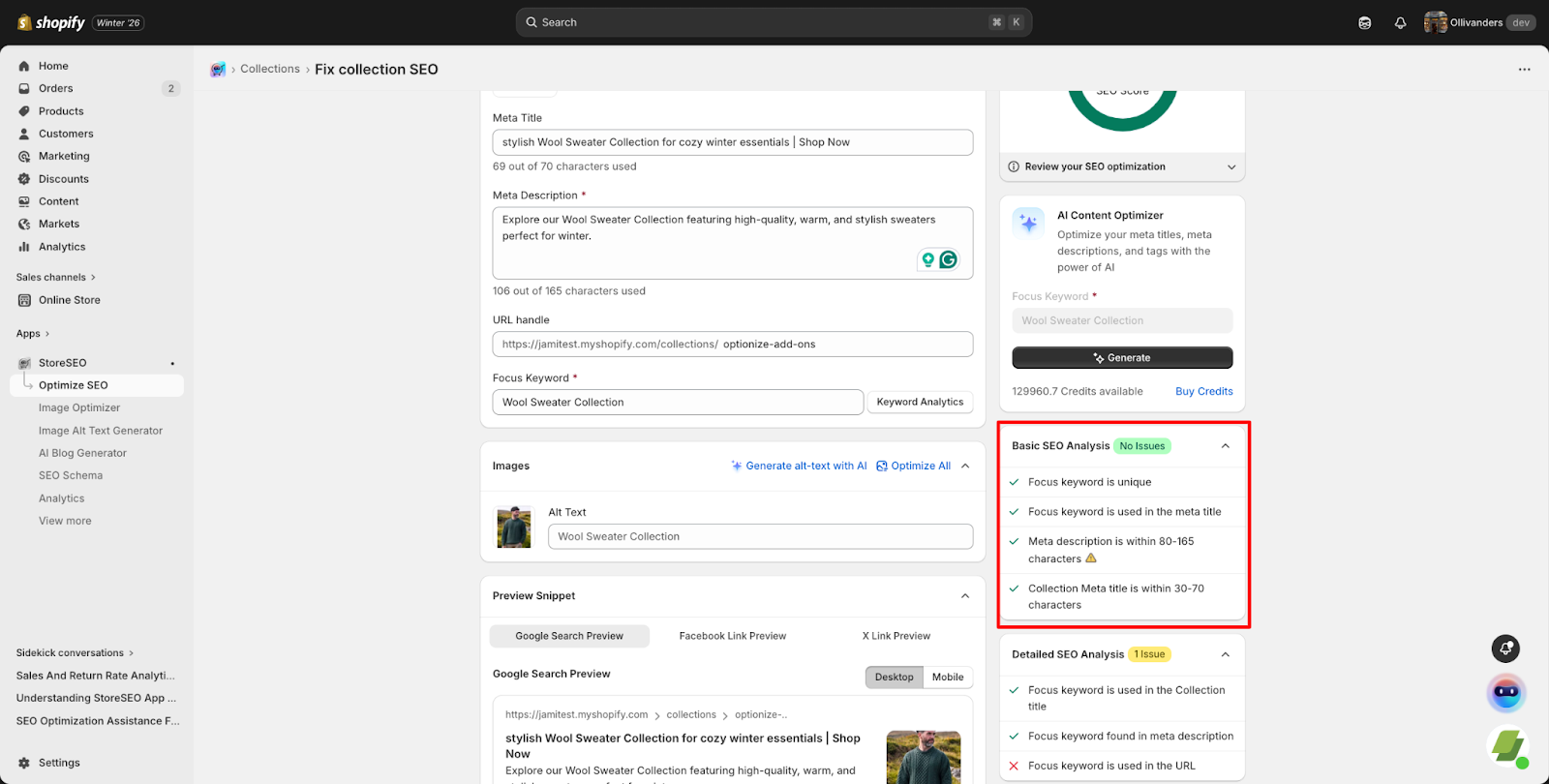
Gedetailleerde SEO-analyse evalueert:
- Focus-trefwoord wordt gebruikt in de titel van de collectie
- Focus trefwoord gevonden in meta beschrijving
- Focus-trefwoord wordt gebruikt in de URL
Deze tweeledige aanpak zorgt ervoor dat er niets over het hoofd wordt gezien. Je behaalt zowel snelle resultaten als diepgaande inzichten in optimalisatie.
2. Geautomatiseerde optimalisatie van meta-informatie
Metatags zijn de eerste indruk die uw collectiepagina maakt in de zoekresultaten. StoreSEO automatiseert dit hele proces:
Metatitel:
- Houdt titels binnen 60-70 tekens voor optimale weergave.
- Plaatst strategisch de belangrijkste zoekwoorden aan het begin.
- Garandeert de uniciteit van 100% op alle collectiepagina's.
- Inclusief secundaire trefwoorden indien het aantal tekens dit toelaat.
Metabeschrijving:
- Behoudt de optimale grootte van 150-160 tekens.
- Schrijft aantrekkelijke beschrijvingen die de aandacht trekken.
- Bevat natuurlijke taal die door AI kan worden geanalyseerd.
- Voegt relevante productcategorie-informatie toe.
Zo ziet dit er in de praktijk uit: in plaats van een generieke variant
Belangrijkste conclusie: Goed geoptimaliseerde metatags verbeteren niet alleen de ranking, maar verhogen volgens onze gegevens ook de click-through rate (CTR) met 20-30%. Een hogere CTR geeft Google het signaal dat uw pagina het beste resultaat is, waardoor een positieve spiraal van betere rankings ontstaat.
3. Geavanceerde beeldoptimalisatie voor collectiepagina's
Afbeeldingen vertragen de meeste Shopify-webshops. De AI-gestuurde beeldoptimalisatietool van StoreSEO lost drie cruciale problemen op:
Intelligente compressie:
- Verkleint de bestandsgrootte van afbeeldingen met maximaal 70% zonder zichtbaar kwaliteitsverlies.
- Past automatisch de afmetingen van afbeeldingen aan naar de aanbevolen afmetingen.
- Wordt indien nodig omgezet naar moderne formaten.
- Geeft prioriteit aan het laden van afbeeldingen die direct zichtbaar zijn op de pagina.
Genereren van alternatieve tekst in bulk:
- Gebruikt AI om productafbeeldingen te analyseren en beschrijvende alternatieve tekst te genereren.
- Bevat relevante zoekwoorden op natuurlijke wijze
- Maakt afbeeldingen doorzoekbaar in Google Afbeeldingen
- Verbeterde toegankelijkheid voor schermlezers
Impact van beeld-SEO:
- Snellere laadtijden van webpagina's verbeteren de Core Web Vitals-scores.
- Betere alt-teksten stimuleren het verkeer naar Google Afbeeldingen.
- Lagere bouncepercentages dankzij snellere laadtijden.
- Verbeteringen in mobiele prestaties (cruciaal voor meer dan 751.000 TP3T-klanten)
Een collectiepagina die in minder dan 2 seconden laadt, converteert 3 keer zo snel als een pagina die er 5 seconden over doet. StoreSEO zorgt ervoor dat uw collectiepagina's razendsnel laden.
4. Schema-opmaak en rich snippets
SEO-schema-markering Het is hét geheime wapen voor de zichtbaarheid van je collectiepagina. Het vertelt zoekmachines – en AI-modellen – precies wat je pagina bevat. StoreSEO implementeert SEO-schema in een paar klikken:
Productcollectieschema:
- Definieert de collectiecategorie en de kruimelpadhiërarchie.
- Verhoogt de prijsinformatie voor alle producten.
- Inclusief beschikbaarheidsstatus
- Hoogtepunten, beoordelingen en aantallen
Broodkruimelschema:
- Toont de sitehiërarchie duidelijk aan zoekmachines.
- Helpt AI productrelaties te begrijpen
- Creëert gestructureerde navigatie in zoekresultaten.
- Verbetert de interne linkautoriteit
Lokale bedrijfsregeling (indien van toepassing):
- Voegt geografische relevantie toe aan lokale zoekopdrachten.
- Bevat bedrijfsinformatie
- Verbetert de zichtbaarheid van zoekresultaten in de buurt.
Rijke fragmenten van Een goed schema kan de doorklikratio verhogen. door 30-40%. Wanneer uw collectiepagina sterrenbeoordelingen, prijsklassen en beschikbaarheid direct in de zoekresultaten weergeeft, onderscheidt u zich van de concurrentie.
5. Implementatie van LLMs.txt: De AI-zichtbaarheidsversterker
Dit is waar StoreSEO in 2026 echt een voorsprong neemt. LLMs.txt is in feite "SEO voor AI"—een gestandaardiseerd bestand dat grote taalmodellen vertelt welke pagina's prioriteit moeten krijgen bij het genereren van antwoorden.
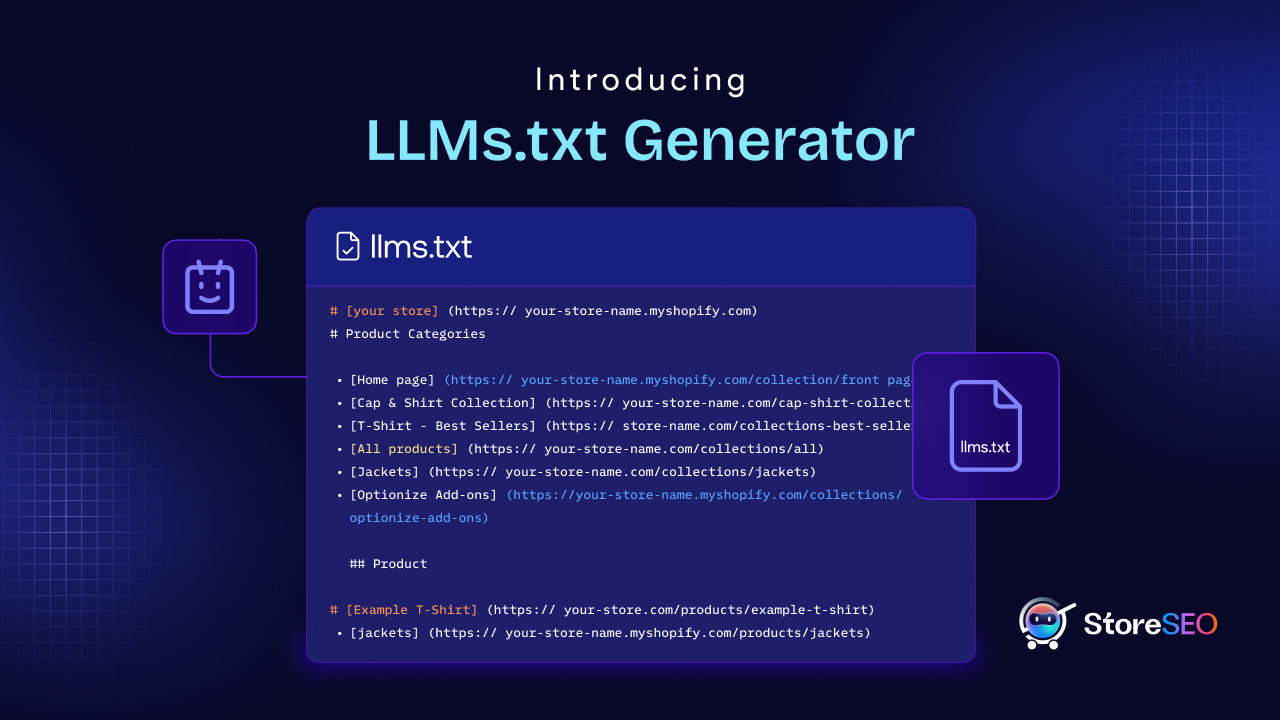
Wat de LLMs.txt-generator van StoreSEO doet:
Creëert een gestructureerde index van uw belangrijkste collectiepagina's in een formaat dat AI-modellen prefereren (schone Markdown). Wijst ChatGPT, Claude, Perplexity en andere AI-assistenten naar uw belangrijkste productcollecties. Vermindert de "ruis" die AI-crawlers tegenkomen, waardoor ze de structuur van uw winkel beter begrijpen. Verhoogt de kans dat uw website wordt genoemd in door AI gegenereerde winkeladviezen.
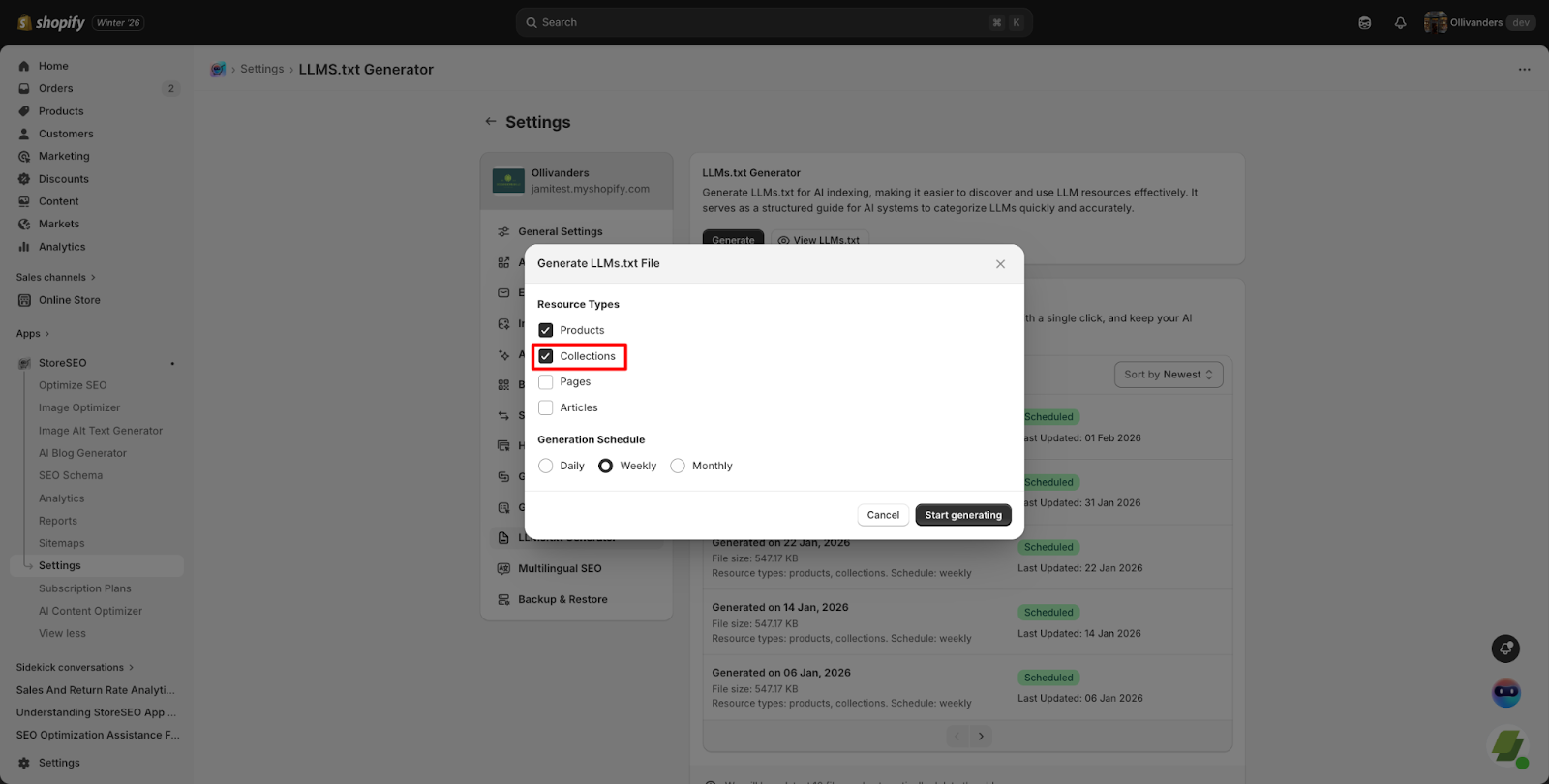
Praktisch voorbeeld:
Bedrijven die implementeren LLMs.txt meldt 10-15% aan nieuwe aanmeldingen afkomstig van ChatGPT. en vergelijkbare AI-tools. Als iemand een AI vraagt: "Wat zijn de beste biologische huidverzorgingsproducten?" en jouw collectiepagina bevat LLMs.txt, is de kans drie keer zo groot dat je als bron wordt genoemd.
ExpertinzichtLLMs.txt is nog in ontwikkeling, maar de eerste gebruikers zien al meetbare voordelen. Zie het als een toekomstbestendige investering in je SEO-strategie. Naarmate AI-gestuurd winkelen steeds gangbaarder wordt, hebben winkels die LLMs.txt gebruiken een voorsprong op het gebied van AI-vermeldingen en -aanbevelingen.
6. Contentoptimalisatie en SEO-score
StoreSEO doet meer dan alleen audits uitvoeren; het begeleidt u naar 100%-optimalisatie met realtime scores:
SEO-score dashboard:
- Visuele weergave van de status van uw collectiepagina (schaal van 0-100)
- Prioritering van problemen met behulp van kleurcodes (kritiek, belangrijk, minder belangrijk)
- Stapsgewijze instructies voor het oplossen van elk probleem.
- Voor/na score-tracking
Inhoudelijke aanbevelingen:
- Optimale lengte van de collectiebeschrijving (minimaal 200-300 woorden)
- Suggesties voor de plaatsing van zoekwoorden
- Mogelijkheden voor interne koppeling met gerelateerde collecties
- Aanbevelingen in de FAQ-sectie voor het optimaliseren van featured snippets
Factoren die de gebruikerservaring beïnvloeden:
- Mobiele responsiviteitscontroles
- Analyse van de navigatiestructuur
- Optimalisatie van de filter- en sorteerfunctionaliteit
- Duidelijke plaatsing van de call-to-action
Het doel is simpel: zorg ervoor dat elke collectiepagina een SEO-score van 95% of hoger behaalt. Op dat niveau concurreer je met de best geoptimaliseerde pagina's in jouw niche.
Het AI-citatievoordeel: hoe StoreSEO ervoor zorgt dat uw bedrijf wordt opgenomen in AI-zoekresultaten.
Traditionele SEO draaide om een plek in de top 10. In 2026 draait het om geciteerd worden door AI.
| 🔍 Categorie | ⚡ Antwoordengineoptimalisatie (AEO) | 🌐 Generatieve motoroptimalisatie (GEO) |
| 🎯 Kernfocus | Geef duidelijke, directe antwoorden op gebruikersvragen, zodat AI deze gemakkelijk kan citeren of samenvatten. | Bouw een alomvattende thematische expertise en contextuele dekking op voor generatieve engines. |
| 🧠 Inhoudsdoelstelling | Help zoekmachines korte, feitelijke antwoorden te genereren. | Help generatieve zoekmachines het kennisdomein van uw merk te begrijpen, ermee in contact te komen en het uit te breiden. |
| 📘 Inhoudsstructuur | – Duidelijke uitleg bij “Wat is [productcategorie]?”. – Samenvattingen van één zin. – FAQ-secties voor veelgestelde vragen. | – Meerdere collectiepagina's over verwante subonderwerpen. – Blogs en contentclusters ter ondersteuning van elke collectie. – Klantenrecensies of door gebruikers gegenereerde content gekoppeld aan pagina's. |
| 🪶 Opmaakstijl | – Kopjes in de vorm van een H2-vraag. – Lijsten met opsommingstekens. – Tabellen met een vergelijking van productkenmerken. – Lijsten met voordelen en kenmerken. | – Semantische variatie op zoekwoorden. – Content met veel entiteiten die het merk en de onderwerpen definiëren. – Interne collecties met onderlinge koppelingen. |
| 📚 Kwaliteit van de bron | – Originele, niet-dubbele beschrijvingen. – Beweringen onderbouwd met gegevens en verifieerbare bronnen. – Auteursreferenties die expertise aantonen. | – Rijke interne en externe referenties. – Commentaar van experts of inzicht in het merk. – Behandelt verwante concepten voor meer contextuele diepgang. |
| ⏱️ Versheidssignalen | – Regelmatige updates van de inhoud voor vertrouwen in AI. | – Continue thematische uitbreiding via nieuwe pagina's, blogs en door gebruikers gegenereerde content. |
| 💬 Inhoudelijke toon | – Informatief, bondig en antwoordgericht. | – Contextueel, narratief en op expertise gebaseerd. |
| 📍 Extra boosters | – FAQ-schema-opmaak. – Gerichte weergave van uitgelichte fragmenten. | – Ingesloten video's, vergelijkingsgrafieken en getuigenissen. – Geografisch relevante vermeldingen (locatiegebonden context). |
Door AEO- en GEO-strategieën te combineren via StoreSEO, worden uw collectiepagina's aantrekkelijke bronnen voor vermeldingen. Onderzoek toont aan dat pagina's die geoptimaliseerd zijn voor zowel traditionele SEO als AI-vermeldingen 60% meer zichtbaarheid krijgen via alle ontdekkingskanalen.
Stapsgewijs: Een collectiepagina optimaliseren met StoreSEO
Ik zal je stap voor stap door het proces leiden, alsof je naast me zit en je eerste collectiepagina optimaliseert.
Het optimaliseren van je Shopify-collectiepagina's is cruciaal voor het aantrekken van bezoekers met een hoge zoekintentie. StoreSEO vereenvoudigt dit proces met een gestructureerd audit- en correctiesysteem dat ervoor zorgt dat elke categoriepagina voldoet aan de moderne SEO-standaarden.
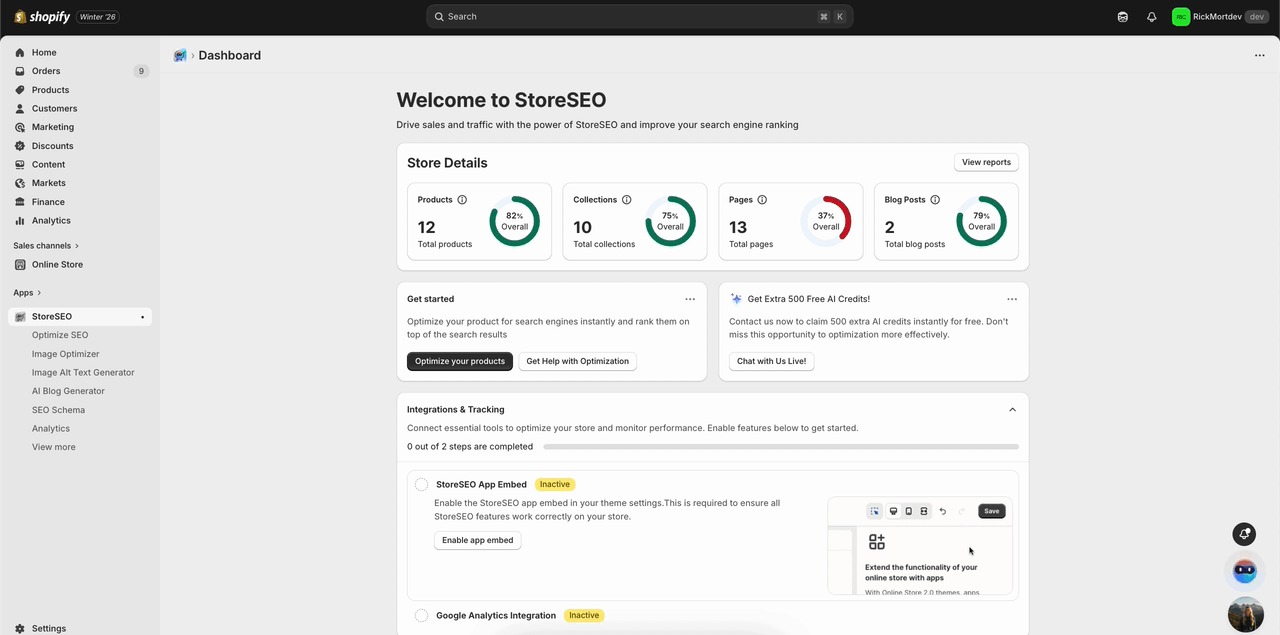
Stap 1: Navigeer naar StoreSEO Collectieoptimalisatie
Meld u aan bij uw Shopify-winkel. Ga vervolgens via de zoekbalk bovenaan of de 'Toepassingen' optie in de linker zijbalk, zoek naar de StoreSEO app en klik erop. Ga vanuit het StoreSEO dashboard naar de 'Optimaliseer SEO' tabblad. Klik nu op de 'Collecties' optie.
Zodra uw collectiepagina's correct zijn gesynchroniseerd, ziet u uw collectielijst op deze pagina. Kies degene die u wilt optimaliseren en klik op de 'Probleem oplossen' knop.
Stap 2: Optimaliseer uw collectiepagina op Shopify
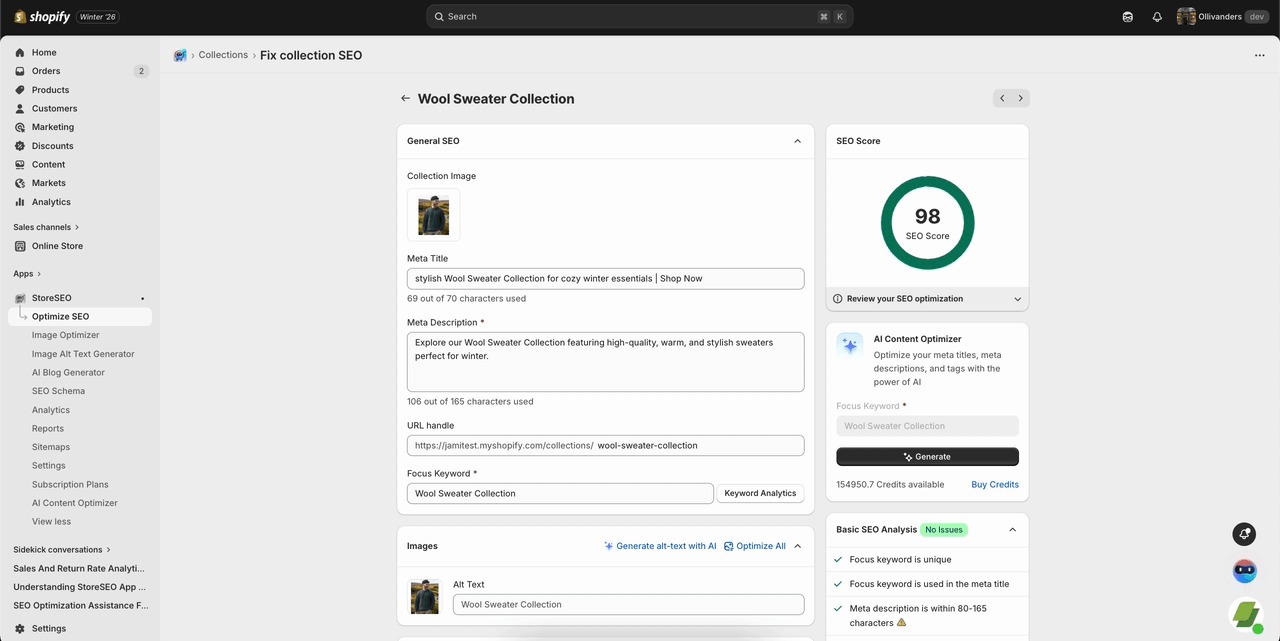
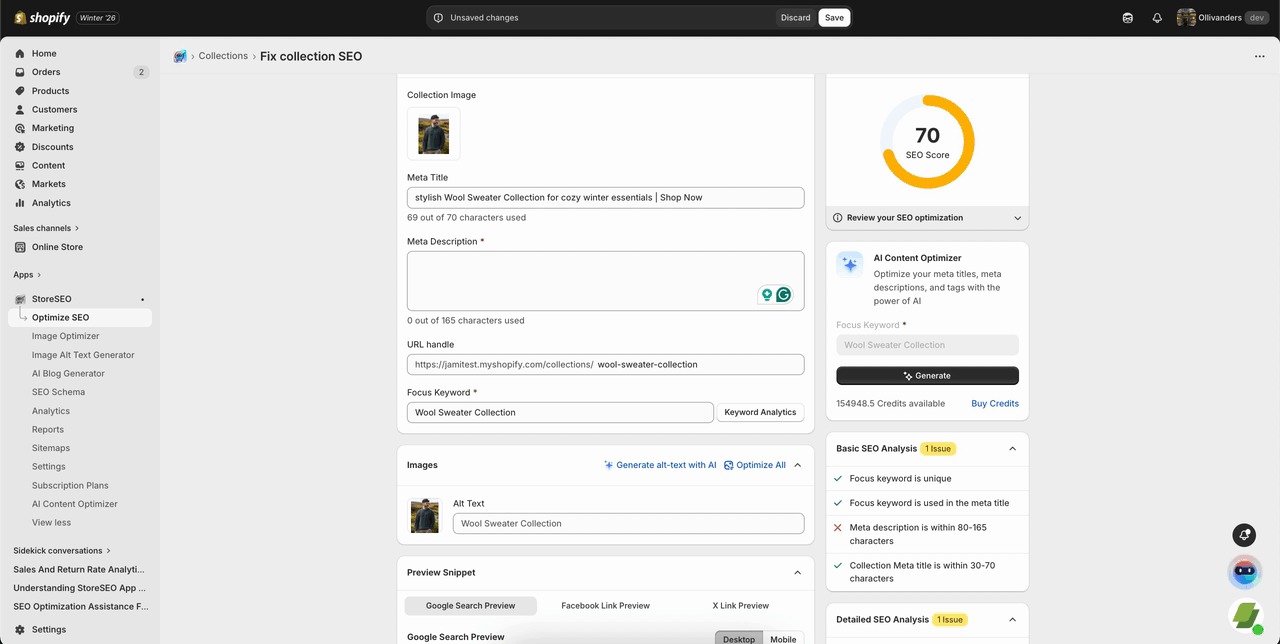
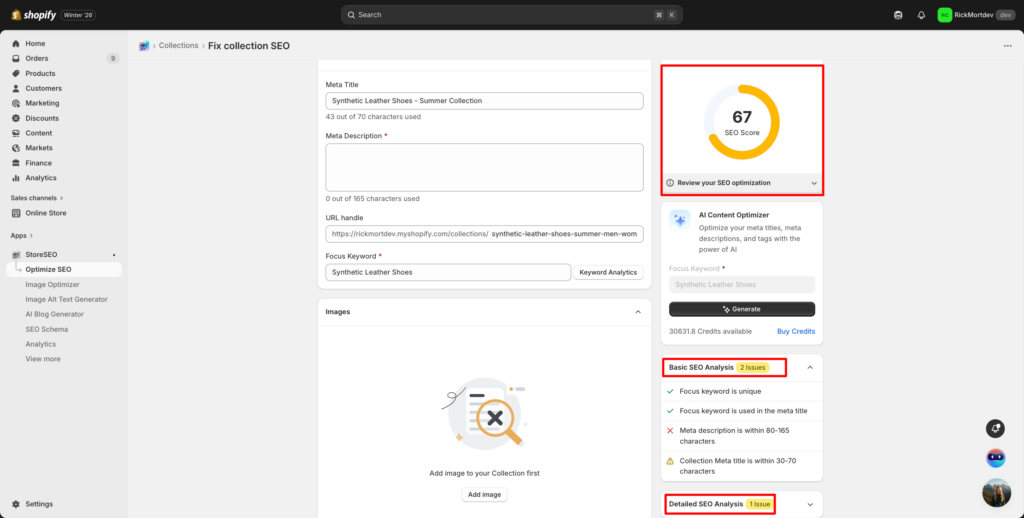
Nu is het tijd om de Shopify-collectiepagina SEO. Zoals u in de onderstaande afbeelding kunt zien, worden de SEO-details van uw geselecteerde collectie weergegeven door StoreSEO. Vanuit het rechterpaneel vindt u ook Basis SEO-analyse En Gedetailleerde SEO-analyse om de belangrijkste factoren te vinden die moeten worden aangepakt om de SEO-score te verbeteren.
Basis SEO-analyse
Laten we beginnen met Basis SEO-analyse. Hier moeten we verschillende criteria garanderen, zoals het gebruiken van een uniek focus-trefwoord, het plaatsen ervan in de metatitel en het voldoen aan een paar andere vereisten. We laten je nu zien hoe je dit één voor één doet.
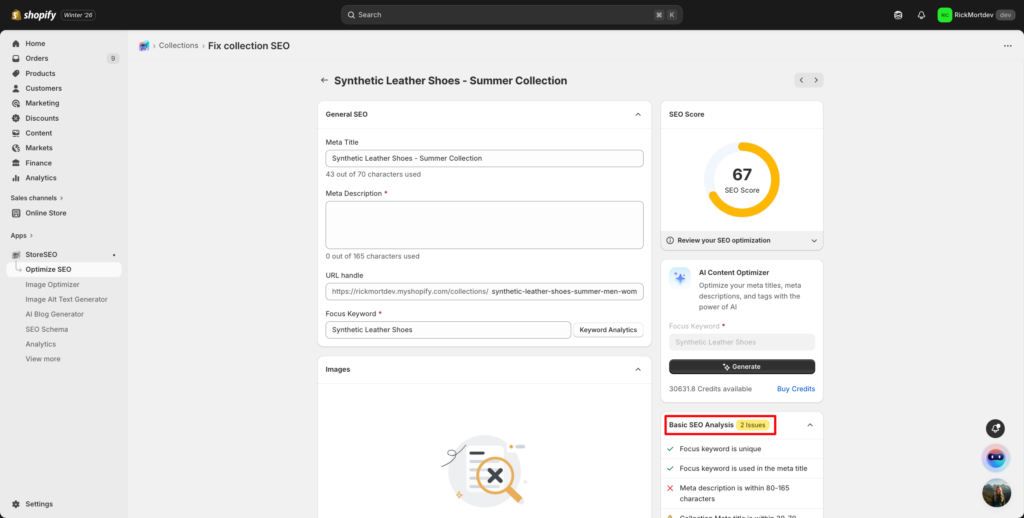
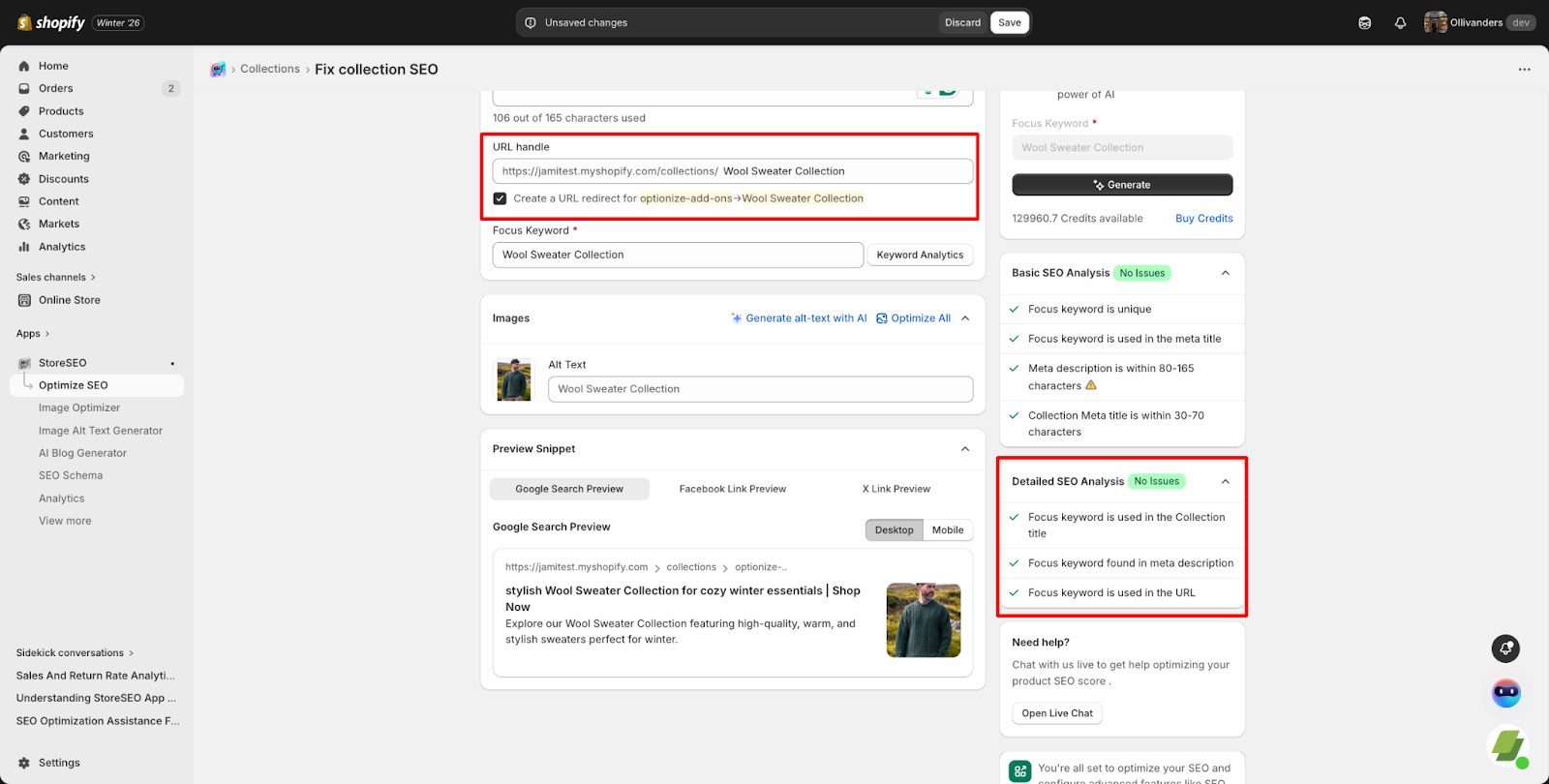
Nadat je de basisstappen van de SEO-analyse hebt voltooid, ga je verder met de gedetailleerde SEO-analyse.
Gedetailleerde SEO-analyse
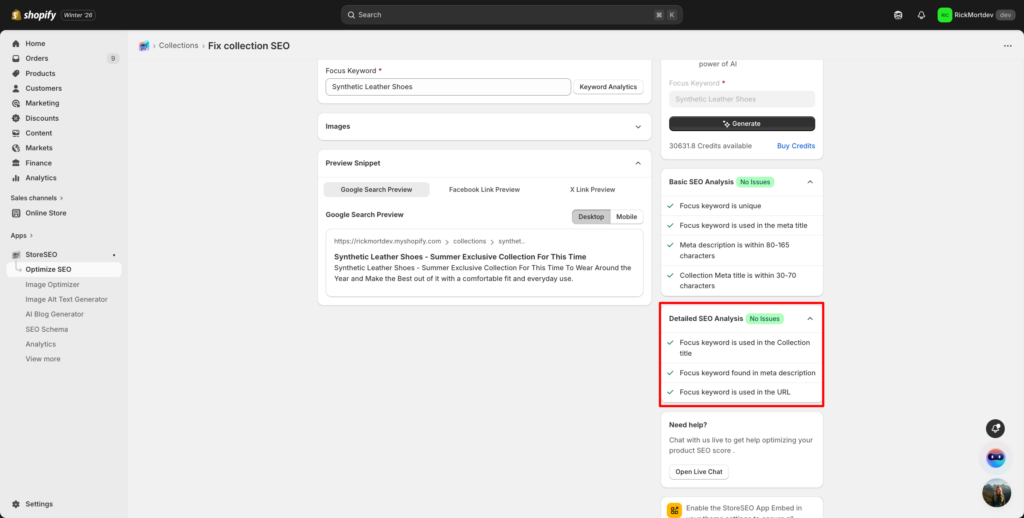
We gaan nu verder met de Gedetailleerde SEO-analyse. Hiervoor moeten we ervoor zorgen dat het focuszoekwoord in de titel van de collectie, de meta-omschrijving en de URL wordt opgenomen. We laten u zien hoe u dit allemaal kunt doen.
Voor een uitgebreide handleiding met screenshots en geavanceerde tips over zoekwoordonderzoek en AI-gestuurde contentoptimalisatie: Lees de volledige StoreSEO-documentatie.
Ook, Neem gerust contact met ons op. toegewijd ondersteuningsteamvoor elk type vraag.
Geavanceerde strategieën voor collectiepagina's voor 2026
Als je de basis eenmaal onder de knie hebt, maken deze geavanceerde tactieken het verschil tussen goede en geweldige winkels.
| 🧭 Strategiegebied | 💡 Tactiek | 🧱 Implementatiedetails | 🚀 SEO-voordeel | 🧰 Ondersteund door StoreSEO-functies |
| 🎯 Creëer collectievarianten die gericht zijn op de intentie van de gebruiker | Speel in op verschillende zoekintenties met specifieke collecties. | – Maak meerdere collecties aan op basis van de intentie van de gebruiker in plaats van één generieke versie. – Voorbeelden: – “Hardloopschoenen voor heren” → genderspecifiek. – “Lichtgewicht hardloopschoenen” → specifiek voor een bepaald kenmerk. – “Waterdichte trailrunningschoenen” → specifiek voor een bepaald gebruik. – “Beste hardloopschoenen voor beginners” → specifiek voor een bepaalde doelgroep. – Pas de beschrijvingen en metadata voor elke variant aan. | – Verhoogt de dekking van zoekwoorden voor meerdere zoekintenties in de zoekresultaten. – Bereikt niche- en longtail-zoeksegmenten. – Verbetert de conversieratio door nauwkeurig aan te sluiten op de intentie van de gebruiker. | ✅ Geautomatiseerde controle op duplicaten. ✅ Hulpmiddelen voor zoekwoordvariaties. ✅ Unieke SEO-metadata-sjablonen. |
| 🏗️ Implementeer slimme collectiehiërarchieën | Bouw een duidelijke, samenhangende categoriehiërarchie op. | – Organiseer collecties op verschillende niveaus: - Hoogste niveau: Breed (Schoenen, Kleding, Accessoires). - Middelste niveau: Specifiek (Hardloopschoenen, Casual schoenen, Nette schoenen). - Onderste niveau: Niche (Trailrunningschoenen, Marathonschoenen). - Gebruik interne links en breadcrumbs om de structuur weer te geven. | - Versterkt interne links en hiërarchische signalen. - Helpt zoekmachines thematische verbanden te begrijpen. - Verdeelt PageRank efficiënt. | ✅ Ingebouwde ondersteuning voor breadcrumb-schema's. ✅ Optimalisatie van de URL-structuur. ✅ Slimme koppeling tussen ouder- en subcollecties. |
| 📅 Profiteer van seizoensgebonden en trending collecties | Maak tijdelijke of trendgebaseerde collecties aan. | – Voeg tijdelijke collecties toe voor: - “Winterhardloopkleding 2026” - “Duurzame sportkleding” - “Essentiële marathontrainingsartikelen” - “Nieuwe artikelen” / “Limited Editions” - Optimaliseer content snel via bulkbewerking. - Archiveer of verwijs door na het seizoen. | – Trekt tijdgevoelig verkeer aan met een hoge intentie. – Houdt content actueel en zoekmachines betrokken. – Sluit aan bij het koopgedrag tijdens specifieke evenementen. | ✅ Tools voor het批量 bewerken van SEO-gegevens. ✅ Beheer van archieven/redirects. ✅ Seizoensgebonden zoekwoordtracking. |
| 🗣️ Optimaliseer voor spraakgestuurd zoeken en conversatiegestuurd zoeken | Pas collecties aan voor zoekopdrachten in natuurlijke taal en lokale spraak. | – Gebruik longtail-zoekwoorden die lijken op gesproken vragen. – Voeg veelgestelde vragen toe met antwoorden op vragen als "beste", "bij mij in de buurt" en "hoe doe ik dat?". – Schrijf op een natuurlijke manier in beschrijvingen. – Voeg locatie-aanduidingen toe waar relevant. | – Verbetert de zichtbaarheid in spraak- en mobiele zoekopdrachten. – Richt zich op uitgelichte fragmenten en conversatiegerichte resultaten. – Verhoogt de relevantie voor lokale SEO. | ✅ Trefwoordanalyse voor spraakgestuurde zoekopdrachten. ✅ Integratie met FAQ-schema's. ✅ Lokale en geografische targetingopties. |
| 🧩 Bouw collectiegerichte contenthubs | Integreer blogs en handleidingen die linken naar collecties. | – Maak thematische blogposts met interne links: - “De ultieme gids voor het kiezen van hardloopschoenen” → linkt naar meerdere schoenencollecties. - “10 onmisbare kledingstukken” → linkt naar kleding. - “Hoe stel je een capsulegarderobe samen?” → linkt naar verschillende gerelateerde categorieën. - Gebruik contextuele ankertekst en onderwerpclusters. | – Bouwt thematische autoriteit en EEAT-signalen op. – Verbetert de diepte van interne links. – Verhoogt de verblijftijd en de sessiewaarde. | ✅ Analyse van de koppeling tussen blogs en collecties. ✅ Inzichten in onderwerpclustering. ✅ AI-gebaseerde suggesties voor interne links. |
Succes meten: KPI's die er echt toe doen
Optimalisatie zonder meting is slechts gissen. Houd deze statistieken bij om het rendement op uw investering (ROI) aan te tonen:
| 📊 Metrische categorie | 🔎 Belangrijkste statistieken | 📘 Hoe te meten/interpreteren | 🚀 Waarom het belangrijk is | 🧰 Gevolgd door StoreSEO / Ondersteunende tools |
| 🌱 Belangrijkste SEO-statistieken | Organische verkeersgroei | – Monitor maandelijks het aantal sessies op de collectiepagina. – Houd de verhouding tussen nieuwe en terugkerende bezoekers bij. – Meet bezoeken afkomstig van doelgerichte zoekwoorden in analysetools. | – Geeft een indicatie van de verkeerskwaliteit en vindbaarheid. – Helpt bepalen of nieuwe content nieuwe gebruikers aantrekt of bestaande gebruikers behoudt. | ✅ StoreSEO Analytics Dashboard.✅ Google Analytics / GA4.✅ Shopify marketingrapporten. |
| Trefwoordranglijsten | – Volg SERP-posities voor kernzoekwoorden. – Monitor rankingwijzigingen voor long-tail zoekwoordvarianten. – Identificeer winsten of verliezen in featured snippets. | – Meet de voortgang van de zichtbaarheid in alle fasen van de marketingtrechter. – Zorgt ervoor dat u waardevolle zoekruimte in handen hebt. | ✅ StoreSEO Keyword Tracker.✅ Google Search Console.✅ Integraties met Ahrefs / SEMrush. | |
| Zoekconsole-gegevens | – Bekijk het totale aantal vertoningen, klikken en CTR in Search Console. – Analyseer de gemiddelde positieverschuivingen in de loop van de tijd. – Evalueer de CTR-trends voor de best presterende collectiepagina's. | – Verbindt belangrijke SEO-inspanningen direct met gebruikersgedrag in zoekresultaten. – Laat zien wat werkt in de zoekresultatenpagina's (SERP's). | ✅ De geïntegreerde Search Console-weergave van StoreSEO. ✅ Directe toegang tot Google Search Console. | |
| 🤖 Statistieken voor zichtbaarheid in AI-zoekresultaten | Citaten en referenties van AI | – Volg merk-/productvermeldingen in ChatGPT, Perplexity of Google AI Overviews (handmatig of met monitoringtools). – Meet de frequentie van citaties of referenties door LLM's. | – Weerspiegelt autoriteit en inclusiviteit in generatieve zoekervaringen. – Nieuwe grens van zichtbaarheid naarmate AI-zoekopdrachten zich uitbreiden. | ⚙️ Handmatige tracking / zichtbaarheidstools van derden met AI.📄 StoreSEO-rapportage (aangepaste AI-sectie). |
| LLMs.txt Prestaties | – Monitor de crawlfrequentie van AI-bots via serverlogs. – Controleer het verwijzingsverkeer van door AI gegenereerde bronnen. – Volg de toename van het zoekvolume naar merknamen na opname in de LLM-data. | – Geeft aan hoe goed uw site wordt geïndexeerd door LLM's en AI-engines. – Correlateert AI-crawlactiviteit met merkbekendheid. | ⚙️ Serverlogbewaking. ✅ StoreSEO AI-indexeringsinzichten. 📊 Google Trends voor merkgerelateerde zoekopdrachten. | |
| Verlovingssignalen | – Meet de tijd die bezoekers op de pagina doorbrengen (streef naar minimaal 2 minuten). – Houd het bouncepercentage onder de 40%. – Houd het aantal pagina's per sessie bij (streef naar minimaal 3). | – Hoge betrokkenheid duidt op kwaliteit en relevantie, zowel voor gebruikers als voor AI-systemen. – Draagt bij aan hogere rankings en een grotere kans op citaties. | ✅ Gedragsanalyse voor StoreSEO. ✅ Betrokkenheidsrapporten van Google Analytics. | |
| 💰 Bedrijfsimpactstatistieken | Omzettoewijzing | – Omzet toewijzen aan collectiepagina's. – Conversiepercentage per collectietype bijhouden. – Gemiddelde orderwaarde (AOV) per productcollectie monitoren. | – Koppelt SEO-prestaties direct aan bedrijfsresultaten. – Identificeert welke collecties het hoogste rendement opleveren. | ✅ Shopify-verkoopanalyses. ✅ StoreSEO-rapporten voor omzetregistratie. |
| Efficiëntiewinsten | – Meet de tijdsbesparing door automatisering versus handmatige SEO. – Bereken de kosten per acquisitie (CPA) van organisch verkeer. – Evalueer de ROI van StoreSEO ten opzichte van betaalde alternatieven. | – Kwantificeert operationele verbeteringen en platform-ROI. – Nuttig voor kwartaalbeoordelingen van de prestaties. | ✅ Logboeken voor StoreSEO-optimalisatie. ✅ Interne ROI-rapporten. |
Streef naar een toename van 30-50% in organisch verkeer naar de collectiepagina binnen 60-90 dagen na optimalisatie. Dat is de maatstaf voor succes.
Veelvoorkomende SEO-fouten op collectiepagina's die u moet vermijden
Zelfs met StoreSEO kun je je resultaten saboteren. Vermijd deze valkuilen:
Fout 1: Dubbele inhoud in meerdere collecties
Het gebruik van identieke beschrijvingen voor vergelijkbare collecties is funest voor je ranking. Elke collectie heeft 100% unieke content nodig, zelfs als producten elkaar overlappen. De AI-contentoptimalisator van StoreSEO helpt je snel unieke beschrijvingen te genereren.
Fout 2: Het negeren van de mobiele ervaring
Meer dan 751.000.300.000 shoppers browsen op hun mobiel. Als uw collectiepagina niet is geoptimaliseerd voor mobiel, loopt u omzet mis. Test:
- Aanraakvriendelijke knoppen en filters
- Leesbare tekst zonder in te zoomen
- Snelle laadtijden (minder dan 3 seconden)
- Eenvoudige navigatie en sortering
De mobiele optimalisatiecontroles van StoreSEO sporen deze problemen op.
Fout 3: Pagina's met weinig inhoud
Een collectie met alleen een titel en een productoverzicht wordt niet goed weergegeven in de zoekresultaten. Minimale vereisten:
- Meer dan 200 woorden aan unieke beschrijvende inhoud
- Duidelijke waardepropositie
- Nuttige aankoopinformatie
- Gerelateerde product suggesties
Voeg inhoud onder het productraster toe om te voorkomen dat producten naar beneden worden gedrukt.
Fout 4: Slechte interne koppelingen
Collecties bestaan op zichzelf als je ze niet correct koppelt. Aanbevolen werkwijze:
- Voeg in de beschrijvingen links naar gerelateerde collecties toe.
- Gebruik beschrijvende ankertekst.
- Maak suggesties voor je collectie met de tekst "Misschien vind je dit ook leuk".
- Bouw collectienavigatie in de header/footer.
Interne links verspreiden autoriteit en helpen zoekmachines relaties te begrijpen.
Fout 5: Nieuwe content vergeten
Verouderde collecties scoren slecht. Werk ze regelmatig bij:
- Het productaanbod wordt maandelijks vernieuwd.
- Werk de beschrijvingen bij zodat ze relevant zijn voor het seizoen.
- Voeg nieuwe klantrecensies toe
- Metatags aanpassen voor trending zoekwoorden
Met de SEO-scoretracking van StoreSEO kunt u collecties identificeren die een update nodig hebben.
De toekomst van SEO voor collectiepagina's: wat staat ons te wachten?
Naarmate we verder 2026 ingaan en verder, zal de optimalisatie van collectiepagina's zich in drie belangrijke richtingen ontwikkelen:
AI-gestuurde optimalisatie wordt de standaard.
Traditionele SEO zal niet verdwijnen, maar AI-optimalisatie wordt een standaardvereiste:
- De implementatie van LLMs.txt zal universeel zijn.
- Schema-opmaak wordt uitgebreid met AI-specifieke metadata.
- De inhoud wordt standaard zo gestructureerd dat deze door AI kan worden geanalyseerd.
- Er wordt verwacht dat de opmaak geschikt is voor citatie.
StoreSEO loopt hier al op vooruit met ingebouwde AI-optimalisatiefuncties.
Personalisatie op grote schaal
Collectiepagina's worden dynamisch aangepast op basis van:
- Gebruikersgedrag en browsegeschiedenis
- Geografische locatie en lokale trends
- Seizoensgebonden en populaire producten
- Individuele voorkeuren en eerdere aankopen
SEO-optimalisatie moet rekening houden met deze dynamische elementen, terwijl tegelijkertijd een sterke basis voor optimalisatie behouden blijft.
Integratie van video- en visuele zoekfuncties
Collectiepagina's zullen steeds vaker de volgende informatie bevatten:
- Productdemonstratievideo's
- 360-graden productweergaven
- Augmented reality-pasfuncties
- Visuele zoekmogelijkheden
Het optimaliseren van afbeeldingen en video's voor zoekmachines wordt net zo belangrijk als tekstoptimalisatie.
StoreSEO blijft meegroeien met deze trends, zodat uw Shopify-winkel concurrerend blijft.
Conclusie: Actieplan voor uw verzamelingspagina
Collectiepagina's zijn uw meest onderbenutte SEO-troef. Met de AI-gestuurde optimalisatietools van StoreSEO kunt u ze transformeren van onopvallende elementen tot krachtige bronnen die verkeer genereren en conversies verhogen.
Jouw actieplan voor de komende 30 dagen:
Week 1: Audit en prioriteren
- Installeer StoreSEO in je Shopify-winkel.
- Voer een SEO-analyse uit op alle collectiepagina's.
- Identificeer de 5 meest populaire collecties op basis van verkeerspotentieel.
- Stel basisstatistieken in Google Analytics in.
Week 2: Optimaliseer prioritaire collecties
- Implementeer focuszoekwoorden en metatags.
- Optimaliseer alle afbeeldingen in de collectie.
- Voeg schema-opmaak toe en schakel LLMs.txt in.
- Verbeter de inhoud tot 200 woorden of meer.
Week 3: Uitbreiden en verfijnen
- Optimaliseer nog 10 collectiepagina's
- Maak nieuwe, op intentie gebaseerde collecties aan.
- Bouw een interne verbindingsstructuur op.
- Voeg FAQ-secties toe aan topcollecties.
Week 4: Meten en herhalen
- Verbeteringen in de beoordeling
- Analyseer veranderingen in verkeer en conversies
- Identificeer onderpresterende collecties
- Plan de volgende optimalisatiecyclus
De winkels die in 2026 succesvol zullen zijn, zijn niet de winkels met de meeste producten, maar de winkels met de best geoptimaliseerde productpagina's. StoreSEO biedt u de tools om u daarbij aan te sluiten.
En voor meer spannende updates en nieuws, abonneer je op onze blogs. Succes!
Belangrijkste punten
- Collectiepagina's richten zich op zoekwoorden met een hoge intentie en een groter zoekvolume dan individuele productpagina's, waardoor ze cruciaal zijn voor de groei van organisch verkeer.
- StoreSEO automatiseert de technische complexiteit van SEO voor collectiepagina's, van metatags en schema-markup tot de implementatie van LLMs.txt.
- AI-zoekmachineoptimalisatie (AEO en GEO) is niet langer optioneel: collectiepagina's moeten klaar zijn voor vermelding in ChatGPT, Perplexity en Google AI Overviews.
- Beeldoptimalisatie heeft een directe impact op de Core Web Vitals en conversieratio's; correct gecomprimeerde afbeeldingen verbeteren de paginasnelheid met 40-50%.
- Het creëren van meerdere op intentie gerichte collectievarianten (geslachtsspecifiek, functiespecifiek, gebruiksspecifiek) genereert meer zoekverkeer dan één enkele generieke collectie.
- Het meten van succes vereist het bijhouden van zowel traditionele SEO-statistieken (rankings, verkeer) als AI-zichtbaarheidsstatistieken (citaties, AI-verwijzingen).
- Regelmatige updates en nieuwe content geven zoekmachines het signaal dat de collectie relevant is, waardoor de ranking van de pagina's niet stagneert.