
Vamos ser honestos uns com os outros por um segundo.
Se alguém da sua equipe entrasse no escritório hoje e dissesse: “Olá, perguntei ao ChatGPT quais eram os melhores fones de ouvido sem fio abaixo de $100 e ele recomendou três marcas, mas nenhuma delas era nossa.,Você saberia o que fazer a respeito?
Muitos lojistas da Shopify não fariam isso. E é totalmente compreensível. Passamos a última década aprendendo as regras de SEO do Google. Otimizamos as tags de título, buscamos backlinks, nos preocupamos obsessivamente com a velocidade de carregamento das páginas e escrevemos descrições de produtos como se os robôs dos mecanismos de busca fossem nosso público principal. Funcionou. Na maioria das vezes.
Mas a estratégia mudou. A revolução das compras com IA está transformando a maneira como os clientes pesquisam produtos.
Primeiro silenciosamente, e agora tudo de uma vez.
Os compradores estão cada vez mais ignorando completamente os mecanismos de busca. Eles estão abrindo o ChatGPT, o Perplexity, o Modo IA do Google ou o Gemini e fazendo perguntas como se fossem pessoas que perguntam a um amigo experiente. E esses sistemas de IA estão fornecendo respostas confiantes, personalizadas e conversacionais, incluindo recomendações de produtos.
Eis a verdade incômoda: se sua loja Shopify não estiver estruturada, otimizada e compreensível para esses sistemas de IA, você estará invisível no canal de descoberta que mais cresce no comércio eletrônico atualmente.
Isso não é motivo para pânico. É uma oportunidade. Uma oportunidade enorme.
Neste guia, vamos explicar exatamente o que está acontecendo, por que isso é importante especificamente para a sua loja e o que você pode fazer a respeito a partir de hoje. Sem enrolação. Sem jargões complicados. Apenas orientações claras e estratégicas de uma equipe que vive e respira SEO para Shopify.
| Nota rápida da equipe StoreSEOTemos acompanhado de perto lojistas da Shopify de todos os portes, desde empreendedores individuais que administram um negócio paralelo até marcas com mais de 10.000 SKUs. Os padrões que compartilhamos neste blog vêm de trabalhos reais de otimização, dados reais e conversas reais com proprietários de lojas que estão passando por essa transição. Não estamos supondo. Estamos vendo tudo acontecer ao vivo. |
1. O comportamento de busca realmente mudou: aqui está a prova da revolução das compras com IA.
Como os consumidores costumavam encontrar produtos (e por que isso está mudando rapidamente)
Até pouco tempo atrás, a jornada do comprador era bastante previsível. Um consumidor ia ao Google, digitava algo como "melhor tapete de ioga para iniciantes", examinava os dez links azuis (talvez conferindo um ou dois snippets em destaque) e clicava para acessar um site que lhe chamasse a atenção.
Essa jornada ainda existe. Mas está sendo interrompida em ritmo acelerado por três mudanças sísmicas:
- As buscas sem cliques estão aumentando. Uma porcentagem crescente de buscas agora termina na própria página de resultados, sem que ninguém clique para acessar um site. Snippets em destaque com inteligência artificial, resumos com IA e painéis de conhecimento estão respondendo às perguntas diretamente. Para consultas informativas, isso já acontece há algum tempo. Agora, essa tendência também está se estendendo a consultas comerciais e transacionais.
- A IA conversacional está se tornando a primeira opção. O ChatGPT ultrapassou a marca de 100 milhões de usuários mais rápido do que qualquer outro aplicativo voltado para o consumidor na história. A complexidade está crescendo exponencialmente. O próprio Modo IA do Google está remodelando a aparência da sua página de resultados. Quando alguém precisa tomar uma decisão de compra, está cada vez mais recorrendo a essas ferramentas em vez de fazer buscas tradicionais.
- Os sistemas de IA estão fazendo recomendações, não apenas recuperando links. Essa é a distinção crucial. Quando você pesquisa no Google, recebe uma lista de opções e decide. Quando você pergunta ao ChatGPT, ele avalia, sintetiza e recomenda. É como ter um assistente de compras inteligente e, para uma grande parcela dos consumidores, esse assistente está se tornando mais confiável do que o próprio Google.
Para os lojistas da Shopify, isso cria um novo desafio: serem encontrados, avaliados e citados por sistemas de IA que não apenas rastreiam sua página, mas a julgam.
| Análise do setorA Gartner previu que, até 2026, o volume de buscas em mecanismos de pesquisa tradicionais cairá 251%, à medida que chatbots com IA e agentes virtuais assumirem mais consultas de pesquisa. Já estamos vendo os primeiros sinais disso nos dados do Search Console em diversos segmentos da Shopify. Essa mudança deixou de ser teórica. |
2. O que são AEO e GEO e por que um lojista da Shopify deve se importar com a revolução da IA nas compras?
Otimização de mecanismos de resposta (AEO): como ser citado por respostas de IA
A Otimização para Mecanismos de Resposta (AEO, na sigla em inglês) é a prática de estruturar seu conteúdo para que mecanismos de resposta baseados em inteligência artificial possam extraí-lo, compreendê-lo e citá-lo ao responder às perguntas dos usuários.
Pense da seguinte forma: o SEO tradicional leva você para a página de resultados. O AEO leva você até a resposta em si.
Quando um usuário pergunta ao ChatGPT: “Qual a melhor garrafa de água ecológica para caminhadas?” A IA utiliza um vasto conjunto de conteúdo indexado, dados de produtos e sinais de marca para gerar suas respostas. O AEO visa garantir que as informações da sua loja, as especificações dos seus produtos, o posicionamento da sua marca, as avaliações dos seus clientes e as suas perguntas frequentes estejam estruturadas de forma que a IA possa de fato analisar, confiar e citar.
Otimização Generativa de Mecanismos (GEO): Vencendo na Era da Busca Gerada por IA
A Otimização Gerativa para Mecanismos de Busca (GEO) vai além. Enquanto a Otimização Gerativa para Mecanismos de Busca (AEO) se concentra em ser citado em respostas de IA, a Otimização Generativa para Mecanismos de Busca (GEO) é a estratégia holística de otimizar sua loja para que sistemas de IA generativa, como o Modo IA do Google, as páginas de respostas da Perplexity e os assistentes de compras de IA, posicionem sua marca de forma favorável no conteúdo gerado.
A geolocalização não se resume a uma única resposta. Trata-se de construir o tipo de presença digital estruturada, semântica e confiável da qual os sistemas de IA se baseiam consistentemente ao sintetizar orientações de compra para os consumidores.
A diferença crucial entre SEO tradicional, AEO e GEO
| Dimensão | SEO tradicional | AEO / GEO |
| Objetivo principal | Sistemas de IA estão sintetizando respostas | Seja citado em respostas geradas por IA |
| Público | Resultados de pesquisa de navegação humana | Sistemas de IA sintetizando respostas |
| Sinais-chave | Palavras-chave, backlinks, velocidade da página | Esquema, EEAT, estrutura semântica |
| Formato do conteúdo | Páginas web otimizadas | Estruturado, rico em entidades, conversacional |
| Método de Descoberta | Taxa de cliques na página de resultados de pesquisa (SERP) | Recomendação ou citação direta por IA |
| Shopify Priority | Páginas de produtos, meta tags | Marcação de esquema, LLMs.txt, Perguntas frequentes |
Para uma análise mais aprofundada de como executar ambas as estratégias em paralelo, confira nosso guia dedicado sobre Otimizando lojas Shopify para busca por IA com estratégias AEO e GEO..
3. Como os sistemas de IA realmente avaliam sua loja Shopify
Não se trata apenas de conteúdo, mas sim de sinais.
Quando uma IA generativa recebe uma consulta sobre uma categoria de produto, ela não se limita a pesquisar algo no Google e retornar um link. Ela sintetiza informações a partir de uma complexa rede de sinais, e sua loja Shopify aparece nessa rede ou não.
Eis o que os sistemas de IA realmente analisam ao avaliar se sua loja merece ser mencionada:
Dados estruturados e marcação de esquema
A marcação de esquema é um código legível por máquina que informa à IA e aos mecanismos de busca exatamente o que seu conteúdo significa. Para o comércio eletrônico, isso significa esquema de produto (preço, disponibilidade, avaliações), esquema de perguntas frequentes (FAQ), esquema de avaliações (Review) e esquema de lista de trilha de navegação (Breadcrumb).
Quando um cliente pergunta a uma IA "Este produto está em estoque e qual o preço?", a IA está utilizando sinais de dados estruturados. Se sua loja possui um esquema completo e preciso, ela pode responder com confiança. Caso contrário, ela recorrerá a concorrentes maiores e mais estruturados, como a Amazon.
EEAT: Experiência, Especialização, Autoridade, Confiabilidade
O Google codificou o EEAT como parte de suas diretrizes de avaliação de qualidade, mas sua aplicação vai muito além do Google. Sistemas de IA em geral usam sinais de confiança para decidir de quais fontes extrair informações. Para lojas Shopify, os sinais do EEAT incluem:
- Páginas de produtos que demonstrem conhecimento genuíno do produto (e não apenas descrições copiadas do fabricante)
- Avaliações de clientes e prova social incorporadas ao seu conteúdo.
- Sinais claros de identidade de marca: Páginas "Sobre nós", informações da equipe, detalhes de contato
- Dados NAP (Nome, Endereço, Telefone) consistentes para empresas locais.
- Backlinks e menções de fontes reconhecidas e de autoridade no seu nicho.
Riqueza Semântica e Autoridade Tópica
Os sistemas de IA não se limitam a ler páginas individuais. Eles tentam compreender sua loja como uma entidade, o que ela representa, em que se especializa e o que domina. Lojas que construíram autoridade em seu nicho (por meio de conteúdo consistente, de alta qualidade e semanticamente rico) têm muito mais probabilidade de serem citadas por sistemas de IA do que lojas com páginas superficiais e repletas de palavras-chave.
Isso significa que seu blog, as descrições dos seus produtos, o texto da página da sua coleção e o conteúdo das suas perguntas frequentes precisam usar uma linguagem coerente e especializada sobre a sua categoria de produto.
LLMs.txt: Seu Guia da Loja Legível por IA
Este é mais recente e merece uma explicação detalhada. O arquivo LLMs.txt é um padrão emergente, semelhante à forma como o robots.txt orienta os rastreadores tradicionais, especificamente direcionando grandes modelos de linguagem sobre como rastrear e compreender sua loja Shopify.
É como uma carta de apresentação para sistemas de IA. Ela informa: "Aqui está quem somos, aqui estão nossos produtos e coleções mais importantes e aqui está o que queremos que você saiba sobre nós". Sem ela, os rastreadores de IA basicamente navegam pela sua loja às cegas.
StoreSEO's Gerador de LLMs.txt Isso automatiza completamente esse processo para lojistas da Shopify. Você pode gerar um arquivo LLMs.txt abrangente que inclui seus produtos, coleções, páginas e artigos do blog, e agendá-lo para ser atualizado automaticamente, mantendo-o sempre atualizado conforme seu estoque muda.
| Dica profissional da StoreSEO: Considere seu arquivo LLMs.txt como o mapa que você entrega a cada rastreador de IA que visita sua loja. Sem ele, eles ficam livres para interpretar sua loja como quiserem, o que geralmente resulta em representações incompletas ou imprecisas nas respostas geradas pela IA. Com um arquivo LLMs.txt bem elaborado, você controla a narrativa. |
4. O verdadeiro custo de ignorar a visibilidade da IA nas buscas
O que está em jogo para os lojistas da Shopify?
Nós entendemos. Você já está lidando com estoque, atendimento ao cliente, anúncios pagos, sequências de e-mail e uma dúzia de outras prioridades. Adicionar "otimizar para busca por IA" à lista pode parecer mais uma coisa que você não consegue priorizar.
Mas eis a questão: o custo de não fazer isso está aumentando silenciosamente a cada dia.
Você está perdendo terreno para concorrentes que já estão fazendo isso.
Alguns dos seus concorrentes provavelmente não são as grandes empresas tradicionais, mas as marcas inovadoras e focadas em crescimento no seu setor já estão pensando em AEO e GEO. Elas estão implementando marcação de esquema. Estão criando conteúdo de perguntas frequentes que responde diretamente às dúvidas que os compradores têm com os chatbots de IA. Estão gerando arquivos LLMs.txt. Estão construindo o tipo de conteúdo estruturado e confiável que os sistemas de IA adoram citar.
Cada semana que você espera é uma semana em que eles se distanciam ainda mais nas recomendações geradas por IA.
As recomendações de IA carregam um enorme peso de confiança.
Quando alguém pesquisa no Google e clica no seu link, essa pessoa faz uma escolha consciente com base no título, no snippet e em qualquer outro elemento que tenha chamado a atenção dela. Quando o ChatGPT ou o Perplexity recomendam o seu produto, acontece algo diferente: a IA efetivamente dá um aval a você.
Essa aprovação implícita confere grande credibilidade aos compradores. As taxas de conversão do tráfego gerado por IA tendem a ser maiores do que as do tráfego orgânico genérico, porque o comprador chega pré-qualificado e pré-informado. Ser citado por sistemas de IA não se resume apenas ao volume de tráfego, mas também à qualidade do tráfego.
A ameaça do modelo de zero cliques é real.
Eis um cenário que está se repetindo em vários nichos do Shopify atualmente. Um comprador pesquisa no Google. O Modo de IA do Google gera uma resposta de compra diretamente na página de resultados, com comparações de produtos, faixas de preço e, às vezes, opções de compra direta. O comprador obtém o que precisa sem precisar clicar em nenhum link para acessar uma loja.
Se seus produtos fazem parte da resposta gerada por IA, você ainda está ganhando, influenciando a decisão do comprador mesmo sem um clique. Mas se você não aparece na resposta, foi completamente ignorado. O objetivo tradicional de SEO de "estar na primeira página" não protege totalmente contra isso.
5. A estrutura StoreSEO para dominar as buscas com IA
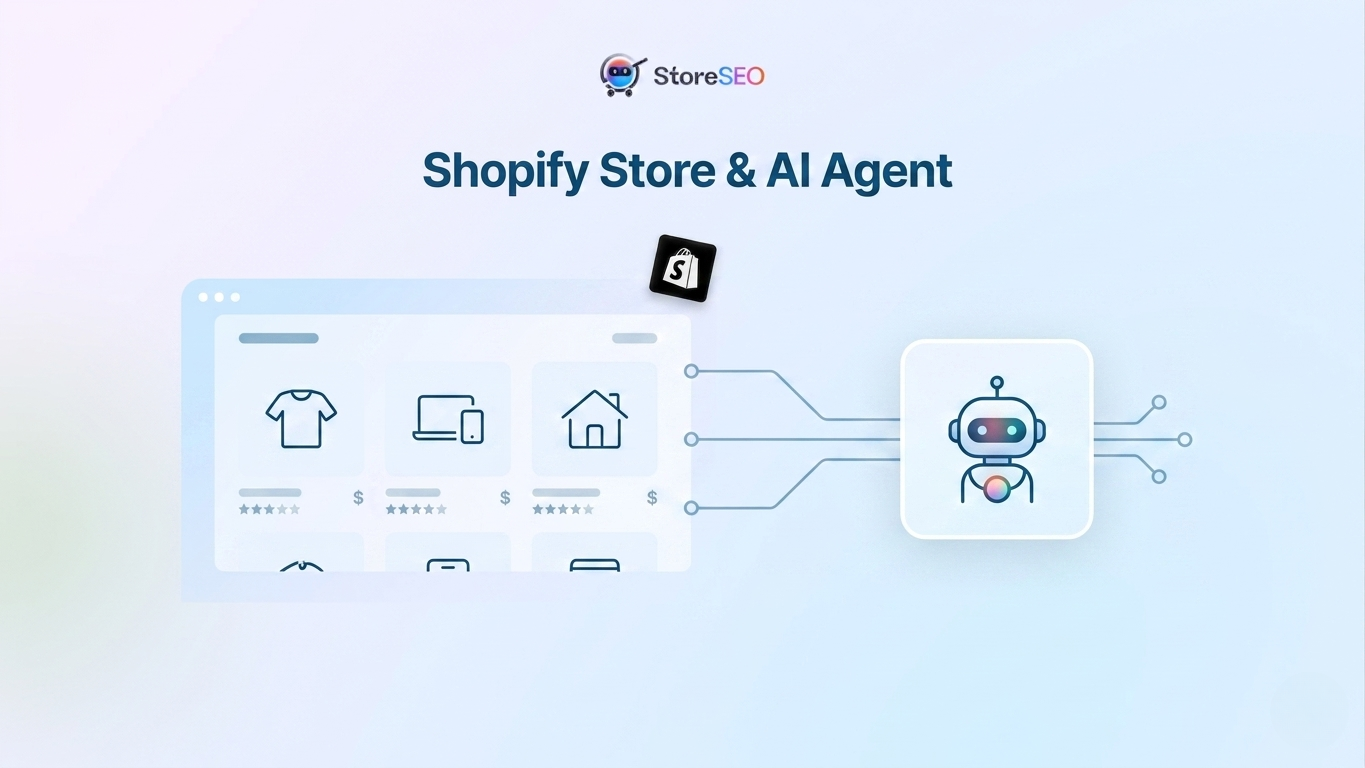
Muito bem, vamos ao que interessa. Aqui está a estrutura que recomendamos para lojistas da Shopify que desejam ter sucesso na era da busca por IA. Dividimos essa estrutura em quatro pilares estratégicos.
Pilar 1: Dados estruturados fornecem aos sistemas de IA algo com que trabalhar.
Esquema do Produto: A Base
Cada uma das suas páginas de produto deve ter um esquema de produto completo e preciso implementado no formato JSON-LD. Isso significa incluir:
- Nome e descrição do produto
- Preço e moeda
- Status de disponibilidade
- Informações sobre a marca
- Contagem agregada de avaliações e comentários
- Imagens de produtos com texto alternativo adequado
- Informações de SKU e identificador
Quando sistemas de IA como o AI Mode do Google geram recomendações de compras, eles se baseiam amplamente no esquema de produto para apresentar informações precisas sobre preços, disponibilidade e avaliações. Um esquema incompleto significa oportunidades perdidas.
O StoreSEO automatiza a geração do esquema JSON-LD para todo o seu catálogo de produtos, páginas de coleção e muito mais, o que significa que você não precisa escrever uma única linha de código para que tudo funcione corretamente. Veja como funciona. Recursos de marcação de esquema do StoreSEO como se parece na prática.
Esquema de FAQ: A Mina de Ouro das Perguntas e Respostas
Os compradores que consultam chatbots de IA sobre produtos estão, quase por definição, fazendo perguntas. O esquema de FAQ incorpora perguntas e respostas estruturadas diretamente em suas páginas, em um formato que os sistemas de IA podem extrair e usar literalmente em suas respostas geradas.
Uma loja que vende tênis de corrida pode ter um esquema de perguntas frequentes (FAQ) nas páginas dos produtos, respondendo a perguntas como:
- “Estes sapatos são adequados para pés largos?”
- “Para que tipo de superfície esses sapatos foram projetados?”
- “Como o tamanho se compara ao tamanho padrão dos EUA?”
- “Estes sapatos são adequados para pessoas com fascite plantar?”
Cada uma dessas respostas é uma citação potencial em uma resposta gerada por IA para um comprador que faça exatamente essas perguntas. Nosso blog sobre Por que a marcação de esquema de perguntas frequentes é importante para os resultados de AEO e GEO Explica isso em detalhes.
Esquema de negócio local: para comerciantes com presença física
Se você possui uma loja física ou opera em mercados geográficos específicos, o esquema de Negócios Locais é indispensável. Ele fornece os sinais de localização estruturados que os sistemas de IA e assistentes de voz utilizam ao responder a perguntas como "melhor loja de roupas sustentáveis perto de mim". Os recursos de SEO local do StoreSEO ajudam você a configurar isso em toda a sua presença online.
Pilar 2: Inteligência de Conteúdo Criar Conteúdo que os Sistemas de IA realmente queiram citar
A transição do excesso de palavras-chave para a riqueza semântica.
Se as descrições dos seus produtos ainda estão escritas naquele estilo robótico de "Compre nosso widget azul premium de alta qualidade, o melhor widget azul online", é hora de uma atualização significativa. Os sistemas de IA são treinados em linguagem natural. Eles entendem nuances, contexto e relações entre entidades. Eles conseguem distinguir quando o conteúdo é realmente informativo de quando é apenas ruído repleto de palavras-chave.
SEO semântico significa escrever conteúdo que:
- Responde de forma abrangente às dúvidas reais dos compradores.
- Utiliza entidades e conceitos relacionados de forma natural (uma descrição de produto para uma bota de caminhada que menciona tipos de trilha, condições climáticas e terreno sem parecer forçado).
- Demonstra conhecimento genuíno sobre a categoria de produtos.
- Utiliza padrões de linguagem natural e conversacional que refletem a forma como os compradores realmente pensam e falam.
Conteúdo do blog como seu motor AEO
Seu blog é um dos recursos mais poderosos e subutilizados para visibilidade em buscas de IA. Conteúdo de blog bem estruturado e com autoridade fornece aos sistemas de IA uma rica fonte de informações para responder às perguntas dos compradores.
A chave é escrever conteúdo para o blog que seja realmente pensado para responder às perguntas que os compradores fazem aos chatbots de IA. Pense nisso: se alguém perguntar ao ChatGPT "O que devo procurar ao comprar uma mesa de altura ajustável?", o ChatGPT sintetizará uma resposta a partir de conteúdos como as suas postagens de guia de compra no blog.
Nós criamos o StoreSEO's Gerador de Blogs com IA Exatamente para isso. Ela ajuda os lojistas da Shopify a criar posts de blog otimizados para SEO e prontos para AEO sem precisar ser redatores profissionais ou especialistas em SEO. A ferramenta gera conteúdo estruturado tanto para buscas tradicionais quanto para descoberta por IA, permitindo que você abranja os dois canais simultaneamente.
Agrupamento Temático: Domine seu Nicho na Mente da IA
Os sistemas de IA desenvolvem algo análogo a um "modelo mental" que define quais fontes são confiáveis em quais tópicos. Uma loja que possui dez artigos bem escritos e interconectados sobre equipamentos para cozinhar ao ar livre será percebida como mais confiável nesse assunto do que uma loja com uma única página de produto e nenhum conteúdo complementar.
Agrupamentos temáticos de conteúdos interligados que, juntos, abordam um assunto de forma abrangente são incrivelmente poderosos tanto para SEO tradicional quanto para a descoberta por IA. Nosso novo Gerador de Clusters de Palavras-chave por IA Foi desenvolvido para ajudar os lojistas da Shopify a criar esses clusters de forma eficiente, identificando os tópicos mais importantes em seu nicho e as lacunas de conteúdo que precisam ser preenchidas.
Pilar 3: Fundamentos Técnicos Torne sua loja rastreável por IA
LLMs.txt: Seu mapa do site de IA
Já mencionamos isso acima, mas merece destaque. O arquivo LLMs.txt está se tornando rapidamente um componente essencial de qualquer estratégia GEO séria. Trata-se de um arquivo Markdown estruturado que reside na raiz do seu domínio (por exemplo, sualoja.com/llms.txt) e informa aos rastreadores de IA exatamente sobre o que sua loja trata e onde encontrar seu conteúdo mais importante.
Um arquivo LLMs.txt bem elaborado para uma loja Shopify inclui:
- Uma descrição clara da marca e uma proposta de valor bem definida.
- Links para suas principais coleções de produtos
- Links para as páginas de produtos mais importantes.
- Links para o melhor conteúdo do seu blog
- Páginas sobre envio, devoluções e políticas de envio
- Quaisquer características únicas que você queira que os sistemas de IA entendam sobre você.
O gerador de LLMs.txt do StoreSEO cuida de tudo isso automaticamente. Você pode selecionar quais tipos de recursos incluir: produtos, coleções, páginas, artigos e definir uma programação de geração (diária, semanal ou mensal) para manter o arquivo atualizado conforme sua loja evolui.
Aprenda como implementar isso em sua loja em nosso guia completo sobre Por que o arquivo LLMs.txt é importante para lojas de e-commerce e Shopify?.
Arquitetura do site e links internos
Os sistemas de IA não se limitam a analisar páginas individuais. Eles tentam compreender como sua loja está organizada, quais categorias se relacionam a quais produtos, como seu conteúdo está interconectado e para onde flui a autoridade dentro do seu site. Uma arquitetura de site clara e lógica, com links internos intencionais, ajuda os sistemas de IA a construir um modelo preciso da sua loja.
Na prática, isso significa:
- Páginas de coleção claramente categorizadas e bem descritas.
- Páginas de produtos com links naturais para produtos relacionados e conteúdo relevante do blog.
- Conteúdo de blog com links para páginas relevantes de produtos e coleções.
- Uma estrutura de URLs limpa que reflita a hierarquia do seu catálogo.
Mapas do site: Não deixe os rastreadores adivinhando.
Um sitemap bem estruturado e enviado é fundamental tanto para a indexação tradicional quanto para a indexação automatizada por IA. O suporte a sitemaps da StoreSEO garante que todas as suas páginas, produtos, coleções, posts de blog e páginas estáticas sejam incluídos, formatados corretamente e enviados ao Google Search Console. Somente em 2024, a StoreSEO ajudou lojistas a otimizar 2.668 páginas, 1.589 posts de blog e 7.722 páginas de coleção por meio do suporte aprimorado a sitemaps.
Isso não é glamoroso, mas é fundamental. Os rastreadores de IA precisam de um roteiro claro. Seu mapa do site é esse roteiro.
Otimização de Imagens: O Sinal Oculto
Imagens de produtos com texto alternativo otimizado, tamanhos de arquivo adequados e formatos modernos (como WebP) contribuem mais para a visibilidade da IA do que a maioria dos lojistas imagina. O texto alternativo que descreve com precisão as imagens dos produtos ajuda os sistemas de IA multimodais a entenderem seu conteúdo visual. A compressão de imagens acelera o carregamento das páginas, um sinal que tanto os sistemas de busca tradicionais quanto os de IA utilizam para avaliar a qualidade da experiência do usuário.
O otimizador de imagens da StoreSEO processou mais de um milhão de imagens de produtos para lojistas, com geração em massa de texto alternativo que garante que cada recurso visual da sua loja contribua positivamente para os seus sinais de busca por IA. Confira! Como tornar o conteúdo da sua loja Shopify compatível com IA Para o passo a passo completo.
Pilar 4: Sinais de Autoridade da Marca - Torne-se a Fonte de Confiança
Avaliações e provas sociais são mais importantes do que nunca.
Quando os sistemas de IA decidem se devem recomendar sua loja, eles buscam sinais de confiança. Um dos sinais de confiança mais poderosos no comércio eletrônico são as avaliações dos clientes. Não apenas a classificação por estrelas, mas o conteúdo real do que os clientes estão dizendo.
Avaliações de clientes genuínas e detalhadas ajudam os sistemas de IA a entender seus produtos a partir de uma perspectiva de uso no mundo real. Elas também fornecem sinais de linguagem natural que reforçam a riqueza semântica de suas páginas. Um produto com 200 avaliações detalhadas é uma fonte de informação muito mais rica do que um com 5 avaliações, e os sistemas de IA levam isso em consideração em suas avaliações.
Certifique-se de que seu esquema de avaliações esteja implementado corretamente para que os sistemas de IA possam extrair classificações e contagens de avaliações. E se suas avaliações estiverem protegidas por um aplicativo de terceiros que não expõe o esquema corretamente, vale a pena investigar se esses sinais estão realmente visíveis para os rastreadores de IA.
Sinais de Autor e Entidade de Marca
Os sistemas de IA estão se tornando cada vez mais sofisticados na compreensão de entidades de marca. Isso significa que eles estão analisando aspectos como:
- Trata-se de uma marca real e consolidada com presença digital consistente?
- Existem múltiplas fontes confiáveis que fazem referência a essa marca?
- Há informações claras sobre quem administra essa empresa e quais são seus valores?
- A marca possui uma voz e um posicionamento consistentes em todo o seu conteúdo?
Para os lojistas da Shopify, isso significa garantir que a página "Sobre nós" seja realmente informativa, que a história da marca seja coerente, que a presença nas redes sociais esteja alinhada ao posicionamento da loja e que o tom do conteúdo seja consistente em descrições de produtos, posts de blog e páginas estáticas.
Monitore como os sistemas de IA estão falando sobre você.
Esta é a parte que a maioria dos lojistas ignora completamente: você precisa verificar o que os sistemas de IA estão dizendo sobre sua marca e seus produtos quando os compradores perguntam sobre eles. Acesse o ChatGPT, o Perplexity e o Modo IA do Google. Pesquise sua categoria de produto. Veja quem é mencionado. Veja o que está sendo dito. Em seguida, faça engenharia reversa para descobrir o que essas lojas citadas fizeram de diferente.
Esse tipo de inteligência competitiva no espaço de busca por IA é um território verdadeiramente novo, e é aí que reside grande parte da vantagem estratégica para os comerciantes que estão atentos.
6. Plano de ação prático: por onde começar (sem enlouquecer)
Já abordamos muitos assuntos. Vamos condensar tudo isso em um plano de ação prático e priorizado para lojistas da Shopify que desejam começar a operar sem precisar reformular tudo de uma vez.
Semanas 1 e 2: Preparação da base
- Instale o StoreSEO e execute sua primeira auditoria completa de SEO. Obtenha uma pontuação inicial de SEO para seus produtos, coleções e páginas. Identifique as principais lacunas: meta descrições ausentes, esquema incompleto e imagens sem texto alternativo. Priorize sem piedade.
- Gere seu arquivo LLMs.txt. Faça isso primeiro. Com o StoreSEO, leva apenas alguns minutos e melhora imediatamente a indexação por IA. Configure para atualizar automaticamente.
- Implemente o esquema de produto nas suas 20 páginas de produtos principais. Priorize seus produtos com maior tráfego e melhor conversão. Certifique-se de que preço, disponibilidade, marca e avaliações estejam estruturados corretamente.
- Otimize as imagens dos seus produtos em massa. Use o Otimizador de Imagens do StoreSEO para comprimir imagens e gerar textos alternativos precisos e ricos em palavras-chave em grande escala. Esta é uma das soluções rápidas de maior impacto.
Mês 1: Profundidade de Conteúdo e Esquema
- Adicione seções de perguntas frequentes (FAQ) às páginas principais dos seus produtos. Escreva de 5 a 8 perguntas frequentes (FAQs) genuínas e úteis por página. Implemente o esquema de FAQ. Elas se tornarão candidatas diretas para citações de respostas geradas por IA.
- Publique sua primeira série de posts em um blog sobre um tema específico. Escolha sua categoria de produto mais importante e escreva de três a cinco posts de blog interligados que abordem de forma abrangente as principais dúvidas dos compradores. Use o Gerador de Blogs com IA da StoreSEO para acelerar esse processo sem sacrificar a qualidade.
- Otimize suas páginas de coleção. Adicione textos descritivos e semanticamente ricos às páginas de suas coleções. Esses textos costumam ter um bom posicionamento nos mecanismos de busca e ajudam os sistemas de IA a entender a taxonomia de seus produtos.
- Conecte o Google Search Console e o Google Analytics através do StoreSEO. Obtenha visibilidade sobre o desempenho das suas páginas, para quais consultas elas aparecem e onde sua cobertura de rastreamento apresenta lacunas.
Mês 2 e seguintes: Construção e monitoramento da autoridade
- Expanda o conteúdo do seu blog de forma consistente. O objetivo é publicar pelo menos de duas a quatro postagens bem pesquisadas e realmente úteis por mês. Cada postagem deve abordar uma pergunta específica ou um conjunto de intenções que os compradores têm ao interagir com sistemas de IA.
- Construa sua base de avaliações estrategicamente. Implemente uma sequência de e-mails pós-compra para incentivar avaliações detalhadas. Explique aos seus clientes a importância de um feedback específico e detalhado, em vez de apenas uma classificação por estrelas.
- Monitore as menções de buscas por IA trimestralmente. Defina um lembrete no calendário para testar o ChatGPT, o Perplexity e o Modo de IA do Google para suas principais categorias de produtos. Monitore quais concorrentes estão sendo citados e analise o que eles estão fazendo.
- Renove e atualize seu conteúdo de melhor desempenho. Os sistemas de IA priorizam conteúdo novo e preciso. Defina um ciclo de revisão trimestral para suas principais postagens de blog e páginas de produtos para garantir que elas permaneçam atuais e completas.
| Análises dos dados da StoreSEOCom base em nossas observações em milhares de lojas Shopify que utilizam o StoreSEO, os lojistas que implementam o esquema completo de Produto, o esquema de FAQ e o arquivo LLMs.txt em conjunto apresentam sinais significativamente mais fortes no monitoramento de buscas por IA, em comparação com as lojas que implementam cada um isoladamente. A combinação é mais poderosa do que a soma das partes. Os sistemas de IA constroem uma imagem mais completa e confiável da sua loja quando os três sinais estão presentes simultaneamente. |
7. O que a busca por voz significa para os lojistas da Shopify
Embora tenhamos nos concentrado principalmente em chatbots de IA baseados em texto, a busca por voz merece uma seção própria, pois está profundamente interligada com a discussão sobre AEO e GEO.
Assistentes de voz como Siri, Alexa e Google Assistente processam consultas de compras há anos. Mas o surgimento de interfaces de voz com inteligência artificial tornou esse canal significativamente mais sofisticado. As consultas de voz tendem a ser:
- Mais longo e com uma estrutura mais conversacional.
- Formuladas como perguntas completas em vez de fragmentos de palavras-chave.
- Altamente dependente da localização (consultas do tipo "perto de mim" são extremamente comuns em comandos de voz).
- Orientado para a ação (“encomendar”, “comprar”, “encontrar”, “onde posso obter”)
Otimizar para busca por voz significa escrever conteúdo que responda a perguntas completas de forma natural, implementar o esquema de Negócios Locais para relevância geográfica e estruturar o conteúdo das suas perguntas frequentes em um formato conversacional de perguntas e respostas que os assistentes de voz possam extrair e ler em voz alta.
A boa notícia é que a maior parte do trabalho de AEO e GEO que você realiza para o ChatGPT e o Perplexity também melhora a visibilidade da sua busca por voz. Os sinais se sobrepõem significativamente.
8. Erros comuns que os lojistas da Shopify estão cometendo agora
Vamos compartilhar alguns dos padrões que observamos com mais frequência e de forma mais preocupante entre os comerciantes que estão ficando para trás em visibilidade nas buscas por IA.
Erro 1: Tratar o SEO com IA como uma estratégia separada.
O erro mais comum é pensar que AEO e GEO são algo que se faz em vez de SEO tradicional, ou como um fluxo de trabalho completamente separado. A realidade é que a melhor otimização de busca com IA é o mesmo que o melhor SEO tradicional, só que feita de forma mais completa e com mais atenção à estrutura e à riqueza semântica.
Se você está realizando um SEO on-page completo, implementando o schema adequado, criando conteúdo realmente útil e construindo autoridade de marca, já está fazendo uma parte significativa do que é necessário para a visibilidade na IA. Os complementos incluem elementos como LLMs.txt, schema de FAQ e uma atenção mais deliberada a formatos de conteúdo conversacionais.
Erro 2: Descrições de produtos superficiais
Descrições de produtos com apenas duas frases, copiadas das especificações do fabricante ou repletas de palavras-chave irrelevantes, representam um grande problema na era das buscas automatizadas. Os sistemas de IA foram treinados para reconhecer e priorizar menos conteúdo. Suas descrições de produtos precisam ser realmente informativas, abordando casos de uso, especificações, considerações do comprador e contexto do mundo real.
Antes, aqui é onde a StoreSEO's Otimizador de conteúdo com IA Brilha. Analisa suas páginas de produtos existentes, identifica pontos fracos no conteúdo e ajuda você a gerar descrições ricas e otimizadas por palavras-chave, que funcionam tanto para compradores humanos quanto para sistemas de IA.
Erro 3: Ignorar as páginas de coleção
As páginas de coleção são frequentemente tratadas como meros elementos de navegação, apenas uma grade de produtos com um filtro. Mas, para a busca por IA, as páginas de coleção representam uma oportunidade de estabelecer autoridade temática para toda uma categoria de produto. Uma página de coleção bem escrita para "Botas de Caminhada Impermeáveis Masculinas" demonstra aos sistemas de IA que você é uma autoridade legítima nesse segmento de produtos.
Adicione textos descritivos e especializados às páginas de suas coleções. Não precisa ser longo; 100 a 200 palavras de uma descrição genuína e útil da categoria já fazem muita diferença.
Erro 4: Não ter um blog (ou ter um blog inativo)
Já dissemos isso antes, mas vale a pena repetir: um blog que não é atualizado há um ano é pior do que nenhum blog. Isso sinaliza tanto para os mecanismos de busca tradicionais quanto para os sistemas de IA que sua loja não está mantendo ativamente a qualidade do conteúdo.
Se blogar parece uma tarefa árdua ou você não tem certeza sobre o que escrever, o Gerador de Blogs com IA da StoreSEO pode te ajudar a manter uma frequência consistente de publicações sem se esgotar. Leia como. Nossa abordagem para a criação de blogs com inteligência artificial para lojas Shopify é inovadora. Para ver o que é possível.
Erro 5: Esquema ausente ou corrompido
Já auditamos inúmeras lojas Shopify que possuem marcação de esquema, mas que está incompleta, estruturada incorretamente ou com campos críticos ausentes. Um esquema corrompido é, de certa forma, pior do que a ausência total de esquema, pois os sistemas de IA recebem sinais conflitantes ou confusos sobre a sua loja.
Execute o teste de resultados avançados do Google nas páginas de seus produtos regularmente. Melhor ainda, deixe o StoreSEO automatizar a geração e validação do esquema para que você não precise gerenciar isso manualmente.
9. A Vantagem StoreSEO: Seu Parceiro de SEO com IA Completo para Shopify
Temos desenvolvido o StoreSEO especificamente para abordar os desafios que os lojistas da Shopify enfrentam neste cenário de buscas em constante evolução, e temos acelerado significativamente o desenvolvimento de nossos recursos à medida que a busca por IA deixou de ser uma "preocupação futura" para se tornar uma "realidade presente".“
Aqui está uma visão geral rápida de como o conjunto de recursos do StoreSEO se relaciona com a estrutura de otimização de busca por IA que descrevemos neste blog:
| Desafio de Busca por IA | Recurso StoreSEO | O que faz |
| Os rastreadores de IA não conseguem mapear sua loja. | Gerador de LLMs.txt | Gera e agenda automaticamente mapas de lojas legíveis por IA. |
| Dados de produto simplificados para IA | Marcação de esquema JSON-LD | Produto Structures, perguntas frequentes, avaliação e dados locais |
| Descrições de produtos fracas | Otimizador de conteúdo com IA | Gera conteúdo de produto rico e otimizado por palavras-chave. |
| Não é permitido conteúdo de blog para citações de IA. | Gerador de Blogs com IA | Cria posts de blog prontos para AEO em minutos |
| Imagens sem contexto | Otimizador de imagens e texto alternativo | O Bulk comprime imagens e gera texto alternativo descritivo. |
| Sem visibilidade de desempenho | Integração com o Google Search Console | Monitora consultas, cobertura e dados de rastreamento. |
| Falta de estratégia de palavras-chave | Gerador de Clusters de Palavras-chave | Cria agrupamentos temáticos para SEO tradicional e de IA. |
| Meta-sinais incompletos | Otimizador de Meta Título e Descrição | Gera metas otimizadas em escala |
O StoreSEO não é apenas uma coleção de ferramentas individuais. É um agente de SEO com IA integrado, projetado especificamente para o Shopify, que entende como os produtos, coleções, conteúdo e sinais técnicos da sua loja interagem para determinar sua visibilidade tanto na busca tradicional quanto na busca automatizada por IA.
Descubra tudo o que o StoreSEO pode fazer pela sua loja em nosso site. página de recursos, ou visite o Blog StoreSEO Para guias mais práticos como este.
10. Olhando para o futuro: para onde a busca de compras com IA está caminhando
Busca multimodal: quando a IA vê seus produtos
A próxima fronteira na busca de compras orientada por IA são os sistemas de IA multimodais que conseguem processar imagens, vídeos e texto simultaneamente. O Google Lens já possibilita buscas visuais em produtos. Sistemas de IA capazes de "enxergar" um produto a partir de uma foto e compará-lo com o estoque estão se tornando cada vez mais sofisticados.
Para os lojistas da Shopify, isso reforça a importância de imagens de produtos de alta qualidade com textos alternativos descritivos. Seu conteúdo visual está se tornando cada vez mais um fator de busca, e não apenas uma ferramenta de conversão.
Assistentes de compras personalizados com IA
Estamos caminhando para um futuro onde assistentes de compras com IA conhecem as preferências, orçamentos e histórico de compras de cada comprador, fazendo recomendações personalizadas. Marcas que estabelecerem identidades claras e estruturadas na base de conhecimento da IA estarão em posição de aproveitar essas oportunidades de recomendações hiperpersonalizadas.
As marcas que se destacarão nesse futuro são aquelas que já estão realizando o trabalho fundamental agora: dados estruturados, conteúdo de autoridade, sinais de marca claros e arquitetura de loja legível por IA.
Comércio Nativo da IA: Uma Estratégia de Longo Prazo
Ainda estamos nos estágios iniciais do comércio nativo de IA. A visão completa, onde os compradores interagem com assistentes de IA que não apenas recomendam, mas também facilitam compras, gerenciam devoluções e prestam atendimento ao cliente, ainda está sendo construída. Mas os comerciantes que dominarão esse futuro são aqueles que estabelecerem sua presença na busca por IA agora, antes que a concorrência fique muito acirrada.
Pense nisso como o SEO em 2008. As marcas que entenderam o Google desde cedo e investiram em presença orgânica construíram vantagens intransponíveis que levaram anos para os concorrentes superarem. A oportunidade de estabelecer uma autoridade em buscas com IA, com concorrência relativamente baixa, está aberta agora. Mas não ficará aberta para sempre.
Concluindo: Os comerciantes que vencerem serão aqueles que agirem agora.
A revolução das compras com inteligência artificial não está a caminho. Ela já chegou.
Os compradores já estão perguntando ao ChatGPT o que comprar. A perplexidade já está gerando comparações de produtos. O Modo IA do Google já está remodelando a forma como as consultas de compras são respondidas. Os assistentes de voz estão ficando mais inteligentes em relação às recomendações de compra a cada mês.
Você tem uma escolha a fazer. Pode esperar até que a disrupção causada pela IA nas buscas seja impossível de ignorar, momento em que os comerciantes que começaram cedo terão uma vantagem significativa e crescente. Ou pode começar agora, enquanto o campo ainda está relativamente aberto e o trabalho fundamental é viável sem um orçamento ou equipe enormes.
A estratégia é clara:
- Estruture os dados da sua loja para que os sistemas de IA possam lê-los e confiar neles.
- Crie conteúdo realmente útil que responda às perguntas que os compradores fazem aos chatbots de IA.
- Gere seu arquivo LLMs.txt para que os mecanismos de busca com IA tenham um mapa do seu conteúdo mais importante.
- Construa autoridade no seu nicho através de conteúdo de blog consistente e de alta qualidade.
- Monitore como os sistemas de IA estão representando sua marca e faça ajustes conforme necessário.
Criamos o StoreSEO para tornar tudo isso possível para lojistas da Shopify sem a necessidade de um orçamento corporativo ou uma equipe de SEO dedicada. Da geração automatizada de esquemas à criação de conteúdo com inteligência artificial e ao gerenciamento de arquivos LLMs.txt, desenvolvemos as ferramentas que dão à sua loja uma chance real de sucesso na era da busca por IA.
Pronto para descobrir a posição da sua loja hoje? Comece a usar o StoreSEO e realize sua primeira auditoria de SEO com IA. Vamos descobrir o que está funcionando, o que está faltando e exatamente o que você precisa fazer para aparecer quando os compradores perguntarem no ChatGPT em vez de pesquisarem no Google.