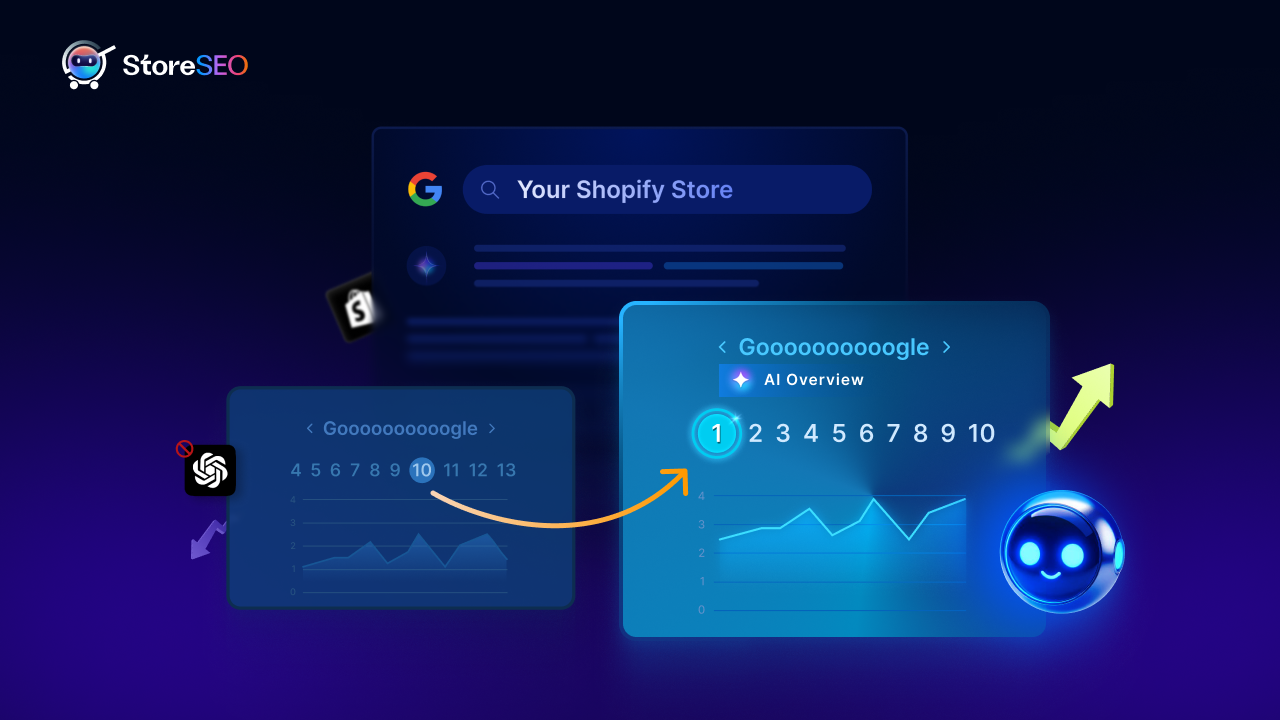

AI-driven search engines now prioritize context, semantics, and user intent. StoreSEO equips Shopify merchants with advanced optimization tools built for this new landscape. From on-page structured data to real-time content insights and AI-ready meta optimization, it ensures your store ranks where it matters most—in conversational AI search results and personalized product recommendations. In 2026, optimizing for AI search is not optional; it is the new standard for organic growth and eCommerce success.
What “AI Search Results” Mean for Shopify in 2026
AI search results in 2026 turn Google (and other engines) into a kind of “shopping assistant” that answers questions directly on the results page, often before a shopper ever clicks through to a Shopify store. For Shopify brands, that means success is less about being “position 1” and more about being the source that AI trusts enough to quote, surface, and recommend inside those answers.
What AI Search Really Means
AI search refers to features like Google’s AI Overviews, AI Mode, Bing Copilot answers, and other generative panels that synthesize content from many websites into one conversational response. Instead of sending users to ten blue links, these systems read product pages, reviews, blogs, and guides, then assemble a short, “best possible answer” with a handful of suggested sources.
For shopping queries, this often looks like a visually rich answer that compares a few products, highlights pros and cons, and shows price ranges or key specs directly within the search experience. In many cases, those AI panels now sit above both ads and organic results, effectively becoming the first (and sometimes only) thing a shopper engages with.
Why Clicks Are Disappearing
Zero‑click behavior searches that end without any visit to another site have been rising for years, but AI search is accelerating it. Recent data shows that around 60% of searches now result in no clicks, and analysts expect the share to grow as AI answers roll out across more query types and markets.
When a shopper gets product comparisons, feature explanations, and even brand suggestions directly in the AI panel, the motivation to open multiple tabs drops sharply. Studies around AI Overviews consistently show lower click-through rates when these panels appear, meaning even strong organic rankings send less traffic than they used to.
What Changes for Shopify Stores
For Shopify merchants, AI search reshapes the game in three big ways: attention, attribution, and action. Attention is now captured inside the AI box, not on the traditional results list, so merchants must think about how their store shows up within that synthesized answer, not just where it ranks as a standalone link.
Attribution shifts because AI doesn’t always feature the “usual suspects”; research on AI Overviews shows that a large share of cited sources do not rank on page one for the query, which opens a door for smaller but highly useful stores to be pulled in. Action changes too: shoppers may move from AI answers straight into platform-native experiences like Google Shopping, merchant listings, or even embedded checkouts, bypassing the store’s homepage entirely.
The New Meaning of “Ranking”
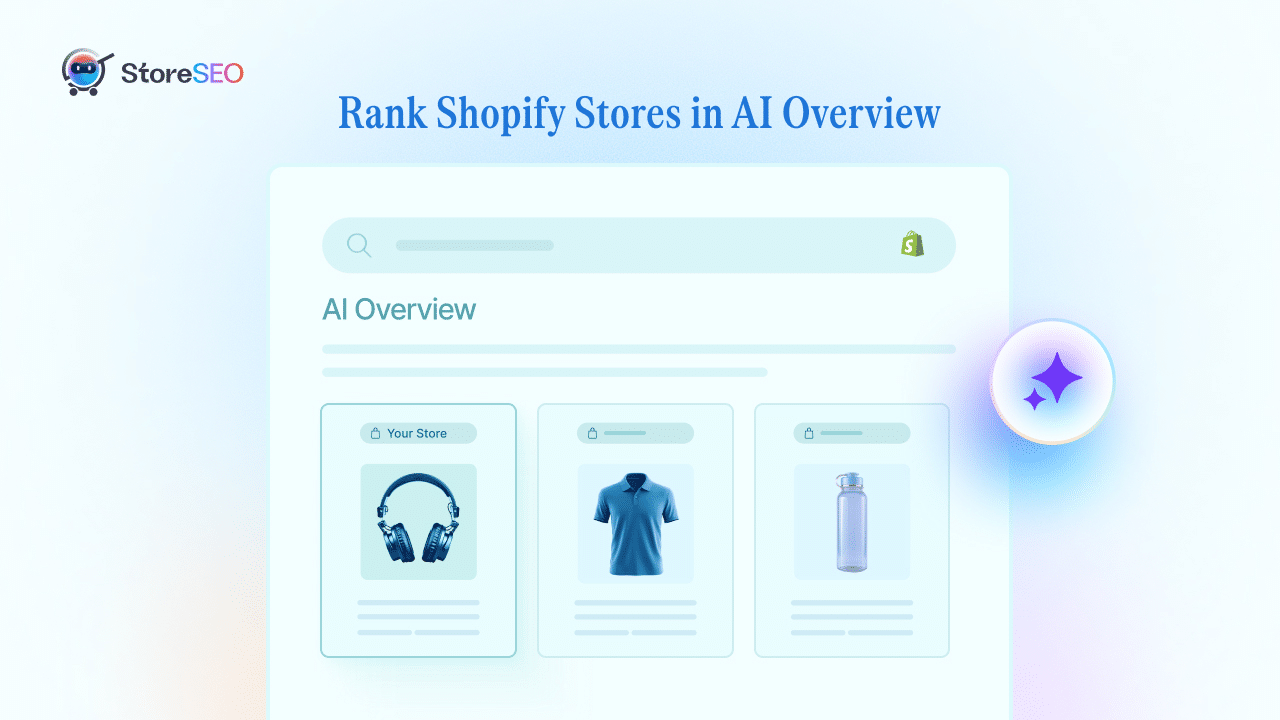
In an AI‑driven SERP, “ranking” looks more like “being referenced and rendered” than holding a numbered spot. A Shopify product page might be one of just three links surfaced in an AI Overview carousel, or its review snippets might be quoted in a generated summary—even if that page is not the top organic result.
This means the practical goal for merchants is to become a trusted data source: clear product information, structured schema, and honest reviews that AI models can safely reuse. Stores that invest in high‑quality, machine‑readable content and strong brand trust signals are more likely to be cited and linked inside AI answers, preserving visibility even as traditional click volume declines.
Why “Being Cited” Beats “Being Seen”
In 2026, it is entirely possible for a store to “appear” in search—via its data informing AI answers—without ever earning a meaningful click or brand impression. The merchants who win are those whose names, products, and URLs are explicitly shown as part of the AI response, so shoppers connect the helpful answer they just read with a specific, credible brand they can buy from.
Being cited inside AI search results essentially becomes the new shelf space: it is where trust is built and where shoppers decide which brand to explore further. For Shopify stores, that shifts SEO from chasing keywords to designing content, product data, and on‑site experience that AI systems feel confident featuring front and center in their generated recommendations.
New Ranking Signals: How AI Chooses Which Stores To Quote
Instead of simply matching keywords or links, AI systems now evaluate which online stores demonstrate the deepest relevance, authority, and clarity around a given product or topic. The days of generic listings are fading fast—AI wants substance, structure, and trust.
At the core of this new system lies topical authority. When AI analyzes eCommerce sites, it asks one central question: Does this store genuinely know what it is talking about? Stores that consistently produce well-researched, informative product content and publish material addressing customer needs tend to earn a stronger reputation as experts in their niche.
For instance, a tech retailer that regularly explains laptop specs, troubleshooting steps, and comparisons builds a recognized entity in AI’s eyes. That sense of credibility becomes a decisive factor when the system selects which store to quote or recommend.
Structured data is another major signal. AI thrives on clarity, and structured data—like schema markup—helps it interpret a store’s content quickly and accurately. Marking up details such as product name, price, availability, brand, and specifications allows the AI to connect dots between search questions and relevant product pages. A store with well-implemented structured data effectively “speaks the same language” as the AI, increasing the odds of its products being surfaced in generated answers.
Alongside structure, clean information architecture plays a vital role. Sites that use clear navigation, logical category hierarchies, and coherent page relationships make it easier for AI systems to map content relationships. When everything from product pages to FAQs and blog posts flows naturally, the AI perceives the site as a source of organized, trustworthy knowledge—an important cue that it can rely on the content to answer user questions accurately.
Beyond structure and layout, rich product content may be the single most powerful ranking signal. Modern AI tools parse through descriptions, attributes, specifications, benefits, and use cases to determine product quality and relevance. A detailed product page that explains 为什么 something is useful, who it is for, and 如何 it works provides multidimensional signals that help AI systems serve contextually accurate recommendations. Thin or repetitive descriptions, on the other hand, leave too little for the AI to work with.
Another crucial ingredient is how effectively a store uses entities and FAQs. In AI-driven ranking, entities—discrete topics or concepts like “wireless gaming mouse” or “sustainable cotton t-shirt”—act as anchors of understanding. By clarifying entities and connecting them across content, a store helps AI systems interpret meanings precisely. Meanwhile, FAQs add conversational texture by answering real-world queries in natural language, aligning closely with how users might phrase their questions to AI tools or voice assistants.
Modern ranking systems also favor conversational queries—the type people speak rather than type. If a store’s content mirrors these natural patterns (“What’s the best phone for outdoor photography?” or “How do noise-canceling headphones work?”), AI can more easily match it to user intent and feature it within an answer.
Altogether, the stores that rise to the top of AI-driven discovery are those that combine authority with clarity and detail. They communicate expertise through well-structured, richly described, and conversationally aligned content. In short, AI no longer rewards just visibility—it rewards genuine understanding.
Why Default Shopify SEO is No Longer Enough
Shopify provides a solid foundation with clean URLs, automatic sitemaps, and basic schema, but it leaves critical gaps that hinder visibility, especially as AI search engines like Google AI Overviews prioritize structured, trustworthy data.
Stores often launch with thin product descriptions that barely scratch 100 words, failing to convey unique value or answer buyer questions, which pushes them down in favor of richer competitor content.
Meanwhile, missing or duplicated meta tags create confusion for crawlers, weak internal linking scatters authority across pages, and inconsistent schema markup—like incomplete product or review data—means AI models overlook the site entirely.
These shortcomings hit harder with AI search, which scans for entity-rich, reliable signals rather than just keywords. Without robust structured data, AI lacks the context to trust a store’s products, so it defaults to quoting big marketplaces like Amazon, established publishers with deep knowledge graphs, or rivals who’ve invested in optimization.
,For example, an AI query for “best wireless earbuds under $50″—your thin description and spotty schema won’t register, while a competitor’s detailed specs and linked reviews get pulled directly into the answer box. This shift explains why stores ignoring these gaps see up to 140% drops in organic visibility as zero-click AI results dominate 70% of queries.
Fixing this starts with auditing your store: beefing up descriptions with buyer-focused details, implementing unique meta tags via apps, building deliberate internal links from blogs to products, and layering in a comprehensive schema for FAQs, pricing, and availability. Merchants who do this report 30-60% traffic lifts, as AI finally has the structured fuel to feature their content prominently. The key? Treat your Shopify site like it is conversing with LLMs, not just Google bots—structured, entity-driven, and conversion-ready.
StoreSEO makes your Shopify Store AI-search-ready
StoreSEO is built to help online stores stay ahead of the ever-changing world of search, especially now that AI-driven discovery tools and AI search engines are transforming how customers find products. It bridges traditional SEO practices with AI-compatible optimization, ensuring that every element of a store’s online presence is clean, structured, and understandable to both human visitors and artificial intelligence systems.
AI Meta Title and Description Generation Aligned to Search and Character Limits
One of the first things AI search engines look at is how a page introduces itself. StoreSEO takes this into account by using advanced algorithms to generate meta titles and descriptions that are both optimized for keywords and polished for readability.
It automatically aligns these elements with current character limits used by major search platforms, preventing text from getting cut off in search results. This ensures that each page presents a clear, complete, and enticing snapshot to users and AI crawlers alike. The result is a stronger click-through rate and better alignment with AI-based search ranking systems that favor relevance and precision.
AI Content Optimization for Product Pages, Tags, and Collections
Every product in an online store tells a story, and StoreSEO helps make sure that story reaches the right audience. Its AI-powered content optimization tools analyze each product page, tag, and collection to identify gaps in topical coverage and keyword usage.
Refining headings, descriptions, and keywords creates deeper semantic connections that AI search engines use to understand product relevance. This gives stores a measurable edge when algorithms prioritize well-structured, informative, and context-rich content. Essentially, StoreSEO turns ordinary product listings into thoroughly optimized, AI-readable entries that perform better across search results.
Automated Image Alt Tags and Image Optimization
Images are critical to eCommerce, but without proper metadata, AI can’t understand what they represent. StoreSEO solves this problem through automated image alt tag generation. It uses descriptive language that links directly to the product’s focus and keywords, making images searchable and more accessible.
Additionally, StoreSEO optimizes image file sizes and formats to ensure faster loading times—something both AI and human users appreciate. This dual approach improves both user experience and the technical performance metrics favored by AI search models.
SEO Schema and Sitemap Support for AI Crawling
AI search technology depends heavily on structured data, and that’s where StoreSEO’s schema and sitemap tools shine. Schema markup helps AI systems interpret what each piece of data means, whether it is a product, a price, a review, or an availability status.
StoreSEO automates this process, ensuring that the store’s information is presented in a machine-readable format that AI crawlers can easily parse. Similarly, its sitemap support keeps the site architecture clear and up to date, helping AI systems navigate relationships between pages and collections more effectively. Together, these features ensure that a store’s entire ecosystem is transparent and easy for AI to understand, which leads to stronger visibility and ranking across AI-driven search platforms and AI search results.
您觉得我们的博客有用吗?如果觉得有用,请 订阅我们的博客 获得更多提示、教程以及行业相关主题的更新。