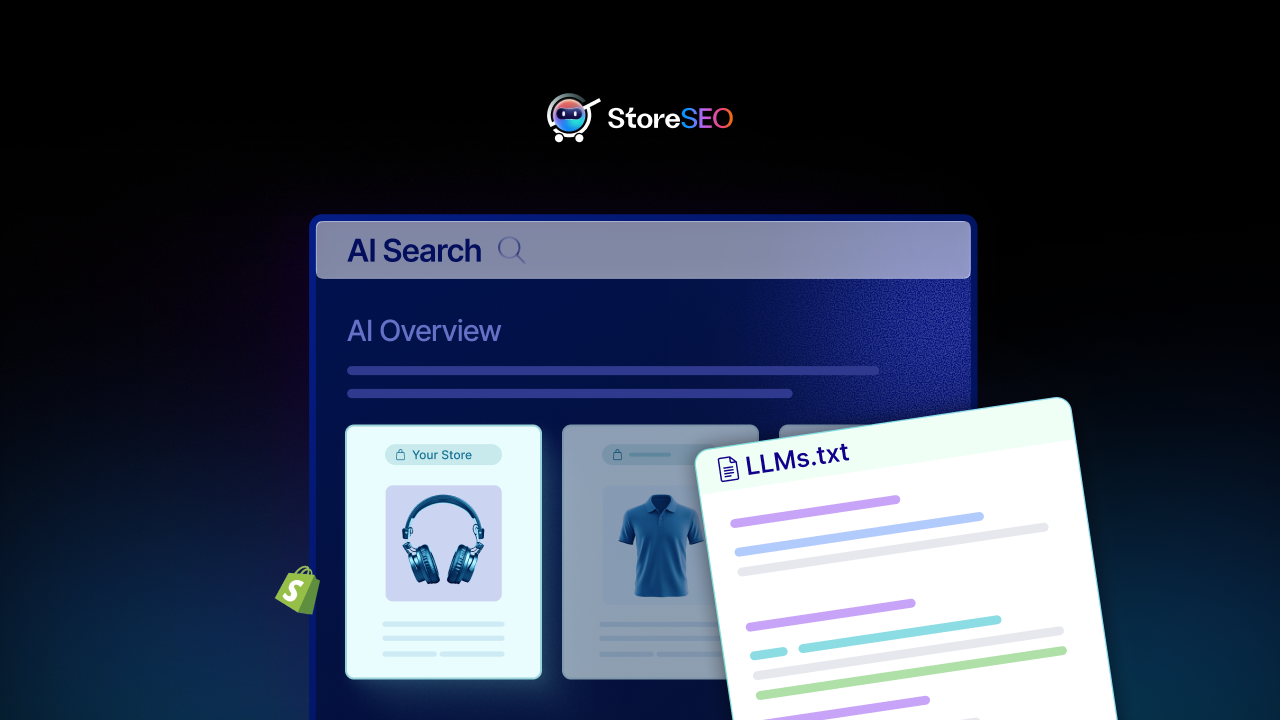

When potential customers search for solutions to their problems, they are increasingly turning to AI-powered systems like ChatGPT, Google AI Overviews, and Perplexity instead of traditional search results. This shift demands a fundamental change in how you optimize your Shopify product pages.
Answer Engine Optimization (AEO) is no longer a nice-to-have strategy. It is becoming essential for eCommerce success. Unlike traditional SEO, which focuses on ranking entire pages, AEO targets the specific answers within those pages that get selected by AI systems. If your product pages are not optimized for AI engines, you risk being invisible to a growing segment of your potential customers.
Understanding AEO vs. Traditional SEO
The distinction between AEO and traditional SEO matters deeply for your Shopify store’s future. Traditional SEO optimizes pages to rank in search engine results, focusing on keywords, backlinks, and domain authority.
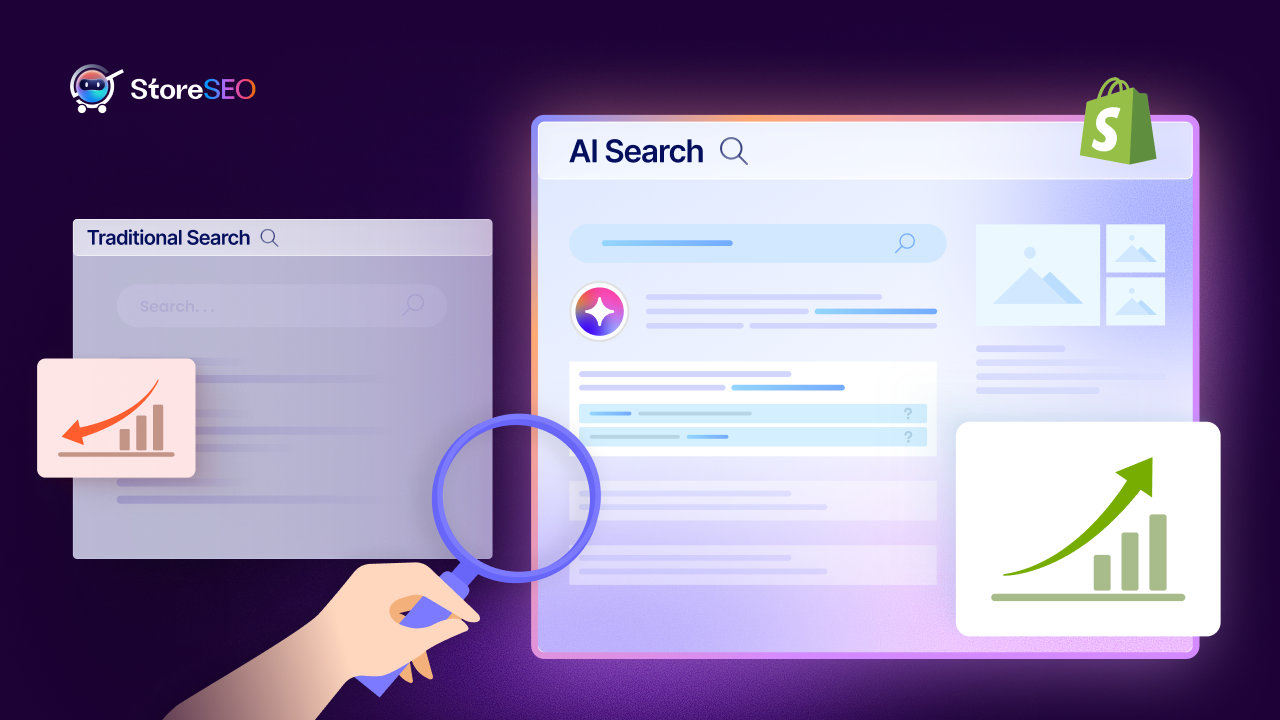
AEO, by contrast, optimizes the content within your pages to be selected as direct answers by AI systems.
When someone asks an AI assistant about the best noise-canceling headphones or whether a product will work with their specific setup, your content needs to be structured in a way that AI systems can easily extract, understand, and cite.
Google’s AI Overviews are now available in over 100+ countries, prioritizing structured, concise product information over lengthy guides or ad-heavy pages. This represents a seismic shift in how eCommerce brands capture visibility.
The good news is that smaller brands with precise, well-structured data can now outperform larger competitors that rely on domain authority alone. The playing field is being leveled by the machines that demand clarity and relevance above all else.
The core benefit of AEO comes from its precise targeting. When you optimize for the exact questions your customers are asking, you meet them at their moment of need.
Research shows that content optimized for specific questions has a 30 percent higher conversion rate than generic keyword-optimized content. This happens because you are addressing the true underlying intent, rather than just hoping visitors will engage with your page.
The 3 Pillars of AEO for Product Pages
To successfully implement AEO on your Shopify product pages, you need to understand and apply 3 essential components. Structure, Substance, Sourceability: these pillars work together to make your product pages visible to AI systems and convince those systems to cite your content.
Structure means your content must be machine-readable. AI systems need clear, standardized formatting that they can parse without confusion. This includes schema markup, consistent labeling of product information, descriptive alt text for images, and crawlable product data that does not rely on JavaScript to render.
When you structure your product page with a proper HTML hierarchy and schema markup, you are essentially providing AI systems with a roadmap to your most important information.
Substance refers to natural-language answers to real buyer questions embedded throughout your product page. Your page should answer questions like “How does this product work?” “Why is it better than alternatives?” and “When should I use this instead of another option?”
These answers should be incorporated into your product descriptions and feature sections in a way that feels natural to human readers while being easily extractable by AI.
Sourceability is about making your information easily attributable to your brand. This means establishing a clear brand voice, including citations and proof points that build authority, and providing customer reviews and testimonials that reinforce your credibility.
When AI systems cite your product page, you want it to be obvious that the information comes from an authoritative source.
Implementing Structured Data and SEO Schema
SEO schema is perhaps the most powerful on-page AEO tool available to you. This code helps AI systems understand the context and meaning of your content in ways that plain text alone cannot achieve. For Shopify product pages, there are several critical schema types you should implement.

Product schema is the highest priority. This markup tells Google and other AI systems what you are selling, including essential information such as product name, URL, price, availability, SKU, and description.
When you properly mark up your product data, AI systems can quickly identify key product information and include it in their responses. The difference between a product page that AI systems find useful and one that they ignore often comes down to whether the Product schema has been correctly implemented.
Offer schema should accompany your Product schema. This markup provides crucial purchasing information, including priceCurrency, price, availability, itemCondition, seller information, and the canonical URL.
Keep these values synced across your page, your schema, and your Google Merchant Center feed to ensure consistency.
Review schema allows you to mark up individual customer reviews and aggregate ratings. This structured data increases the likelihood that your star ratings and review snippets appear in AI-generated results.
When AI systems are summarizing product information, they often look for aggregated ratings to quickly convey customer satisfaction levels.
FAQ schema uses the FAQPage markup to identify question-and-answer pairs on your product page. This helps AI systems recognize that your content directly answers common questions, increasing the likelihood that your exact answers appear in AI responses.
There are multiple ways to add structured data to your Shopify store. The simplest approach is to use a Shopify SEO app that handles schema markup automatically without requiring code knowledge.
These apps typically provide interfaces where you can select schema types and customize the data they include. Alternatively, if you are comfortable editing code, you can manually add JSON-LD structured data to your theme files.
If you want maximum control, you can use Shopify metafields to store custom schema data that gets output into your theme.
Once you have implemented structured data, you must validate it to ensure it is correct. Google’s Rich Results Test is the most important tool for this validation.
Simply enter your product page URL, and the tool will show you what structured data Google found and whether it qualifies for rich results.
The Schema.org Validator is a neutral alternative that checks whether your markup follows standards regardless of the search engine.
Structuring Product Content for AI Interpretation
The way you structure your product page copy has a direct impact on whether AI systems will select your content as a source. AI systems have consistent patterns in how they present information, and aligning your page structure with these patterns increases your chances of being cited.
Start by leading with a concise product proposition at the very top of your page. This should be a clear, benefit-focused summary that immediately answers “What is this product and why should I care?”
AI systems often extract this initial summary to present to users, so make it count. Keep this section to two or three sentences maximum, and focus on the main benefit rather than technical specifications.
Use question-based headers for your feature sections. Instead of headers like “Advanced Features” or “Technical Specifications,” write headers that reflect the questions your customers are actually asking.
For example, “How can this product optimize my alt text?” or “Will this integrate with my existing tools?” Questions signal to AI systems that the content below directly answers that question, making it more likely to be extracted and cited.
Directly answer each header question in the first one to two sentences of the section below. Provide a specific answer that is tight and quotable.
AI systems prioritize content they can extract directly into their responses, so craft your answers as if they will be quoted verbatim in an AI response. If more context is needed, provide it after the direct answer, or link to a detailed resource like a support article or blog post.
Include an HTML table that provides a visual overview of your key features and benefits. AI systems rely on structured information just as much as on-page text, so providing important details in both formats gives AI more to work with.
A visual summary helps AI models quickly identify and extract specific capabilities that match user queries.
Focus on making your product citable by explicitly stating facts clearly and consistently. Price, availability, shipping details, return policies, warranties, compatibility information, and key specifications should all be stated upfront in a way that is unmistakable.
Use the same terminology across headings, bullets, and specification tables so AI systems do not have to guess at what you mean.
Creating and Optimizing FAQ Sections
FAQ sections are ideal for directly answering the questions potential customers ask AI systems. Many customers now ask chatbots about product details, pricing, security, integrations, and free trials instead of reaching out to support teams.
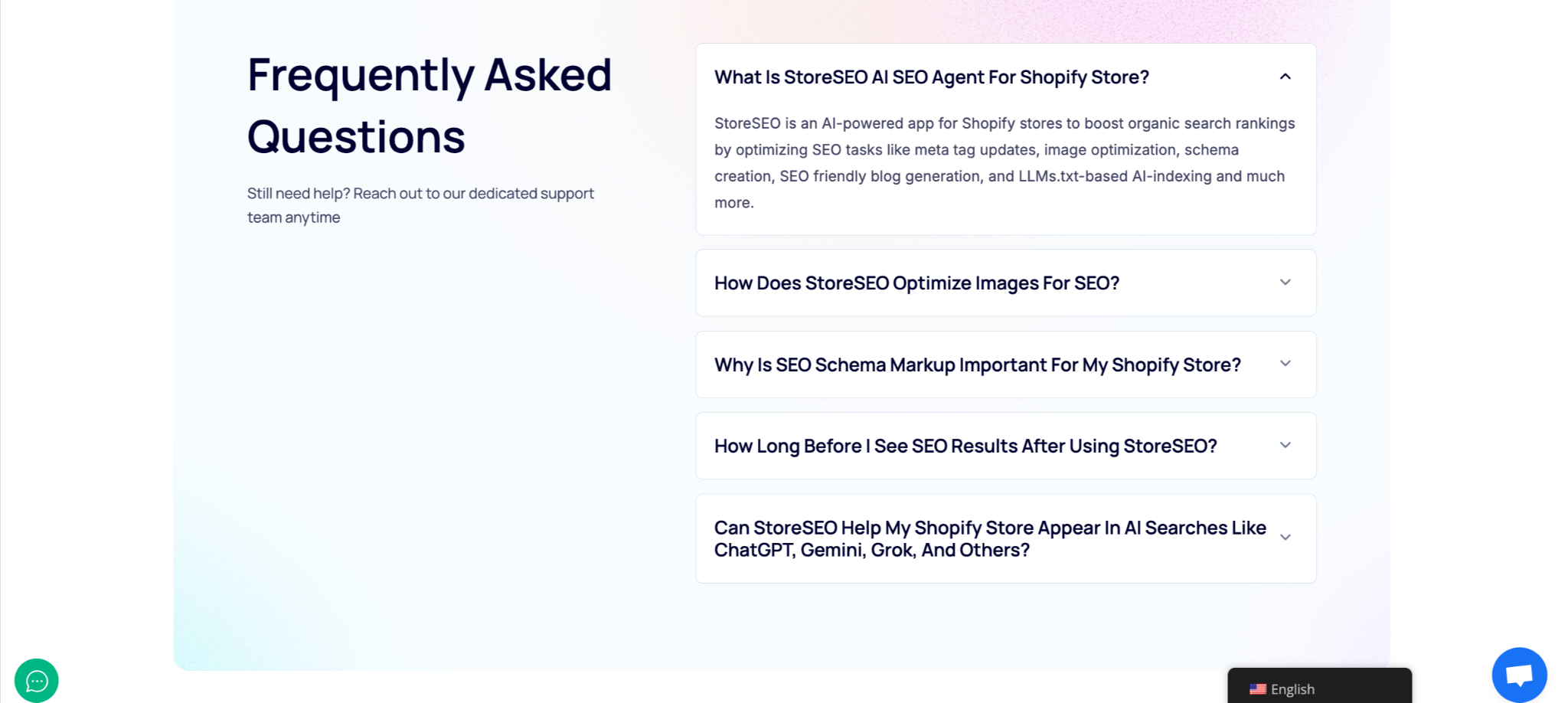
Your FAQ section should provide those answers so potential customers get accurate information from your product page rather than from a third-party source.
Start by researching the actual questions your audience is asking. Use Google Search Console to identify searches that lead to your product page. Mine Google’s “People Also Ask” boxes for your core topics.
Connect with your sales and customer service teams to understand the questions prospects and customers frequently ask. These real questions should become the basis for your FAQs.
Phrase each FAQ item as a clear, concise question that matches how people actually ask about your product. Do not try to rephrase questions to fit your preferred terminology.
If your customers ask, “Does it work with Shopify?” then that is exactly how your FAQ question should be worded.
Concisely answer each question in one or two sentences using an informative, non-promotional tone. The goal is to provide copy that can be lifted directly into AI responses without feeling salesy or biased.
If the answer requires context, provide that context after the direct response, but make sure the standalone answer is tightly written and factually complete.
Update your FAQ section regularly as new questions arise or as product details change. Your FAQ should reflect current pricing, new features, policy updates, and emerging customer concerns.
Many organizations make the mistake of treating FAQs as static content that gets written once and left alone. Instead, treat FAQ updates as an ongoing maintenance task. Review your FAQs every few months and add new entries as customer feedback reveals common concerns.
Implement FAQPage schema markup on your FAQ sections. This tells AI systems explicitly that your content contains question-answer pairs, increasing the likelihood that your exact content appears in AI responses for specific queries.
Without this markup, AI systems might understand that your content contains questions and answers, but they will be less confident about using that information in their responses.
Leveraging Customer Reviews and Testimonials
Customer reviews and ratings are among the strongest trust signals for both AI systems and human shoppers. When AI systems are deciding which product page to cite in their response, they often look for evidence of customer satisfaction and real-world usage.
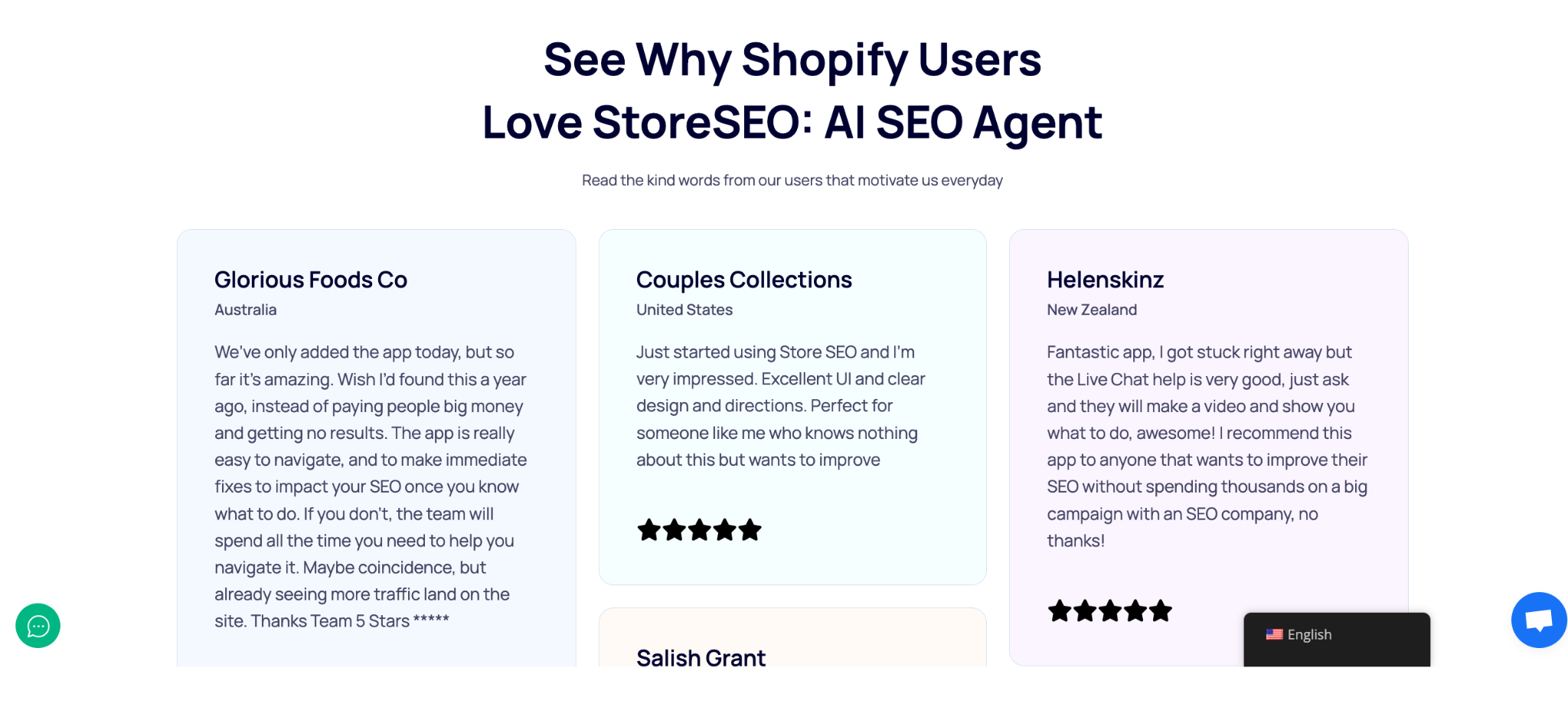
Actively solicit reviews and feature the most relevant and highly-rated reviews prominently on your product pages. Encourage customers who have recently purchased to leave reviews by sending follow-up emails after purchase. Ask them to address specific concerns that potential customers frequently have.
Mark up your customer reviews with review schema that includes the reviewer’s name, date published, review body, and rating. Include the AggregateRating schema to show your overall star rating based on the number of reviews you have received. When your reviews are properly marked up, AI systems can easily extract this social proof and include it in their responses.
Respond to customer reviews, especially negative ones. When you respond to a poor review with a thoughtful explanation or offer to resolve the issue, you demonstrate responsiveness and commitment to customer satisfaction. These responses become part of your review content and show AI systems that you take feedback seriously.
Optimizing Product Images for AI Discovery
While AI systems primarily rely on text and structured data, high-quality images remain important for product pages. Include multiple angles and lifestyle images that give users context about how the product is used in real scenarios.
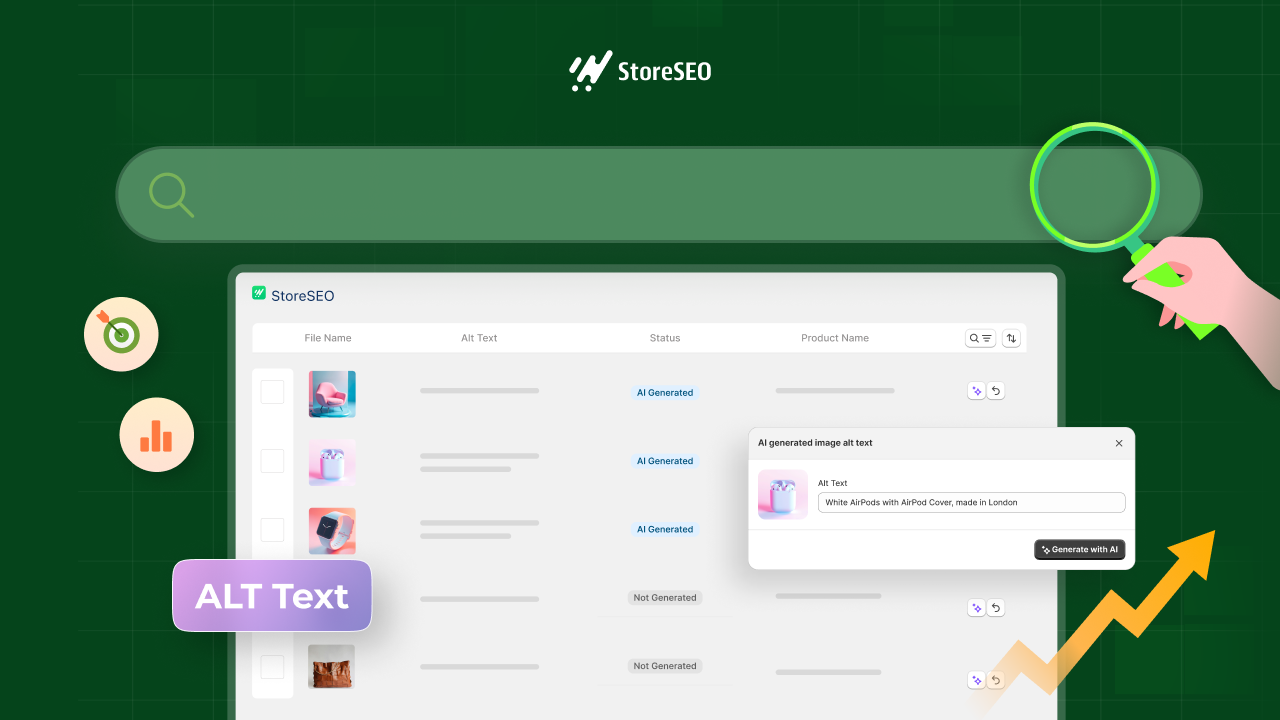
Write descriptive alt text for every product image. The alt text should describe what the image shows in a way that is useful for both visually impaired users and AI systems. Instead of generic alt text like “product image,” write something like “blue noise-canceling headphones shown from three angles with included carry case.”
Descriptive alt text helps AI systems understand your products better and can improve your chances of appearing in image-based searches and shopping results.
Optimize your image file sizes and names for web performance. Use semantic file names that describe the image content instead of generic names like “IMG_12345.jpg.” Compress images to reduce load times without sacrificing quality. AI systems favor fast-loading pages, and Core Web Vitals performance is an important ranking factor.
Addressing Common AEO Mistakes
As you implement AEO on your Shopify product pages, be aware of common pitfalls that can undermine your efforts.
Do not stuff keywords or repeat the same terms excessively in your content. AI systems prioritize natural, conversational content that reads well to human visitors.
When you write naturally for people first, AI systems will usually understand your content better than if you were writing artificially for machines.
Avoid creating superficial content that lacks depth. Thin content with minimal detail will not establish the expertise needed for AI citations.
Your product pages should comprehensively cover what your product is, how it works, what problems it solves, and when customers should choose it over alternatives.
Do not neglect structured data. Missing schema markup significantly reduces AI systems’ ability to understand your content’s purpose and structure.
Even if your page copy is excellent, AI systems will be more confident citing your content when you have provided explicit machine-readable signals through schema markup.
Never ignore mobile optimization. Poor mobile experience can significantly impact how AI systems evaluate your content quality. Many potential customers research products on mobile devices, and AI systems prioritize pages that work well on all device sizes.
Avoid focusing solely on Google. While Google is important, diversify your optimization approach to account for other AI platforms including ChatGPT, Bing Copilot, Perplexity, and Claude.
Each of these systems may have slightly different preferences, but the fundamentals of clear structure and authoritative content work across all of them.
Setting Technical Foundations for AI Crawlability
Before AI systems can cite your product pages, they must be able to crawl and understand them. Technical SEO remains fundamental to AEO success.
Ensure your pages are crawlable by checking that your robots.txt file does not block product pages and that your sitemap includes all product URLs. AI systems need to be able to access your pages without encountering blocks or redirects.
Achieve Core Web Vitals performance thresholds to ensure fast loading. Target Largest Contentful Paint (LCP) under 2.5 seconds, First Input Delay (FID) under 100 milliseconds, and Cumulative Layout Shift (CLS) under 0.1.
Use image compression, minimize render-blocking resources, and implement a content delivery network to improve speed.
Maintain a clear heading hierarchy with one H1 tag per page and logical H2-H3 structure. This hierarchy is one of the strongest signals AI systems use to parse your content’s organization. Do not skip header levels or use headers for styling instead of structure.
Implement secure HTTPS protocols on all pages. Search engines and AI systems prioritize secure connections, and many modern features require HTTPS to function properly.
Create a logical site architecture with clear internal linking. This helps both AI systems and human visitors understand how your product pages relate to each other and to the broader structure of your store.
Monitoring AI Visibility and Performance
Understanding how your product pages perform in AI systems is critical for optimizing your strategy. Unfortunately, Google Search Console does not yet provide clear visibility into AI Overview citations, creating a tracking gap.
To overcome this limitation, set up manual tracking of AI visibility. Create a spreadsheet with columns for keyword, date checked, location, device type, whether an AI Overview appeared, whether it was expanded, whether your site was cited, and which competitors were cited. Search your target keywords in incognito mode and document what you see.
Take screenshots and note which sources appeared in the AI overview. This manual process requires two to three minutes per keyword per week, but it provides crucial data that Search Console does not offer.
Alternatively, use an API-based solution like SerpApi to automate AI Overview detection. The API can pull comprehensive data about AI Overview presence, content, citations, and positioning without human error. While this requires some technical setup, it becomes more cost-effective than manual tracking once you are monitoring more than 50 keywords.
Track the following metrics to understand your AEO performance: AI Overview presence rate (percentage of keywords where an AI Overview appears), citation success rate (percentage of keywords with AI Overviews where your site is cited), and CTR impact analysis (comparing CTR for keywords with AI Overviews versus traditional organic results).
Use Google Search Console’s standard Performance reports to monitor how your visibility changes over time. While you cannot filter specifically for AI Overview traffic yet, you can identify keywords and pages where impressions have grown significantly but clicks have not, which may indicate AI Overview impact.
Creating Supporting Content for AI Citations
Product pages alone may not be enough to achieve strong AI visibility. AI systems often cite comparison pages, use case articles, and buying guides when responding to product-related queries.
Create comparison pages that position your product against competitors. Titles like “Product A vs. Product B” directly match how AI systems structure comparison responses. Highlight key differentiators in both concise text and as an HTML table to favorably position your brand when potential customers weigh different options.
Build listicle content that ranks products in a category. Ranking content often appears in responses to “best solution” prompts. When you create a list of all products in a category, you control part of the narrative, and you can position your product as the market leader while objectively noting strengths and weaknesses for each option.
Develop use case pages that show how your product solves specific problems. Instead of targeting just “product name,” target “product name for [specific use case].” These pages often appear in AI responses to detailed customer queries.
A 30-Day Action Plan to Get Started with AEO for Your Shopify Product Pages
If you feel overwhelmed by the scope of AEO optimization, start with this practical 30-day plan that prioritizes your highest-impact opportunities.
Week 1: Audit and Research. Audit the crawlability of your Shopify store by checking that robots.txt and sitemaps are correct. Check your Core Web Vitals in Google PageSpeed Insights. Audit your existing schema markup to see what is already in place and what is missing. Identify 10 to 15 target keywords and use AI tools to see how those queries currently appear in Google AI Overviews and ChatGPT. Research competitor product pages that frequently get cited to understand what makes their pages AI-friendly.
Week 2: Implement Core Schema. Focus on your top 10 most-important product pages. Implement or refine Product + Offer + AggregateRating schema markup on these pages. Add a compact FAQ section with FAQPage schema that answers the five most common questions customers ask. For product pages with variants, introduce ProductGroup schema to help AI systems understand your variant structure. Validate all schema in Google’s Rich Results Test.
Week 3: Fix Feed and Pricing Issues. Audit your Google Merchant Center feed for disapprovals and fix any issues. Ensure that product identifiers (GTINs and MPNs) are consistent across your product pages, your JSON-LD markup, and your merchant feed. Set up near-real-time price and availability syncs so your feed always reflects what is actually on your website. Enable product rating feeds in Google Merchant Center if you have sufficient review volume.
Week 4: Monitor and Optimize. Monitor your target keywords weekly using either manual SERP checking or an API solution to track AI Overview presence and citations. Track which of your pages are appearing in AI responses. Identify common themes in how AI systems describe your products. Fix any inconsistencies between how you describe your products on your website and how AI systems are describing them based on your content. Plan additional optimizations for the following month.
Outrank Your Competitors with AEO Best Practices for Your Product Pages
Your competitors are likely not yet optimizing for AEO. This means the opportunity to capture AI-driven visibility is significant right now. Start with your highest-traffic product pages and expand systematically. Small changes to structure, clarity, and markup can lead to major improvements in how AI systems understand and cite your products. The stores that embrace AEO now will have a substantial advantage when AI search becomes even more dominant in how customers discover products.
Have you found our blog useful? If you do, please subscribe to our blog for more tips, tutorials, and updates on industry-related topics.