
Jak klastry słów kluczowych realnie pomagają Twojemu sklepowi Shopify lepiej się pozycjonować i więcej sprzedawać?
Ten artykuł jest tłumaczeniem oryginalnej wersji angielskiej. Przeczytaj oryginał
Jeśli wciąż budujesz strategię SEO dla Shopify wokół pojedynczych słów kluczowych, jesteś już krok w tyle. Nie dlatego, że słowa kluczowe przestały mieć znaczenie, bo nadal mają je ogromne. Zmienił się jednak sposób, w jaki wyszukiwarki czytają, rozumieją i nagradzają treści. Google nie dopasowuje już po prostu słów na stronie. Ocenia autorytet tematyczny. Szuka głębi, trafności i pełnego pokrycia tematu.
I właśnie tu do gry wchodzą klastry słów kluczowych.
W tym poradniku wyjaśniamy, czym są klastry słów kluczowych, dlaczego dziś są ważniejsze niż kiedykolwiek dla sklepów Shopify, jak przekładają się zarówno na pozycje, jak i na realną sprzedaż, oraz jak zacząć je budować już dziś dzięki generatorowi klastrów słów kluczowych opartemu na AI w StoreSEO. Po lekturze będziesz mieć jasny, praktyczny schemat, który pozwoli Ci przejść od rozproszonych list słów kluczowych do spójnej strategii treści budującej autorytet i konwersje.
| Dlaczego to ważne właśnie teraz |
| Helpful Content System Google i coraz szersze wykorzystanie sygnałów wyszukiwania semantycznego sprawiają, że sklepy zoptymalizowane pod klastry tematyczne regularnie wyprzedzają te, które celują w pojedyncze słowa kluczowe. Wyszukiwarki oparte na AI, takie jak Perplexity i ChatGPT Search, również preferują źródła z silnym autorytetem tematycznym, gdy podsuwają rekomendacje produktów i zakupów. Jeśli Twój sklep Shopify nie pokazuje głębi tematycznej, jesteś niewidoczny dla obu tych światów. |
1. Czym są klastry słów kluczowych i dlaczego powinny interesować sprzedawców na Shopify?
Klaster słów kluczowych to grupa semantycznie powiązanych fraz, które krążą wokół jednego głównego tematu. Zamiast optymalizować stronę produktu pod jedno słowo kluczowe, tworzysz mapę powiązanych zapytań, które razem oddają wszystkie sposoby, w jakie ludzie szukają tego, co sprzedajesz. Cały klaster wykorzystujesz potem przy tworzeniu treści, opisów produktów, metadanych i struktury witryny.
Spójrz na to tak. Jeśli sprzedajesz maty do jogi premium, podejście oparte na jednym słowie kluczowym kazałoby Ci optymalizować stronę pod frazę „mata do jogi”. Podejście klastrowe mówi: zrozummy każdy sposób, w jaki ktoś może szukać tego produktu, i każde powiązane pytanie, jakie może mieć przed decyzją zakupową, w jej trakcie i po niej.
To podstawowa idea stojąca za autorytetem tematycznym i jeden z najsilniejszych sygnałów wpływających na pozycje organiczne w 2026 roku i później.
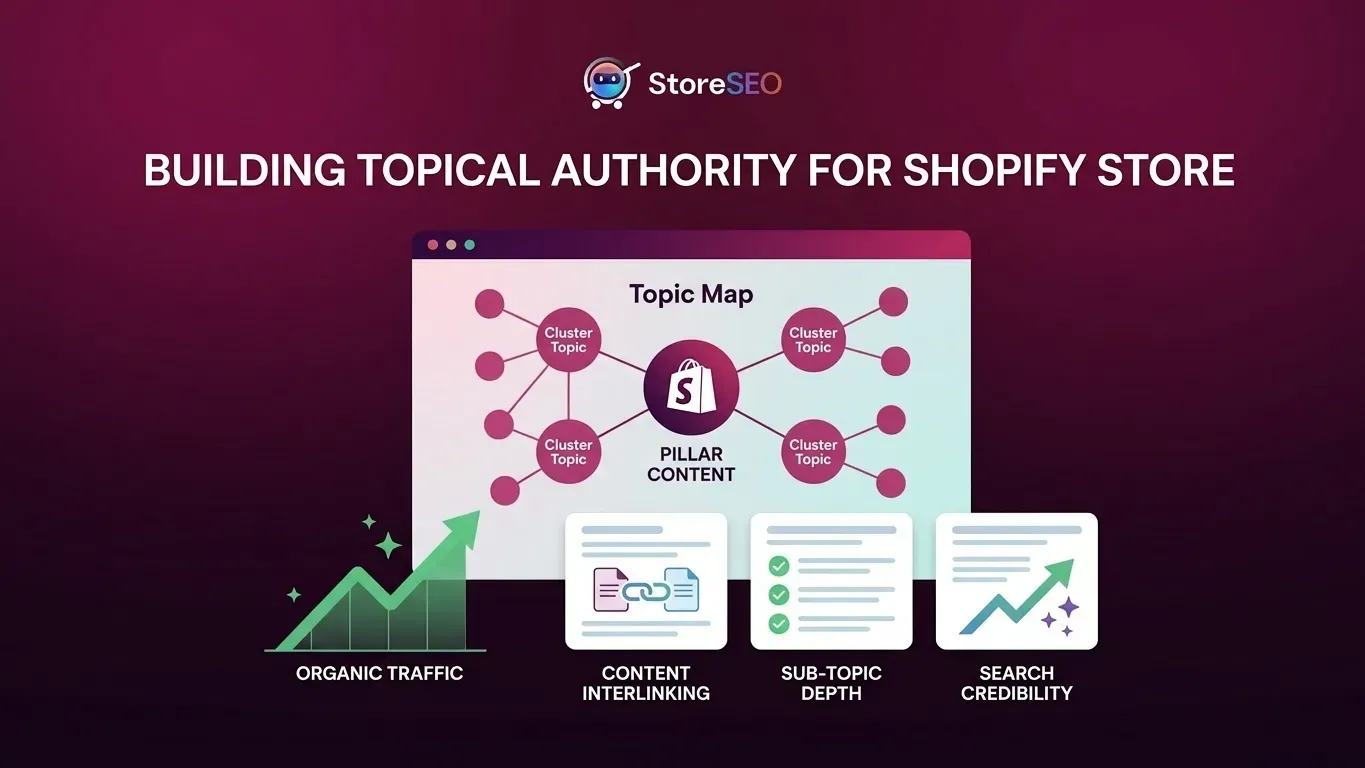
Uproszczony przykład klastra słów kluczowych dla maty do jogi
| Typ klastra | Słowa kluczowe w klastrze |
| Główne słowo kluczowe (filar) | mata do jogi |
| Warianty z intencją komercyjną | najlepsza mata do jogi, mata do jogi premium, mata do jogi dla początkujących |
| Warianty z intencją transakcyjną | kup matę do jogi online, mata do jogi darmowa dostawa, sklep z matami do jogi |
| Informacyjne frazy z długiego ogona | Korkowa mata do jogi czy gumowa, mata do jogi TPE czy PVC |
| Zapytania świadome problemu | mata do jogi, która się nie ślizga, ekologiczna nietoksyczna mata do jogi |
| Zapytania porównawcze | mata do jogi, która się nie ślizga, ekologiczna mata do jogi, nietoksyczna |
Każda z tych grup słów kluczowych odpowiada innemu nastawieniu tego samego potencjalnego klienta. Jedni dopiero się uczą. Inni aktywnie porównują. Jeszcze inni są gotowi kupić. Gdy optymalizujesz treści i strony produktów tak, by razem odpowiadały na wszystkie te intencje, nie pozycjonujesz się na jedną frazę. Stajesz się autorytatywną odpowiedzią w całym temacie, a Google to nagradza.
2. Jak Google faktycznie ocenia dziś treści Twojego sklepu Shopify
Żeby zrozumieć, dlaczego klastry słów kluczowych są tak ważne, musisz wiedzieć, jak nowoczesne wyszukiwarki oceniają treści w Twoim sklepie. To już nie jest Google sprzed dziesięciu lat, który po prostu liczył wystąpienia słów kluczowych.
Od dopasowania słów kluczowych do rozumienia semantycznego
Algorytmy Google, zwłaszcza systemy takie jak BERT, MUM i Helpful Content System, zostały zaprojektowane tak, by rozumieć język podobnie jak ludzie. Analizują kontekst, relacje między tematami i kompletność omówienia danego zagadnienia. Gdy ktoś wpisuje „najlepsze buty do biegania na płaskostopie”, Google nie szuka wyłącznie stron zawierających dokładnie te słowa. Próbuje wyświetlić stronę, która najpełniej, najrzetelniej i najbardziej pomocnie odpowiada na cały ten temat.
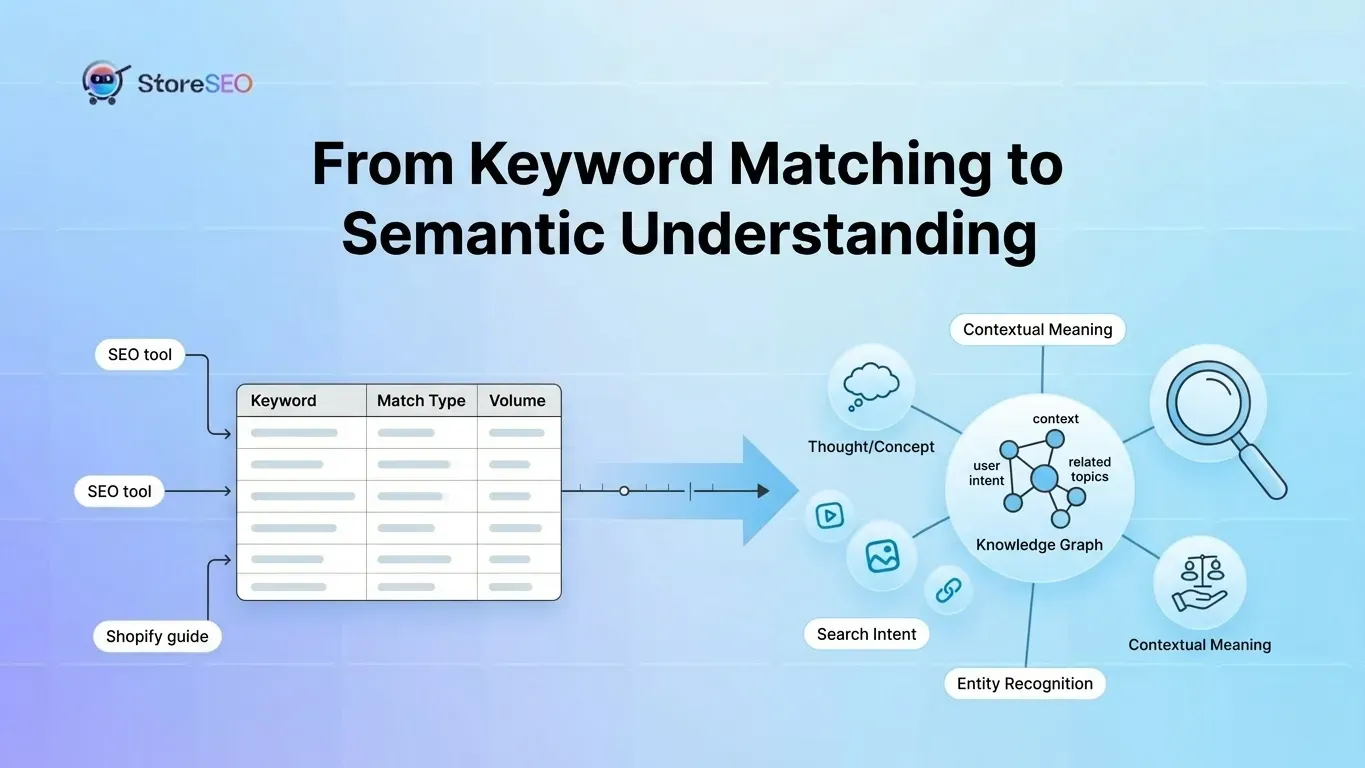
Sklep Shopify z klastrem treści o butach do biegania, typach stóp, pronacji, amortyzacji i porównaniach marek niemal zawsze wyprzedzi sklep z jedną stroną produktu nastawioną na frazę „najlepsze buty do biegania na płaskostopie”.
E-E-A-T i głębia tematyczna
Wytyczne Google dla oceniających jakość opierają się na E-E-A-T: doświadczeniu (Experience), wiedzy eksperckiej (Expertise), autorytatywności (Authoritativeness) i wiarygodności (Trustworthiness). W przypadku sklepów internetowych wykazanie E-E-A-T nie wymaga doktoratu. Chodzi o to, by szerokością i głębią treści pokazać, że naprawdę znasz swoją niszę.
Strategia klastrów słów kluczowych zmusza Cię do dokładnego omówienia tematu, a właśnie to nagradza E-E-A-T. Nie tylko sprzedajesz produkt. Pozycjonujesz swój sklep Shopify jako pierwsze źródło wiedzy w swojej niszy.
Rola klastrów słów kluczowych w widoczności w wyszukiwaniu AI
Oto coś, o czym większość poradników SEO dla Shopify milczy: wyszukiwarki generujące odpowiedzi za pomocą AI, takie jak Perplexity, ChatGPT Search i Gemini, nie korzystają z jednej strony, gdy odpowiadają na pytania o produkty i zakupy. Łączą informacje z najbardziej autorytatywnych źródeł w danym temacie.
Jeśli Twój sklep Shopify ma rozbudowane, klastrowe treści wokół kategorii produktów, znacznie częściej będzie cytowany, wspominany lub polecany przez narzędzia AI, gdy ktoś zada pytanie związane z tym, co sprzedajesz. Tak w praktyce wygląda Answer Engine Optimization (AEO) i Generative Engine Optimization (GEO), a treści oparte na klastrach są fundamentem, który to umożliwia.
| Ekspercka uwaga od StoreSEO |
| Przeanalizowaliśmy setki sklepów Shopify, które mimo solidnego SEO on-page nie potrafią utrzymać stabilnego ruchu. Najczęstszy schemat: pozycjonują się na pojedyncze słowa kluczowe zrywami, ale nie są w stanie utrzymać autorytetu. Sklepy, które konsekwentnie zwiększają ruch organiczny, budują klastry tematyczne, zamiast celować w słowa kluczowe pojedynczo. To nie teoria. Tak pokazują dane. |
3. Bezpośredni związek między klastrami słów kluczowych a wyższą sprzedażą na Shopify
Zostawmy na chwilę pozycje, bo ranking to tylko środek do celu. Prawdziwe pytanie brzmi: w jaki sposób klastry słów kluczowych pomagają Ci więcej sprzedawać?
Klastry dopasowują treści do całej ścieżki zakupowej
Każda osoba, która w końcu kupuje w Twoim sklepie Shopify, od czegoś zaczyna. Może dziś wpisuje „jak wybrać matę do jogi”. Tydzień później szuka „najlepsza ekologiczna mata do jogi”. Aż w końcu wpisuje „kup korkową matę do jogi”.
Jeśli Twój sklep ma treści i zoptymalizowane strony odpowiadające na każdy z tych etapów, możesz przechwycić tego klienta w każdym punkcie styku, zbudować zaufanie i stać się naturalnym wyborem, gdy będzie gotowy do zakupu.
Strategia jednego słowa kluczowego może przechwycić osobę z intencją transakcyjną. Strategia klastrowa obejmuje cały lejek i z czasem wzmacnia relację z klientem.
Klastry ograniczają kanibalizację słów kluczowych
Kanibalizacja słów kluczowych występuje wtedy, gdy kilka stron w Twoim sklepie Shopify konkuruje o to samo słowo kluczowe. Rozmywa to Twój autorytet, dezorientuje Google i obniża potencjał rankingowy obu stron.
Dobrze zaplanowana strategia klastrów rozwiązuje ten problem już na etapie projektu. Każda strona lub treść ma przypisany klaster i intencję. Strona filarowa obejmuje szeroki temat. Strony wspierające omawiają konkretne podtematy. Nie ma nakładania się ani wewnętrznej konkurencji, a Google jasno rozumie strukturę Twojej witryny.
Klastry usprawniają linkowanie wewnętrzne, co wzmacnia autorytet stron
Gdy treści są uporządkowane wokół klastrów, Twoja strategia linkowania wewnętrznego staje się logiczna i skuteczna. Każda strona wspierająca linkuje do strony filarowej. Strona filarowa linkuje do stron wspierających. Powstaje sieć powiązań tematycznych, która jasno sygnalizuje Google, o czym jest Twoja witryna, i rozprowadza autorytet po najważniejszych adresach URL.
W sklepach Shopify przekłada się to bezpośrednio na większy autorytet stron produktów i kolekcji, co poprawia ich pozycje, co przyciąga lepiej dopasowany ruch, co z kolei zwiększa konwersje.
Klastry pomagają celować w wysoko konwertujące frazy z długiego ogona
Jedną z najbardziej niedocenianych zalet badania słów kluczowych opartego na klastrach jest systematyczne wyszukiwanie fraz z długiego ogona. To dłuższe, bardziej konkretne zapytania, które pojedynczo mają mniejszą liczbę wyszukiwań, ale razem generują znaczący ruch o wyraźnie wyższej intencji zakupowej.
Ktoś, kto wpisuje „body niemowlęce z bawełny organicznej rozmiar 3 miesiące”, to kupujący. Ktoś, kto wpisuje „ubranka dla dzieci”, może tylko przeglądać. Klastry słów kluczowych w naturalny sposób wydobywają te frazy z długiego ogona o wysokiej intencji, bo proces klastrowania zmusza Cię do zbadania każdej semantycznej odmiany głównego tematu.
4. Anatomia skutecznego klastra słów kluczowych dla Shopify
Nie wszystkie klastry słów kluczowych są sobie równe. Oto jak w praktyce wygląda dobrze zbudowany klaster dla sklepu Shopify.
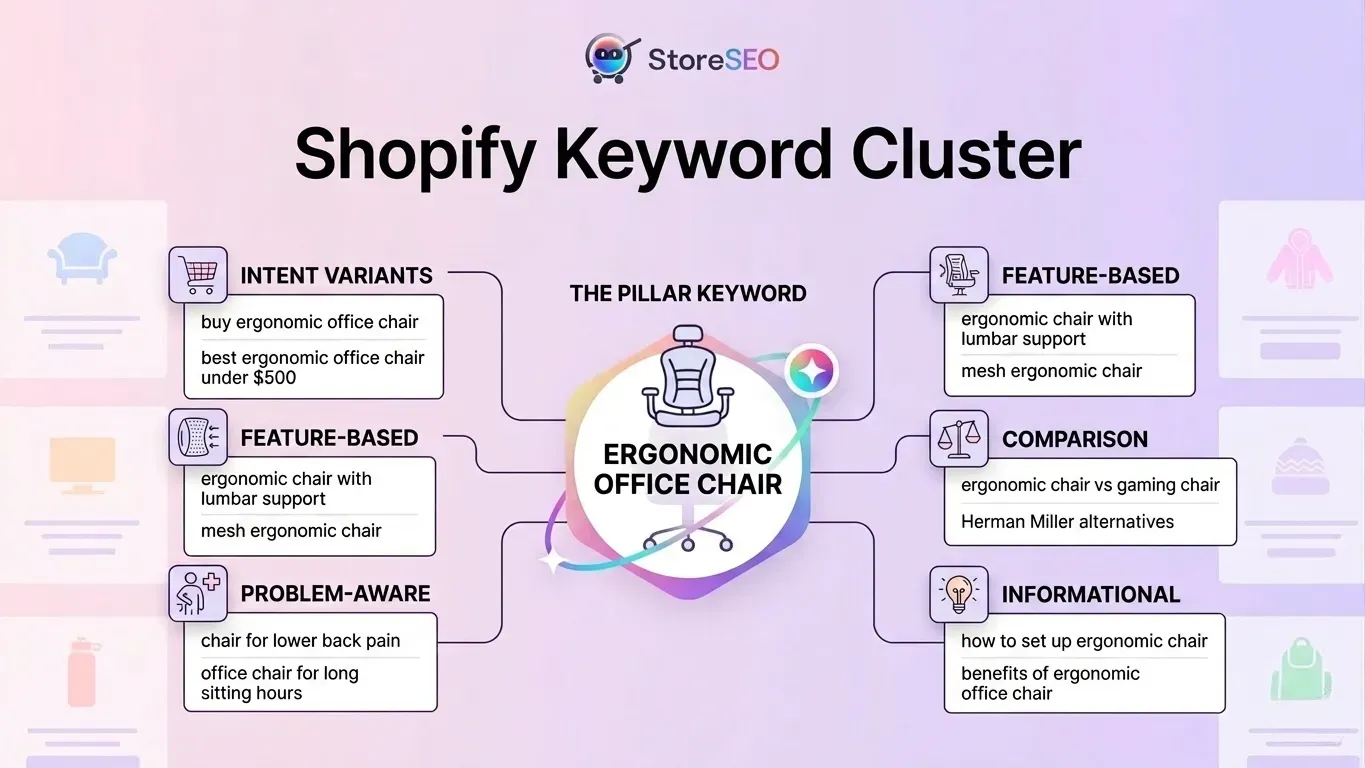
Filarowe słowo kluczowe
To Twoja główna fraza. Zwykle jest szeroka, ma stosunkowo dużą liczbę wyszukiwań i reprezentuje główny temat kategorii produktów lub strony kolekcji. Na przykład w sklepie meblowym filarem może być „ergonomiczne krzesło biurowe”.
Wspierające słowa kluczowe w klastrze
To semantyczne warianty, powiązane frazy i konkretne podtematy krążące wokół filaru. Należą do nich:
- Warianty intencji: „kup ergonomiczne krzesło biurowe”, „najlepsze ergonomiczne krzesło biurowe do $500”
- Oparte na cechach: „ergonomiczne krzesło z podparciem lędźwiowym”, „ergonomiczne krzesło z siatki”
- Świadome problemu: „krzesło na ból dolnej części pleców”, „krzesło biurowe do długiego siedzenia”
- Porównawcze: „krzesło ergonomiczne czy gamingowe”, „alternatywy dla Herman Miller”
- Informacyjne: „jak ustawić krzesło ergonomiczne”, „zalety ergonomicznego krzesła biurowego”
Mapowanie intencji wyszukiwania
Każde słowo kluczowe w klastrze musi mieć przypisaną dominującą intencję wyszukiwania: informacyjną, nawigacyjną, komercyjną lub transakcyjną. To decyduje, jaki rodzaj treści tworzysz dla danej frazy i która strona w Twoim sklepie Shopify powinna na nią celować.
| Typ intencji | Przykładowe zapytanie | Rodzaj treści lub strony |
| Informacyjna | jak ustawić krzesło ergonomiczne | Wpis na blogu lub poradnik |
| Komercyjna | najlepsze krzesło ergonomiczne do domowego biura | Strona kolekcji lub porównania |
| Transakcyjna | kup ergonomiczne krzesło z siatki online | Strona produktu z mocnym CTA |
| Nawigacyjna | autoryzowany sprzedawca Herman Miller | Strona marki lub kolekcji |
Wykrywanie luk w treściach
Pełna analiza klastra pokazuje też, czego Ci brakuje. Jeśli Twoi konkurenci mają w Twojej niszy szczegółowe poradniki zakupowe, porównania albo strony produktów pełne FAQ, to są luki w treściach, które Twoja strategia klastrów musi zapełnić. Uzupełnienie ich to jeden z najszybszych sposobów na zdobycie przewagi w wynikach organicznych.
5. Jak zbudować klastry słów kluczowych dla sklepu Shopify: schemat krok po kroku
Oto praktyczny schemat, który polecamy przy budowaniu klastrów słów kluczowych napędzających pozycje i sprzedaż sklepów Shopify.
Krok 1: Określ główne filary tematyczne
Zacznij od kategorii produktów lub kolekcji. Każda większa kategoria może być filarem tematycznym. W sklepie ze sprzętem fitness filarami mogą być taśmy oporowe, maty do jogi, kettlebelle i wałki do masażu. W marce kosmetycznej mogą to być serum z retinolem, kremy nawilżające z witaminą C i filtry przeciwsłoneczne SPF. Te filary stają się kotwicą dla każdego z Twoich klastrów. Jeśli potrzebujesz pomocy w wyborze właściwych fraz głównych dla każdego klastra, nasz poradnik o tym, jak przeprowadzić badanie słów kluczowych dla Shopify, to świetny punkt wyjścia.
Krok 2: Wygeneruj semantyczne warianty słów kluczowych
Dla każdego filaru wygeneruj wszystkie semantyczne warianty, powiązane pytania, frazy z długiego ogona i zapytania oparte na intencji, które krążą wokół tego tematu. Tu tradycyjne narzędzia do badania słów kluczowych zawodzą. Dają Ci listy, a nie klastry. Potrzebujesz narzędzia, które rozumie semantyczne relacje między słowami kluczowymi.
Krok 3: Pogrupuj według intencji i powiązań tematycznych
Gdy masz już surową listę słów kluczowych, pogrupuj je według dwóch wymiarów: intencji wyszukiwania (czego chce użytkownik) i bliskości tematycznej (jak mocno frazy są ze sobą powiązane). Słowa kluczowe o podobnej intencji i podobnym temacie powinny trafić do tego samego klastra i być obsługiwane przez tę samą stronę lub treść.
Krok 4: Przypisz klastry do stron i treści
Każdy klaster odpowiada konkretnej stronie lub treści w Twoim sklepie Shopify. Klastry transakcyjne przypisujesz do stron produktów i kolekcji. Klastry informacyjne do wpisów na blogu i poradników. Klastry komercyjne mogą trafić na strony porównań lub wyselekcjonowane strony docelowe kolekcji.
Krok 5: Zoptymalizuj i opublikuj, a potem połącz linkami wewnętrznymi
Gdy treści przypisane do klastrów są już opublikowane, połącz wszystko solidną strukturą linkowania wewnętrznego. Strony filarowe linkują do treści wspierających. Treści wspierające linkują z powrotem do stron filarowych i do odpowiednich stron produktów. Taka architektura pomaga Google zrozumieć Twój autorytet tematyczny i mądrze rozprowadzać autorytet stron po całym sklepie. Szczegółowe omówienie dobrych praktyk optymalizacji on-page, które uzupełniają to podejście, znajdziesz w naszym kompletnym poradniku o SEO on-page dla Shopify.
6. Poznaj generator klastrów słów kluczowych AI w StoreSEO: stworzony dla Shopify, nie tylko dla ekspertów SEO
Stworzyliśmy generator klastrów słów kluczowych StoreSEO właśnie dlatego, że opisany wyżej proces, choć skuteczny, wykonywany ręcznie naprawdę pochłania mnóstwo czasu. Sprzedawcy na Shopify powinni prowadzić swój biznes, a nie spędzać godziny w arkuszach kalkulacyjnych.
Generator klastrów słów kluczowych AI w StoreSEO automatyzuje cały proces klastrowania w Twoim panelu StoreSEO. Oto, co odróżnia go od wszystkich innych narzędzi do słów kluczowych.
Działa w Twoim panelu Shopify
Nie musisz żonglować zewnętrznymi narzędziami, eksportować i importować plików CSV ani uczyć się osobnej platformy. Wpisujesz słowo kluczowe startowe bezpośrednio w panelu optymalizacji produktu w StoreSEO, a narzędzie natychmiast generuje pełną mapę klastra. Wszystko jest powiązane z produktem, który faktycznie chcesz zoptymalizować.
Semantyczne grupowanie oparte na AI, a nie tylko listy słów kluczowych
Większość narzędzi do słów kluczowych zwraca płaską listę posortowaną według liczby wyszukiwań. Generator klastrów słów kluczowych StoreSEO stosuje analizę semantyczną, by ustalić, które frazy są ze sobą tematycznie powiązane i powinny należeć do tego samego klastra. To odzwierciedla sposób, w jaki Google ocenia treści: nie słowo po słowie, ale temat po temacie.
Oznaczanie klastrów według intencji
Każdy klaster wygenerowany przez StoreSEO ma przypisaną dominującą intencję wyszukiwania: informacyjną, nawigacyjną, komercyjną lub transakcyjną. Dzięki temu planowanie treści przestaje być zgadywaniem. Jeśli klaster jest oznaczony jako transakcyjny, wiesz, że trzeba skupić się na stronie produktu z mocnym, sprzedażowym tekstem i danymi strukturalnymi. Jeśli jest informacyjny, wiesz, że warto napisać edukacyjny poradnik lub wpis na blogu.
Bezpośrednia integracja z generowaniem opisów produktów
Tu robi się naprawdę ciekawie. Gdy klaster słów kluczowych jest gotowy, StoreSEO wykorzystuje cały klaster, by jednym kliknięciem przygotować dla Ciebie opis produktu z potencjałem na wysokie pozycje. Nie jest to opis upchany słowami kluczowymi, tylko bogaty semantycznie tekst, który naturalnie wplata cały klaster, by zmaksymalizować trafność w wyszukiwarce. Możesz generować kolejne warianty, aż znajdziesz idealny, a potem zapisać go bezpośrednio w produkcie.
Pełną, techniczną instrukcję korzystania z tej funkcji krok po kroku znajdziesz w naszej kompletnej dokumentacji generatora klastrów słów kluczowych StoreSEO.
Wbudowane wykrywanie luk w treściach
Generator wskazuje też luki w treściach: obszary, w których Twoi konkurenci mogą mieć treści, a Twój sklep nie. Te luki to Twoje najważniejsze szanse contentowe, czyli miejsca, w których opublikowanie dobrze zoptymalizowanych treści najszybciej i najbardziej bezpośrednio wpłynie na Twoje pozycje.
| Szybka instrukcja StoreSEO: 4 kroki do pierwszego klastra słów kluczowych |
| 1. Przejdź do zakładki ‘Optimize SEO’ (Optymalizuj SEO) w panelu StoreSEO i wybierz produkt, który chcesz ulepszyć. |
| 2. Kliknij ‘Generate Keyword Cluster’ (Generuj klaster słów kluczowych) w panelu Keyword Research, aby automatycznie pobrać słowa kluczowe dopasowane do intencji wyszukiwania oraz wizualną mapę klastra. |
| 3. Kliknij ‘Generate Product Description’ (Generuj opis produktu), aby StoreSEO wykorzystał Twój klaster do napisania zoptymalizowanego opisu. Generuj ponownie, aż będzie idealny, a potem kliknij ‘Keep and Replace.’ (Zachowaj i zastąp). |
| 4. Użyj przycisku ‘Edit Product’ (Edytuj produkt), aby wprowadzić ostatnie poprawki w metadanych lub opisie, a następnie zapisz. |
7. Klastry słów kluczowych a AEO/GEO: pozycjonowanie w wyszukiwaniu opartym na AI
Porozmawiajmy o przyszłości wyszukiwania, bo ona już tu jest.
Wyszukiwarki odpowiedzi oparte na AI, w tym ChatGPT Search, Perplexity, Google AI Overviews i Gemini, zasadniczo zmieniają sposób, w jaki użytkownicy znajdują produkty i podejmują decyzje zakupowe. Zamiast przeklikiwać listę niebieskich linków, wielu użytkowników dostaje teraz bezpośrednie odpowiedzi, rekomendacje produktów i porównania przygotowane przez AI.
Kluczowa obserwacja jest taka: wyszukiwarki AI nie wybierają źródeł przypadkowo. Preferują źródła z autorytetem tematycznym. Szukają witryn, które wykazały się kompleksową, rzetelną i dobrze uporządkowaną wiedzą w danym temacie. Innymi słowy, preferują dokładnie to, co daje strategia klastrów słów kluczowych.
Jak klastry słów kluczowych napędzają AEO w sklepach Shopify
Answer Engine Optimization (AEO) polega na takim przygotowaniu treści, by to właśnie je narzędzia AI cytowały, odpowiadając na pytania użytkowników. W przypadku sklepu Shopify oznacza to:
- Klastry FAQ produktów: zebranie wszystkich pytań, jakie kupujący zadają o Twoje produkty, w klaster FAQ i przygotowanie wyczerpujących odpowiedzi. StoreSEO ułatwia dodanie FAQ Schema do stron produktów, co jest niezbędnym technicznym krokiem w AEO.
- Klastry porównawcze: kompleksowe omówienie zapytań porównawczych w Twojej niszy, aby narzędzia AI wskazywały Twój sklep, gdy użytkownicy pytają, „co jest lepsze”.
- Klastry „najlepsze do”: odpowiadanie na konkretne zapytania o zastosowania, które kupujący kierują do narzędzi AI, np. „najlepsza mata do hot jogi” albo „najlepsze krzesło ergonomiczne dla niskich osób”.
GEO: jak zostać cytowanym źródłem w wynikach wyszukiwania generatywnego
Generative Engine Optimization (GEO) idzie o krok dalej. Celem nie jest tylko pozycja w tradycyjnych wynikach, ale bycie cytowanym, polecanym lub przywoływanym w odpowiedziach generowanych przez AI. Sklepy z rozbudowanymi, klastrowymi treściami wokół kategorii produktów mają największe szanse, by trafić do generowanych przez AI rekomendacji produktów i poradników zakupowych.
Dlatego wierzymy, że sprzedawcy na Shopify, którzy już teraz inwestują w strategię treści opartą na klastrach, budują trwałą przewagę konkurencyjną, która będzie rosnąć przez najbliższe trzy do pięciu lat wraz z rozwojem wyszukiwania AI.
8. Najczęstsze błędy sprzedawców na Shopify przy klastrowaniu słów kluczowych (i jak ich uniknąć)
Błąd 1: Tworzenie osobnej strony dla każdego wariantu słowa kluczowego
Tworzenie nowej strony produktu lub kolekcji dla każdego wariantu frazy to klasyczny błąd nadmiernej optymalizacji. Prowadzi do ubogich treści, problemów z duplikacją i kanibalizacji słów kluczowych. Zamiast tego grupuj semantycznie podobne frazy na jednej stronie i pozwól, by jedna dobrze zoptymalizowana strona objęła cały klaster.
Błąd 2: Pomijanie intencji wyszukiwania przy budowaniu klastrów
Klaster słów kluczowych zbudowany bez mapowania intencji to po prostu lista słów kluczowych z dodatkowymi krokami. Jeśli umieścisz frazy informacyjne i transakcyjne na tej samej stronie produktu, Twoje treści będą niespójne, a Google tak samo zdezorientowany. Zawsze najpierw mapuj intencję, a potem twórz pasujące do niej treści.
Błąd 3: Klastrowanie bez planu treści
Generowanie klastrów ma sens tylko wtedy, gdy prowadzi do planu treści. Kto napisze wpisy na blogu dla informacyjnych fraz z klastra? Jaki jest harmonogram optymalizacji stron produktów pod klastry transakcyjne? Klastry słów kluczowych to strategiczny zasób, ale tylko wtedy, gdy są połączone z planem działania.
Błąd 4: Zaniedbywanie technicznego SEO obok strategii klastrów
Klastry słów kluczowych nie pokażą pełni możliwości, jeśli Twój sklep Shopify ma problemy z technicznym SEO, które utrudniają Google indeksowanie treści i poruszanie się po nich. Zadbaj o techniczną kondycję sklepu: przesłane mapy witryny, wdrożone dane strukturalne, zoptymalizowaną szybkość stron i poprawnie skonfigurowane metadane. Pełen zestaw narzędzi StoreSEO obejmuje wszystkie te obszary. Systematyczne podejście do wykrywania i naprawiania problemów technicznych opisujemy w poradniku o tym, jak przeprowadzić szczegółową analizę SEO sklepu Shopify.
Błąd 5: Brak monitorowania wyników klastrów
Strategia klastrów słów kluczowych to nie jest zadanie typu „ustaw i zapomnij”. Musisz śledzić, które klastry przyciągają ruch, które frazy w klastrach zyskują lub tracą pozycje i gdzie pojawiają się nowe luki w treściach. Keyword Rank Tracker w StoreSEO pozwala monitorować pozycje słów kluczowych w czasie, bezpośrednio w tym samym panelu, w którym zarządzasz klastrami. Takie zamknięte koło informacji zwrotnej pozwala stale dopracowywać i ulepszać strategię.
9. Ekosystem StoreSEO: jak klastry słów kluczowych łączą się z całą Twoją strategią SEO
Klastry słów kluczowych są strategicznym fundamentem, ale największą moc zyskują w połączeniu z kompleksowym podejściem do SEO. Oto jak funkcje StoreSEO współpracują, tworząc pełny, samonapędzający się system SEO dla Twojego sklepu Shopify.
Keyword Analytics: sprawdź swoje klastry na prawdziwych danych
Przed zbudowaniem klastrów i po nim funkcja Keyword Analytics w StoreSEO dostarcza dane o liczbie wyszukiwań, CPC, wskaźnikach trudności płatnej i podpowiedzi powiązanych słów kluczowych. Dzięki temu możesz upewnić się, że budowane klastry celują w frazy z realnym popytem, i nadać priorytet tym, które najlepiej łączą liczbę wyszukiwań z wartością komercyjną.
AI Content Optimizer: upewnij się, że frazy z klastra są dobrze wplecione
Gdy klaster jest zdefiniowany, a treść napisana, AI Content Optimizer w StoreSEO analizuje opisy produktów, wpisy na blogu i treści stron, aby frazy z klastra były naturalnie i skutecznie obecne w całym tekście. To optymalizacja on-page, która się skaluje.
Schema Markup: spraw, by treści z klastra były czytelne dla maszyn
Dane strukturalne są pomostem między treściami z klastra a tym, jak rozumieją je wyszukiwarki i narzędzia AI. StoreSEO ułatwia wdrożenie Product Schema, FAQ Schema, Review Schema i innych w całym sklepie Shopify. To szczególnie ważne w AEO, gdzie uporządkowane, czytelne dla maszyn dane znacząco zwiększają szanse na cytowanie w odpowiedziach generowanych przez AI. Instrukcję konfiguracji krok po kroku znajdziesz w naszej dokumentacji o konfigurowaniu znaczników schema SEO w Shopify za pomocą StoreSEO.
Integracja z Google Search Console: dane o wynikach z prawdziwego świata
Ostatni element układanki to wiedza o tym, jak Twoja strategia klastrów radzi sobie w prawdziwych wynikach wyszukiwania. Integracja StoreSEO z Google Search Console przenosi dane o wyświetleniach, kliknięciach i pozycjach bezpośrednio do Twojego panelu, dzięki czemu widzisz, które frazy z klastrów zyskują i gdzie warto zwiększyć wysiłki.
| Dowód, że to działa |
| Sklepy Shopify, które przechodzą od optymalizacji pod pojedyncze słowa kluczowe do strategii treści opartej na klastrach, regularnie obserwują trzy zjawiska: szerszy zasięg słów kluczowych (pozycje na więcej fraz), dłuższe sesje użytkowników, którzy czytają kilka treści z klastra, oraz wyższe współczynniki konwersji z ruchu, który przeszedł całą ścieżkę zakupową. Strategia klastrów nie tylko zwiększa ruch. Znacząco poprawia jego jakość. |
10. Praktyczne szablony klastrów słów kluczowych dla popularnych typów sklepów Shopify
Zróbmy to jeszcze bardziej konkretnie. Oto przykładowe schematy klastrów dla trzech popularnych typów sklepów Shopify.
Dla sklepu z modą i odzieżą
Filar: Damskie lniane bluzki
- Główne: lniane bluzki damskie, damskie koszule lniane
- Komercyjne: najlepsze lniane bluzki lato 2026, tanie lniane bluzki
- Oparte na cechach: lniane bluzki z kieszeniami, oversize’owe lniane bluzki
- Oparte na okazji: lniane bluzki do pracy, lniane bluzki na wakacje nad morzem
- Informacyjne: jak dbać o lniane ubrania, czy len przepuszcza powietrze
Dla sklepu ze zdrowiem i wellness
Filar: Suplementy z kolagenem
- Główne: suplementy z kolagenem, kolagen w proszku
- Komercyjne: najlepsze suplementy z kolagenem dla kobiet, kolagen morski czy wołowy
- Świadome problemu: kolagen na bóle stawów, kolagen na porost włosów
- Transakcyjne: kup peptydy kolagenowe online, suplementy z kolagenem darmowa dostawa
- Informacyjne: jak przyjmować kolagen, kiedy brać suplement z kolagenem
Dla sklepu z artykułami do domu
Filar: Lniana pościel
- Główne: lniane prześcieradła, lniana pościel
- Komercyjne: najlepsza lniana pościel dla osób, którym jest gorąco w nocy, organiczna lniana pościel
- Porównawcze: len czy bawełna w pościeli, len francuski czy belgijski
- Transakcyjne: lniane prześcieradło king size, kup lnianą pościel online
- Informacyjne: jak zmiękczyć lnianą pościel, czy lniana pościel się gniecie
Każdy z tych schematów możesz wygenerować w kilka minut za pomocą generatora klastrów słów kluczowych StoreSEO. Wpisujesz swój produkt jako słowo kluczowe startowe, a AI przygotowuje pełny semantyczny klaster, od razu uporządkowany według intencji.
11. Jak mierzyć skuteczność strategii klastrów słów kluczowych
Gdy Twoja strategia klastrów już działa, oto jak sprawdzić, czy przynosi efekty.
Wzrost zasięgu organicznych słów kluczowych
Czy z czasem pozycjonujesz się na coraz więcej słów kluczowych? Strategia klastrów powinna stale zwiększać liczbę fraz, na które wyświetla się Twój sklep. Śledź to w Google Search Console lub w narzędziu do śledzenia pozycji StoreSEO.
Pozycje głównych i wspierających słów kluczowych klastra
Śledź pozycje filarowego słowa kluczowego i fraz wspierających w każdym klastrze. Zdrowa strategia klastrów sprawi, że strona filarowa znajdzie się w top 10 dla głównej frazy, a strony wspierające będą się pozycjonować na swoje podtematy.
Trend ruchu organicznego według stron
Sprawdzaj wzrost ruchu organicznego na stronach zoptymalizowanych zgodnie ze strategią klastrów. Trendy wzrostowe powinny być widoczne zarówno na stronach filarowych, jak i na treściach wspierających.
Współczynnik konwersji na stronach produktów zoptymalizowanych pod klastry
To wskaźnik, który dla sprzedawców na Shopify liczy się najbardziej. Strony produktów zoptymalizowane pod klastry, które przyciągają ruch zgodny z intencją, powinny mieć wyższe współczynniki konwersji niż strony bez takiej optymalizacji, bo trafiają na nie lepiej dopasowani odwiedzający.
| Wskaźnik do śledzenia | Co Ci mówi |
| Łączna liczba pozycjonowanych słów kluczowych | Jak z czasem rośnie zasięg Twojego autorytetu tematycznego |
| Pozycja filarowego słowa kluczowego | Podstawowa widoczność najważniejszej kategorii produktów |
| Sesje organiczne według stron | Czy strony zoptymalizowane pod klastry zdobywają więcej ruchu |
| Strony na sesję | Czy treści z klastra prowadzą do głębszego zaangażowania w sklepie |
| Współczynnik konwersji według źródła | Jakość ruchu z klastrów w porównaniu z innymi źródłami |
| Średnia pozycja fraz z klastra | Ogólna kondycja klastra w wynikach wyszukiwania |
Najczęściej zadawane pytania o klastry słów kluczowych i SEO w Shopify
Czym różni się klaster słów kluczowych od listy słów kluczowych?
Lista słów kluczowych to płaski zbiór fraz, zwykle posortowanych według liczby wyszukiwań lub trafności. Klaster słów kluczowych to uporządkowana grupa semantycznie powiązanych fraz, zorganizowana według tematu i intencji wyszukiwania, z jasnym przypisaniem do konkretnych stron lub treści. Klastry są strategiczne, listy jedynie informacyjne.
Ile słów kluczowych powinien zawierać klaster?
Nie ma sztywnej liczby, ale zdrowy klaster produktowy dla sklepu Shopify zwykle obejmuje od 10 do 30 słów kluczowych. Mniejsze klastry mogą oznaczać, że nie zbadano całego semantycznego obszaru wokół tematu. Większe może być warto podzielić na podklastry.
Czy mogę budować klastry słów kluczowych bez płatnego narzędzia?
Tak, ale to powolna i ręczna praca. Możesz korzystać z autouzupełniania Google, sekcji „Podobne pytania” (People Also Ask) i podobnych wyszukiwań, aby ręcznie wyłuskać frazy do klastra. Jednak sprzedawcom na Shopify, którzy muszą przygotować klastry dla dziesiątek lub setek produktów, narzędzie takie jak generator klastrów słów kluczowych StoreSEO radykalnie skraca czas i nakład pracy, a przy tym poprawia trafność grupowania semantycznego.
Po jakim czasie widać efekty strategii klastrów słów kluczowych?
Zazwyczaj pierwsze mierzalne wzrosty pozycji stron zoptymalizowanych pod klastry pojawiają się po 6 do 12 tygodniach, a większe przyrosty ruchu między 3. a 6. miesiącem. Efekt autorytetu tematycznego narasta z czasem, więc im wcześniej zaczniesz, tym większą przewagę zyskasz.
Czy klastrowanie słów kluczowych sprawdza się w zupełnie nowych sklepach Shopify?
Jak najbardziej. Co więcej, strategia klastrów od pierwszego dnia to najszybsza droga do zbudowania autorytetu tematycznego nowego sklepu. Zamiast od razu walczyć o konkurencyjne, szerokie frazy, klastry pozwalają najpierw zdobyć pozycje na frazy z długiego ogona i mniej konkurencyjne, zbudować autorytet, a z czasem wypracować pozycje także na szersze hasła. Nasz poradnik wskazówki SEO dla nowych właścicieli sklepów Shopify omawia to podejście dokładniej.
Czym generator klastrów słów kluczowych StoreSEO różni się od narzędzi takich jak Ahrefs czy SEMrush?
Ahrefs, SEMrush i podobne narzędzia to potężne platformy badawcze stworzone dla specjalistów SEO. Wymagają sporo czasu na naukę, działają poza środowiskiem Shopify i nie łączą się bezpośrednio z Twoimi stronami produktów. Generator klastrów słów kluczowych StoreSEO powstał specjalnie dla sprzedawców na Shopify: działa w Twoim panelu, łączy się bezpośrednio z produktami i pozwala przejść od klastra do zoptymalizowanej treści w kilka minut, a nie godzin.
Przestań gonić za słowami kluczowymi. Zacznij budować autorytet tematyczny.
Sklepy Shopify, które w najbliższych latach zdominują wyniki organiczne i wyszukiwanie oparte na AI, to nie te, które celują w najwięcej słów kluczowych. To te, które budują najgłębszy i najbardziej spójny autorytet tematyczny w swojej niszy.
Klastry słów kluczowych to mechanizm, który pozwala osiągnąć autorytet tematyczny na dużą skalę. Dopasowują treści do całej ścieżki zakupowej. Eliminują kanibalizację słów kluczowych. Wysyłają Google i wyszukiwarkom AI najsilniejszy możliwy sygnał, że Twój sklep jest autorytatywnym źródłem w swojej kategorii produktów.
Stworzyliśmy generator klastrów słów kluczowych StoreSEO właśnie po to, by ta strategia była dostępna dla każdego sprzedawcy na Shopify, a nie tylko dla tych z własnym zespołem SEO czy budżetem na poziomie korporacji. W czterech krokach przejdziesz od słowa kluczowego startowego do bogatego semantycznie klastra, zoptymalizowanego opisu produktu i planu treści.
Pytanie nie brzmi, czy klastry słów kluczowych działają. Dowody jasno pokazują, że tak, i to znacząco. Pytanie brzmi, czy Twój sklep Shopify będzie budował ten autorytet, podczas gdy konkurencja wciąż utknęła na celowaniu w jedno słowo kluczowe naraz.
Chcesz zbudować swój pierwszy klaster słów kluczowych? Otwórz panel StoreSEO i wygeneruj pierwszy klaster już dziś. A jeśli przed startem chcesz zapoznać się z pełną dokumentacją funkcji, odwiedź naszą stronę dokumentacji generatora klastrów słów kluczowych.

Autor
Mahmudul Hasan