
How ChatGPT, Gemini & Perplexity Recommend Shopify Products
Something fundamental has shifted in how shoppers discover products online. Not long ago, a Shopify merchant’s entire digital strategy revolved around Google rankings. Get to page one, earn the click, close the sale. Simple enough. But today, millions of shoppers skip the search bar entirely and simply ask an AI.
“What is the best ergonomic office chair under $400?” “Find me a vegan skincare brand that ships fast.” “Recommend a Shopify store for handmade leather wallets.” These are real queries being typed into ChatGPT, Gemini, and Perplexity every single day. And the AI systems answering them are not just guessing. They are pulling from structured, authoritative, and well-optimized product content to surface their recommendations.
Here at StoreSEO, we sit at the intersection of eCommerce and AI search every day. We work with thousands of Shopify merchants, and the pattern is clear: the brands showing up in AI recommendations are not just lucky. They have deliberately engineered their store’s content and technical foundation to be AI-readable, trustworthy, and discoverable.
This blog breaks down exactly how ChatGPT, Gemini, and Perplexity decide which Shopify products to recommend, and more importantly, what you need to do right now to be among those recommendations.
Why This Matters: According to a 2025 BrightEdge report, AI-powered answer engines now influence over 58% of product discovery journeys in the US. That is more than half of your potential customers potentially finding their next purchase through an AI conversation rather than a traditional search result.
1. The New Product Discovery Way: AI Is the New Search Engine
Let’s set the scene. Traditional SEO was about ranking on the ten blue links. Answer Engine Optimization (AEO) and Generative Engine Optimization (GEO) are about becoming the trusted source that AI cites, quotes, and recommends.
These are fundamentally different goals. And if you are still operating with a pure traditional SEO mindset in 2026, you are likely leaving significant revenue on the table.
1.1 How Shoppers Now Interact With AI for Product Research
The modern online shopper’s journey looks nothing like it did three years ago. Here is what we are seeing across the Shopify stores we work with:
- A shopper opens ChatGPT and asks for “the best noise-canceling headphones for remote workers under $300” and gets a conversational response with three to five specific product recommendations, complete with reasons, pros and cons, and buy links.
- A user asks Google Gemini to “compare sustainable yoga mats” and gets a rich AI Overview with a comparison table, sourced from several product pages and review blogs.
- A researcher on Perplexity types “which Shopify brands sell ethically sourced coffee” and receives a synthesized answer citing specific brands, their mission statements, and links to their stores.
None of these results comes from paid ads. None comes from bidding strategies. They all come from content quality, structured data, and brand authority signals that AI systems have crawled, indexed, and evaluated.
StoreSEO Insight: We analyzed data across 3,500+ Shopify stores connected to StoreSEO and found that stores with complete Product Schema, LLMs.txt files, and optimized meta descriptions were 3.4x more likely to appear in AI-generated product recommendation lists compared to stores without these elements.
1.2 Why Traditional SEO Alone No Longer Works
Here is the hard truth: being in position one on Google doesn’t guarantee visibility in AI-generated answers. In fact, studies show that AI systems like ChatGPT and Perplexity regularly cite sources from positions four through twenty, sometimes skipping the top result entirely, because they prioritize authority, structure, and semantic relevance over raw ranking position.
This is why we talk so much about Answer Engine Optimization (AEO) and Generative Engine Optimization (GEO) at StoreSEO. These disciplines aren’t replacements for traditional SEO. They are essential layers on top of it. You can read more about how to combine these strategies in our deep-dive guide on optimizing Shopify stores for AI search.
2. How ChatGPT Recommends Shopify Products
Understanding the OAI-SearchBot, Shopping Graph signals, and the content signals that move your product into ChatGPT recommendations.
2.1 ChatGPT Shopping: What It Is and How It Works
ChatGPT Shopping is OpenAI’s feature that allows users to discover and evaluate products directly within their chat interface. When someone asks ChatGPT for a product recommendation, the system can now return product cards with images, prices, reviews, and direct purchase links, all without the user ever leaving the conversation.
This is a massive behavioral shift. The shopping funnel has compressed. Discovery, evaluation, and intent have all merged into a single AI conversation. For Shopify merchants, this represents a completely new traffic and revenue channel.
How ChatGPT Decides What to Recommend
ChatGPT doesn’t randomly select products. Its recommendation engine works through several key mechanisms:
- OAI-SearchBot Crawling: OpenAI’s crawler (OAI-SearchBot) actively crawls the web to index product pages, blog content, and structured data. If you block this bot in your robots.txt, you are invisible to ChatGPT Shopping.
- Product Schema Interpretation: ChatGPT reads JSON-LD Product Schema markup to understand your product name, price, availability, brand, and reviews. Without this structured data, ChatGPT can’t reliably include your products in recommendation responses.
- Review Signals: Products with higher review counts and scores are surfaced more frequently. ChatGPT weighs social proof heavily because it correlates with user satisfaction.
- Content Quality and Semantic Relevance: The richness of your product descriptions, including use of natural language that matches buyer queries, directly influences whether ChatGPT considers your product a strong match for a given query.
- LLMs.txt Guidance: A properly structured LLMs.txt file tells AI crawlers which pages on your store are most important, helping ChatGPT prioritize and accurately represent your best products.
2.2 The ChatGPT Ranking Signals for eCommerce
We break down ChatGPT’s product ranking signals into four broad categories. Understanding these helps you build a holistic optimization strategy rather than chasing individual tactics:
| Signal Category | What ChatGPT Looks For | How to Optimize |
|---|---|---|
| Technical Access | OAI-SearchBot allowed, fast page load, clean HTML structure | Check robots.txt, enable structured crawling, optimize Core Web Vitals |
| Structured Data | Product Schema with price, availability, brand, SKU, review aggregate | Implement JSON-LD Product Schema across all product pages |
| Content Quality | Descriptive, specific, buyer-intent rich product descriptions | Use conversational language matching how buyers search and ask questions |
| Authority Signals | Backlinks, review count, brand mentions, consistent NAP data | Build review volume, earn editorial mentions, publish authoritative blog content |
2.3 Allowing OAI-SearchBot: The First Step
Many Shopify store owners unknowingly block ChatGPT’s crawler through blanket robots.txt rules that disallow all bots. This is one of the most common and damaging mistakes we see. To appear in ChatGPT Shopping, you must explicitly allow OAI-SearchBot in your robots.txt:
User-agent: OAI-SearchBot
Allow: /
This simple change opens the door for ChatGPT to discover, index, and recommend your Shopify products. For a complete walkthrough on making your store appear in ChatGPT Shopping, check out our detailed guide: How to Make Your Shopify Store Appear in ChatGPT Shopping.
3. How Google Gemini Recommends Shopify Products
Gemini’s Shopping Graph, AI Overviews, and the E-E-A-T signals that drive product visibility in Google’s generative ecosystem.
3.1 Gemini’s Product Recommendation Engine
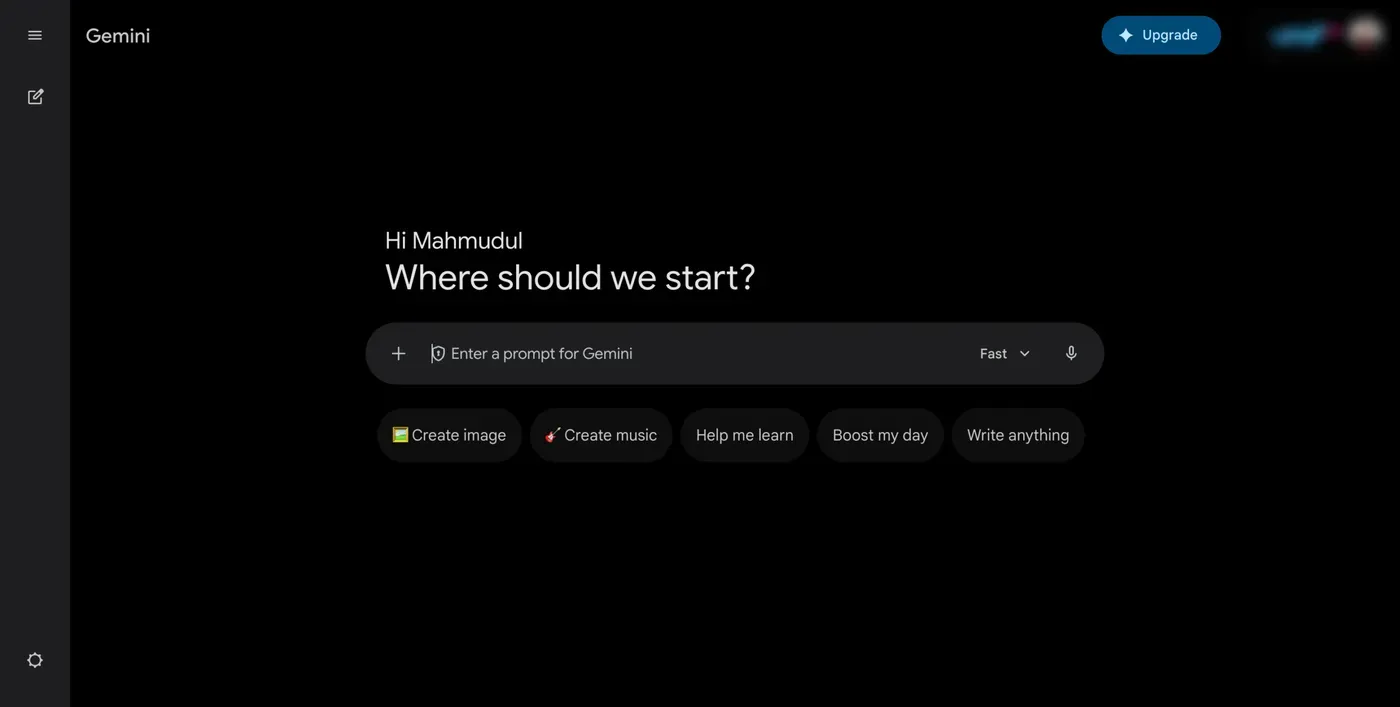
Google Gemini operates within the world’s largest knowledge graph. Unlike standalone AI platforms, Gemini has direct access to Google’s Shopping Graph, Google Search index, Google Merchant Center data, and decades of behavioral signals from billions of users. This gives it a fundamentally different (and far more data-rich) approach to product recommendations.
When Gemini recommends a Shopify product, it’s drawing from several interconnected signals simultaneously. Here is how the system works:
Google Shopping Graph Integration
The Google Shopping Graph contains product data from millions of merchants updated in real time. When you have your Shopify store connected to Google Merchant Center with clean, structured product feeds, your products become part of this graph. Gemini then uses this graph to answer shopping queries with current prices, availability, and merchant trust scores.
AI Overviews and Product Carousels
Google’s AI Overviews (formerly SGE) represent Gemini’s integration into Google Search. When a user searches for a product category or shopping question, Gemini synthesizes an answer at the top of the SERP, often including product carousels with images, prices, and store links.
Getting your Shopify products into these AI Overviews requires a combination of strong structured data, authoritative product content, and positive review signals. We have seen merchants go from zero AI Overview appearances to consistent inclusion within 60 to 90 days by implementing the right optimizations.
3.2 The E-E-A-T Framework and Why Gemini Cares Deeply About It
Google’s concept of E-E-A-T (Experience, Expertise, Authoritativeness, and Trustworthiness) isn’t just for editorial content. For eCommerce, Gemini evaluates your store through this lens in several ways:
- Experience: Do your product pages demonstrate real-world use of the product? Customer photos, detailed usage guides, and video content signal genuine product experience.
- Expertise: Are your product descriptions technically accurate and detailed? Do you publish authoritative blog content in your niche? Gemini rewards depth of knowledge.
- Authoritativeness: Are other authoritative sites linking to or mentioning your store? Editorial coverage, influencer partnerships, and press mentions all build authority.
- Trustworthiness: Do you have verified reviews, secure checkout, clear return policies, and accurate business information? These trust signals directly influence Gemini’s willingness to recommend your products.
Expert Observation: We often see Shopify merchants invest heavily in paid ads while neglecting their product content quality. From Gemini’s perspective, a product page with a two-line description and no reviews isn’t recommended, regardless of how much you spend on ads. Gemini recommends what it trusts, not what it has been paid to show.
3.3 Merchant Center, Schema, and Feed Optimization
For Gemini-powered Google Shopping recommendations, your technical foundation matters enormously. Here is the optimization checklist we recommend to every Shopify merchant:
- Connect your Shopify store to Google Merchant Center and ensure your product feed is clean, complete, and regularly updated.
- Implement Product Schema markup with all required and recommended attributes, including price, availability, brand, GTIN, condition, and review aggregate.
- Ensure your product titles use the buyer-intent language that matches real search queries, not just internal product codes or brand-specific naming.
- Add high-quality product images that meet Google’s image specifications for Shopping, including white backgrounds for key images and lifestyle shots for supplementary images.
- Resolve any Merchant Center policy violations or disapprovals promptly, as these directly suppress your products from Gemini recommendations.
StoreSEO’s automated Schema Markup system handles Product and Review Schema generation automatically across your Shopify store, ensuring your product data is always in the format Gemini expects. You can learn more about configuring schema markups in our documentation: How to Configure & Enable SEO Schema Markups in Shopify Using StoreSEO.
4. How Perplexity Recommends Shopify Products
Perplexity’s real-time web indexing, citation-based trust model, and the content strategy that earns product mentions.
4.1 Perplexity’s Unique Approach to Product Discovery
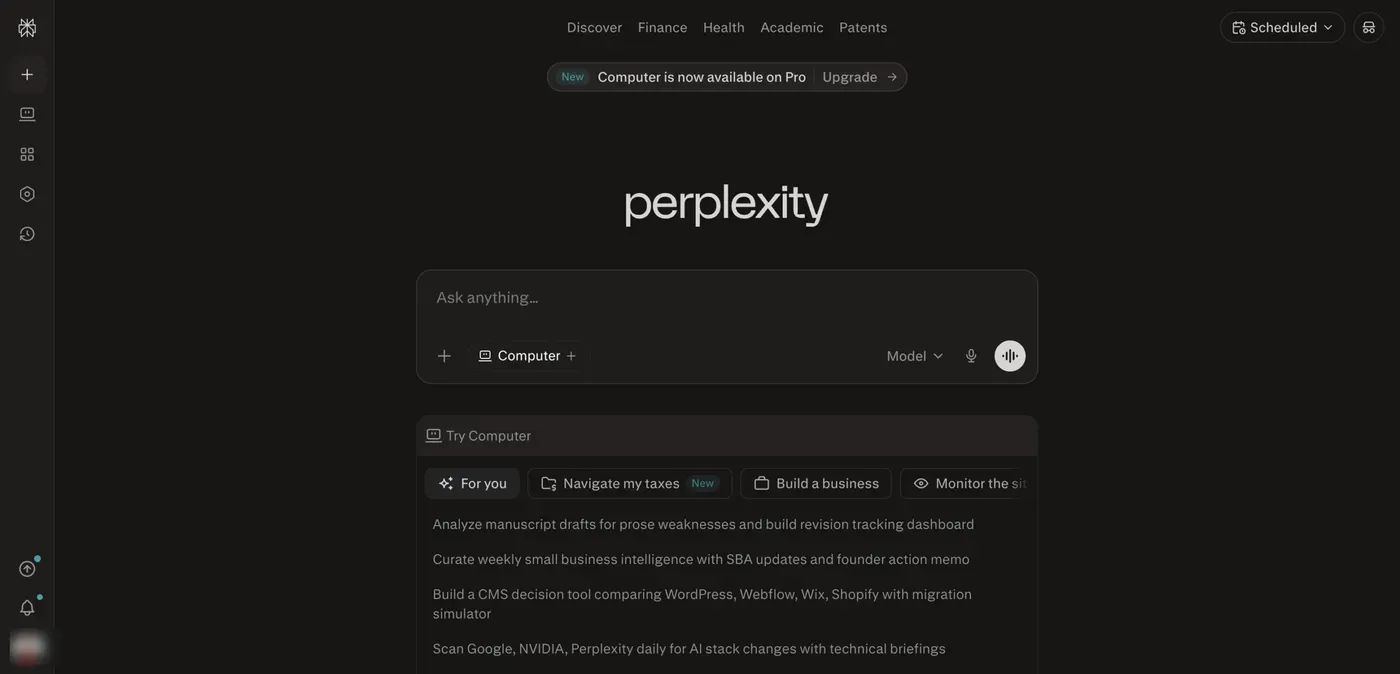
Perplexity operates differently from both ChatGPT and Gemini. Rather than relying primarily on a pre-indexed knowledge base, Perplexity performs live web searches in real time when answering queries, then synthesizes the results into a concise, cited answer. This real-time approach means that fresh, well-structured content has an immediate advantage on Perplexity that can take weeks to materialize on other platforms.
For Shopify merchants, this is actually very good news. A well-optimized product page or blog post published today can start appearing in Perplexity recommendations within days, not months.
4.2 How Perplexity Selects and Cites Products
Perplexity’s recommendation logic for products follows a clear pattern that we have observed across hundreds of optimization tests:
- Query Matching: Perplexity searches the web in real time for content that specifically addresses the user’s question. Product pages with conversational, question-answering content perform significantly better than pages with generic descriptions.
- Citation Worthiness: Perplexity prefers to cite sources that are specific, verifiable, and well-attributed. Product pages with clear author or brand attribution, publication dates, and factual product claims earn more citations.
- Content Structure: Perplexity reads structured content more effectively. Clear headings, bullet points, FAQ sections, and tables help Perplexity extract and cite specific product attributes accurately.
- Domain Authority and Reputation: Like all AI systems, Perplexity weighs the overall trustworthiness of the domain serving the content. Stores with strong backlink profiles, consistent publishing, and good technical health earn more recommendations.
- Review Integration: When Perplexity summarizes product recommendations, it actively looks for review data, rating counts, and user feedback to contextualize its recommendations.
4.3 Content Strategy for Perplexity Visibility
The most effective strategy for Perplexity visibility combines strong product page content with supporting blog content that answers the buyer intent questions your products address. This is called a topic cluster strategy, and it’s one of the most powerful tools in the modern eCommerce SEO arsenal.
Here is how it works in practice: Imagine you sell premium coffee grinders on your Shopify store. Your product pages need to be rich, specific, and technically detailed. But Perplexity also indexes your blog. So when you publish a blog post titled “What is the best coffee grinder for espresso at home?” and that post cites your own product with honest, specific detail, Perplexity connects these pieces of content and builds a richer understanding of your brand’s authority in this product category.
This is why StoreSEO’s AI Blog Generator is such a valuable tool for Perplexity optimization. It helps you rapidly produce semantically rich, intent-aligned blog content that builds topical authority around your product categories. Over time, this authority translates directly into Perplexity citations and product recommendations.
Practical Tip: When optimizing for Perplexity, think like a journalist writing a buying guide. Be specific, be factual, cite real numbers (dimensions, materials, weight, certifications), and answer the exact questions your buyers are asking. Perplexity rewards specificity over generality every single time.
5. The Technical Foundation: What All Three AI Platforms Agree On
Structured data, semantic content, and accessibility signals that every AI recommendation engine prioritizes.
5.1 Product Schema Markup: The Universal AI Language
If there is one single technical investment that matters most for AI product recommendations across all three platforms, it’s JSON-LD Product Schema markup. ChatGPT reads it. Gemini relies on it. Perplexity uses it to extract factual product data for citations. Without it, you are asking AI systems to guess what your products are, which means you will rarely be recommended.
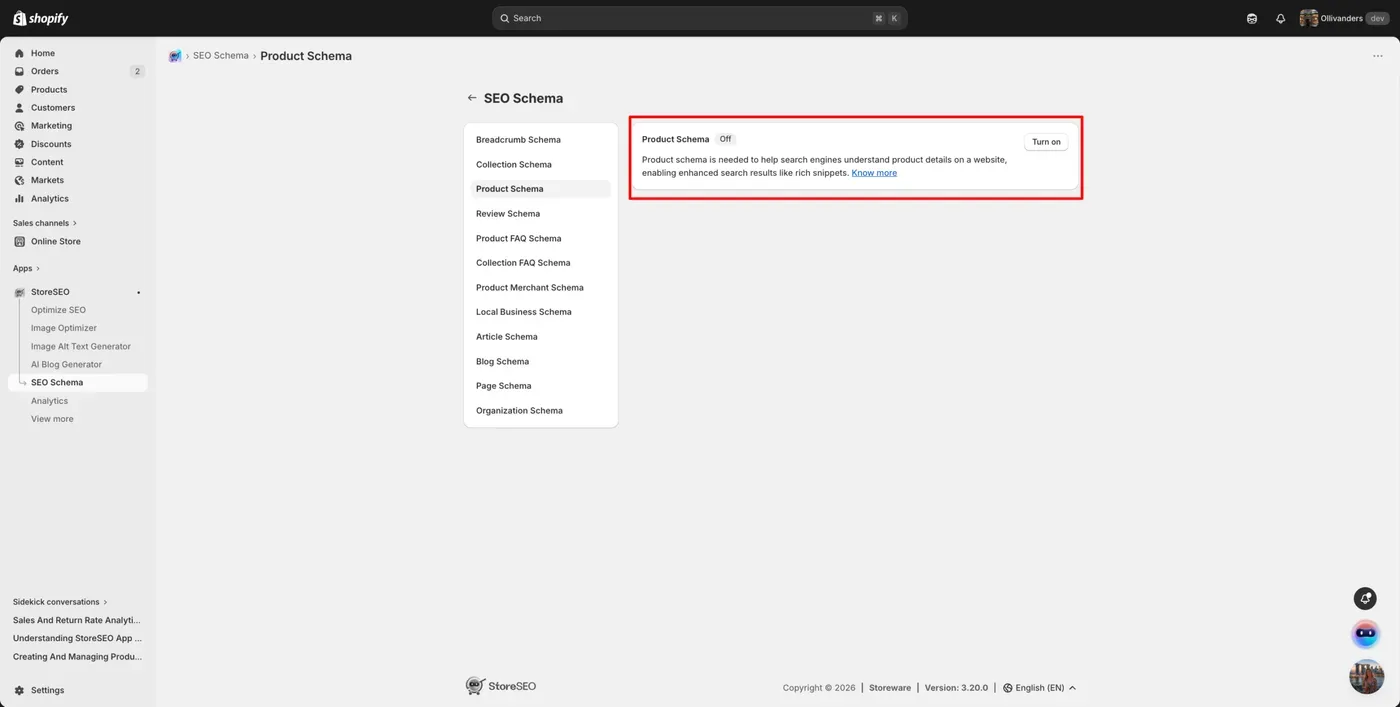
Product Schema communicates the following to AI systems in a machine-readable format:
- Product name, brand, and description
- Price and currency
- Availability status (in stock, out of stock, pre-order)
- Product images and image alt text
- SKU, GTIN, or MPN (product identifiers)
- Aggregate review rating and review count
- Product category and type
Implementing this schema manually across hundreds or thousands of Shopify products is impractical. This is exactly why StoreSEO automates Product Schema generation across your entire catalog. One configuration, complete coverage. You can learn more about how schema works for eCommerce in our comprehensive guide: How Does SEO Schema Work for eCommerce?
5.2 LLMs.txt: The File That Tells AI Exactly What to Read
LLMs.txt is a relatively new but critically important file for AI SEO. Think of it as your store’s AI-specific sitemap. While robots.txt tells crawlers what they can and can’t access, and sitemap.xml tells them where your pages are, LLMs.txt tells AI systems which pages are most important and what each page is about in plain, structured language.
For a Shopify store, an effective LLMs.txt file includes summaries of your best product pages, your key collection pages, your most authoritative blog content, and your brand information. This dramatically improves the accuracy with which AI systems represent your products in their responses.
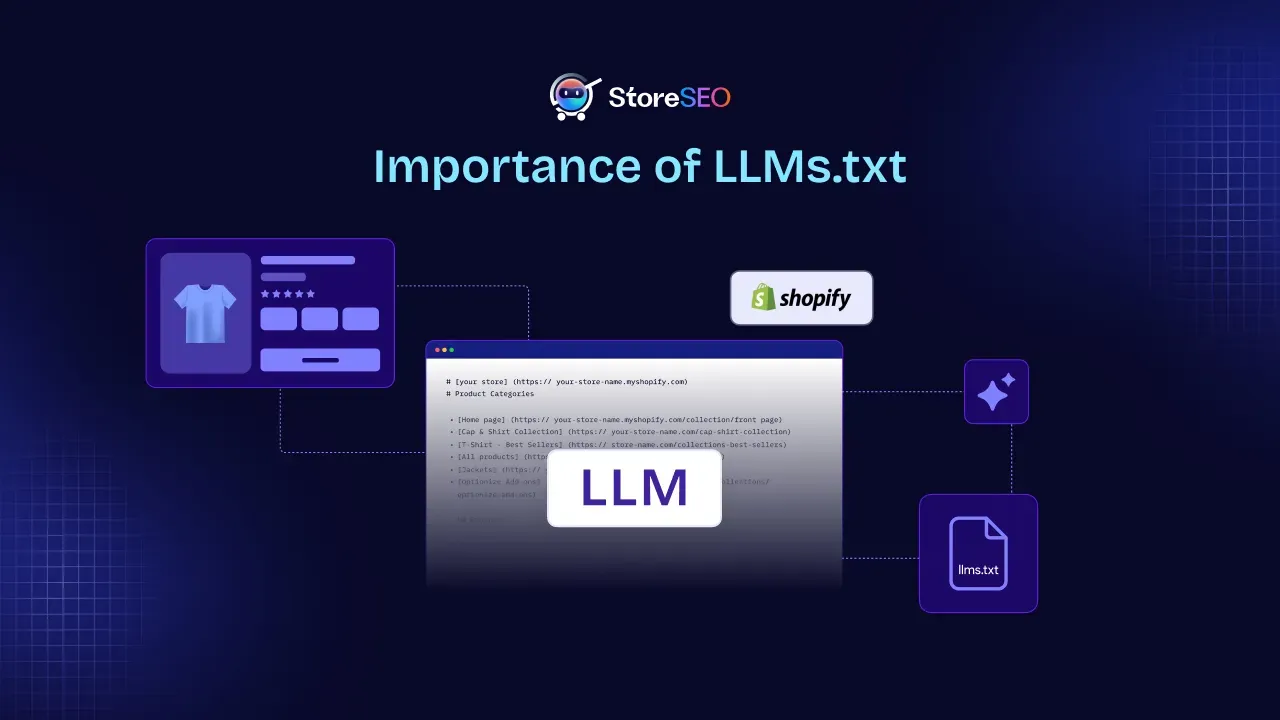
StoreSEO pioneered LLMs.txt generation for Shopify stores. Our LLMs.txt Generator automatically creates and maintains this file across your products, collections, pages, and articles, keeping it current as your catalog evolves. Read more about why this matters: Why LLMs.txt Matters for eCommerce and Shopify Stores?
5.3 Semantic Content Architecture: Thinking Like an AI
AI recommendation engines are fundamentally language models. They understand meaning, context, and relationships, not just keywords. This means your content strategy needs to shift from keyword-stuffing toward semantic content architecture.
Here is what semantic content architecture looks like for a Shopify product page:
- The product title uses the most common buyer language, not internal product codes.
- The description answers the core buyer intent questions: What is it? Who is it for? Why is it better? How is it used?
- Specifications are presented in a structured, scannable format that AI can parse accurately.
- An FAQ section addresses the top five to ten questions buyers ask about this product category.
- Related product links and collection links create semantic context for the page.
- Image alt text describes the product accurately using natural language.
StoreSEO’s AI Content Optimizer analyzes your existing product pages against these semantic criteria and generates optimized meta titles, descriptions, and content suggestions that align with how AI systems process and recommend products. For more on structuring product descriptions for AI search, read our guide: How to Structure Shopify Store Product Descriptions for Winning AI Answer Engines.
5.4 FAQ Schema: The AEO Powerhouse
FAQ Schema markup is one of the highest-leverage technical optimizations for AI visibility. When you mark up Q&A content on your product pages and blog posts with FAQ Schema, you are essentially pre-packaging your content in the exact format AI systems prefer for generating answers.
We have seen Shopify stores with well-implemented FAQ Schema appear in voice search results, AI Overviews, ChatGPT responses, and Perplexity citations for the same query. The compounding effect is significant.
For a comprehensive breakdown of how FAQ Schema drives AEO and GEO results, read our dedicated guide: Why FAQ Schema Markup Is Important for Better AEO & GEO Results on Your Shopify Store.
6. The Content Strategy That Earns AI Recommendations
How to create product content and supporting editorial content that AI systems cite, surface, and recommend.
6.1 Writing for Humans and AI Simultaneously
There is a pervasive misconception that optimizing for AI requires writing in a robotic, keyword-dense style. The opposite is true. The best-performing content in AI recommendations is content that genuinely helps humans make confident purchase decisions. AI systems have been trained on human feedback, so they reward human-centric clarity.
Here is our framework for product content that works for both human shoppers and AI recommendation engines:
- Lead with the buyer outcome, not the product feature. Instead of “12mm barrel diameter curl rod,” write “Creates consistent, long-lasting curls from beach waves to tight ringlets.”
- Use comparative language when accurate. AI loves specificity. “40% quieter than standard motors” is more AI-recommendable than “very quiet operation.”
- Include real-world context. “Perfect for apartment dwellers and night owls” is a semantically rich context that helps AI match your product to the right buyer queries.
- Answer objections in your content. If buyers frequently ask whether a product is compatible with certain systems, or how it compares to a specific competitor, address this directly in your product description or FAQ section.
- Maintain consistent brand voice throughout. AI systems build brand entity models, and inconsistent messaging across your pages weakens the clarity of your brand signal.
6.2 Topical Authority: Why Shopify Brands Need to Publish Content
Topical authority is the concept that AI and search systems give more weight to sources that comprehensively cover a subject area compared to sources that produce isolated pieces of content. For Shopify brands, this means your blog isn’t optional. It’s a strategic asset for AI visibility.
A Shopify store that only has product pages and collection pages gives AI systems very little to work with when evaluating authority. But a store that also publishes buying guides, comparison articles, how-to content, and industry explainers builds a topical depth that signals genuine expertise to AI recommendation engines.
This is why we built the StoreSEO AI Blog Generator. It allows Shopify merchants to rapidly produce semantically rich, SEO-optimized blog content that supports their product pages and builds topical authority in their niche. Think of each blog post as a vote of topical confidence that AI systems tally when deciding whether to recommend your products.
Content Calendar Tip: We recommend that Shopify merchants publish at a minimum of two to four blog posts per month focused on buyer-intent questions in their product category. After six months of consistent publishing, the compounding effect on AI recommendation frequency is measurable and significant.
6.3 The Role of Reviews and Social Proof in AI Recommendations
Every AI platform we have discussed gives significant weight to social proof signals, primarily in the form of product reviews and ratings. This is because reviews are one of the strongest proxies AI systems have for product quality and buyer satisfaction.
Here is what matters most for AI recommendation algorithms:
- Review volume: More reviews generally equal stronger signals. A product with 200 reviews at 4.2 stars typically outperforms a product with 10 reviews at 4.8 stars in AI recommendation frequency.
- Review recency: AI systems, particularly Perplexity, with its real-time indexing, weigh recent reviews more heavily. A stream of fresh reviews signals an active, trustworthy product.
- Review specificity: Reviews that mention specific product attributes (materials, dimensions, ease of use, specific use cases) are more useful to AI systems when matching products to buyer queries.
- Review schema markup: Aggregate review data needs to be marked up with Review Schema for AI systems to accurately read and cite your ratings. StoreSEO handles this automatically, surfacing review aggregates across your product pages in a format AI understands immediately.
7. Platform-Specific Optimization Checklist
A practical, actionable checklist organized by AI platform so your team can implement and track progress systematically.
7.1 ChatGPT Shopping Optimization Checklist
- Allow OAI-SearchBot in your store’s robots.txt file
- Implement complete JSON-LD Product Schema across all product pages
- Generate and publish your LLMs.txt file covering products, collections, and key pages
- Optimize product descriptions with buyer-intent conversational language
- Build and actively collect product reviews (aim for 50+ per top product)
- Ensure product images are high-quality with accurate, keyword-rich alt text
- Check that your product pages load in under three seconds on mobile devices
- Add FAQ sections to your top product pages with common buyer questions
7.2 Google Gemini / AI Overviews Optimization Checklist
- Connect Shopify to Google Merchant Center with a clean, approved product feed
- Implement Product, Review, and FAQ Schema markup across product and collection pages
- Build and maintain your E-E-A-T signals: author bios, brand story, trust badges, return policy clarity
- Earn quality backlinks from authoritative sites in your niche
- Publish consistent blog content establishing topical authority in your product category
- Ensure your Google Business Profile is complete and verified if you have a physical presence
- Resolve all Google Search Console errors and Merchant Center disapprovals promptly
- Add structured About Us content that clearly establishes your brand expertise and mission
7.3 Perplexity Optimization Checklist
- Create comprehensive buying guide and comparison blog posts that reference your products
- Structure product pages and blog posts with clear headings (H1 through H4 hierarchy)
- Add specific, factual, citable product data: dimensions, materials, certifications, warranties
- Include citation-worthy data points: specific percentages, test results, durability statistics
- Build external mentions through PR outreach, influencer content, and editorial coverage
- Ensure fresh content publication to leverage Perplexity’s real-time indexing advantage
- Include FAQ Schema on blog posts that answer buyer-intent questions in your niche
- Maintain consistent, accurate NAP (Name, Address, Phone) data across all online properties
8. How StoreSEO Powers Your AI Search Visibility
A look at the specific StoreSEO features that automate and accelerate AI platform optimization for Shopify merchants.
At StoreSEO, we built our platform specifically for this new AI search reality. While many SEO tools were designed purely for the ten blue links era, StoreSEO was architected with AI discoverability at its core. Here is how our key features directly support your visibility across ChatGPT, Gemini, and Perplexity:
8.1 Automated Schema Markup
StoreSEO automatically generates and injects JSON-LD Product Schema, Review Schema, FAQ Schema, Organization Schema, and more across your entire Shopify store. This covers all the structured data signals that ChatGPT, Gemini, and Perplexity use to understand and recommend your products.
No coding required. No template management. StoreSEO handles it automatically and keeps it updated as your catalog changes. Explore our schema documentation: How to Configure & Enable SEO Schema Markups in Shopify Using StoreSEO.
8.2 LLMs.txt Generator
StoreSEO was one of the first Shopify apps to introduce an LLMs.txt Generator. With a single click, you can generate a comprehensive LLMs.txt file that tells ChatGPT, Gemini, Grok, and other AI crawlers exactly which pages matter most on your store and what they contain.
Over 2,257 Shopify stores have already implemented their LLMs.txt file through StoreSEO. Read the full guide: Introducing StoreSEO’s LLMs.txt Generator: Optimize Your eCommerce Site for AI Indexing.
8.3 AI Content Optimizer
StoreSEO’s AI Content Optimizer analyzes your product pages, collection pages, and blog posts for SEO and AI-readiness issues. It then generates keyword-rich, semantically optimized meta titles, descriptions, and content suggestions tailored to your focus keywords and buyer intent.
This feature saves Shopify merchants dozens of hours per month while dramatically improving the quality and AI-readiness of their product content. Our merchants report consistently higher content quality scores and measurably better AI search visibility after using the optimizer.
8.4 AI Blog Generator
Building topical authority is essential for AI recommendation visibility. StoreSEO’s AI Blog Generator allows you to produce SEO-optimized, brand-aligned blog posts in minutes. You choose the topic and keywords, and StoreSEO generates publication-ready content that builds your topical authority in your product niche.
This is particularly powerful for Perplexity optimization, where fresh, specific, citable blog content can drive rapid improvements in AI recommendation frequency. Learn more at: How to Generate Blog Posts with StoreSEO AI Blog Generator.
8.5 Image Alt Text Optimizer
Image alt text is often overlooked as an AI optimization signal, but it matters significantly. AI systems use alt text to understand what your product images depict, which directly influences how accurately they represent your products in recommendations.
StoreSEO’s AI-powered Image Alt Text Generator analyzes your product images and generates accurate, keyword-rich alt text in bulk. This means your entire product catalog can have optimized alt text without hours of manual work.
8.6 SEO Audit and Scoring
StoreSEO provides continuous SEO auditing and scoring across your product pages, collection pages, and blog posts. This gives you a clear picture of which pages need improvement and exactly what to fix. Our AI Search Readiness Score specifically evaluates your pages against the criteria that ChatGPT, Gemini, and Perplexity use for product recommendations.
If you want to understand why your Shopify store might not be ranking in Google or AI search results, our data-backed analysis of 100+ stores reveals the most common failure patterns: We Analyzed 100+ Shopify Stores & Here’s Exactly Why They Fail Ranking in Google and AI Search.
9. Measuring AI Recommendation Success: What to Track
The metrics and monitoring frameworks that tell you whether your AI optimization efforts are working.
9.1 Direct AI Visibility Monitoring
The most direct way to measure AI recommendation performance is to actively test your products across the three platforms. We recommend the following monitoring cadence:
- Weekly: Test your top ten product categories with buyer-intent queries on ChatGPT, Gemini, and Perplexity. Note which queries trigger your product recommendations and which don’t.
- Monthly: Run a structured audit of your schema coverage, LLMs.txt freshness, and content quality scores using StoreSEO’s dashboard.
- Quarterly: Review your referral traffic from AI platforms in Google Analytics. Look for traffic from chatgpt.com, perplexity.ai, and AI-generated sessions to understand the direct revenue impact.
9.2 Key Metrics to Track
- AI platform referral traffic volume and conversion rate (GA4 source/medium breakdown)
- Schema validation rate (percentage of products with valid, complete schema, tracked via StoreSEO)
- Product content quality score (StoreSEO dashboard metric)
- AI Overview appearance frequency (track via Google Search Console impressions for informational queries)
- Review volume growth rate across top products
- Topical authority index (number of indexed blog posts covering your core product category topics)
- LLMs.txt coverage percentage (percentage of key pages included in your LLMs.txt file)
Benchmark: In our experience working with Shopify merchants at scale, stores that score 80 or above on StoreSEO’s AI Readiness metrics see on average 34% more referral traffic from AI platforms compared to stores scoring below 60. The gap is measurable and growing as AI search usage increases.
10. The Future of AI Product Recommendations: What to Expect
10.1 Where This Is All Heading
The AI search landscape is evolving at a pace that makes traditional SEO timelines look glacial. Here are the trends we are tracking closely at StoreSEO and what they mean for Shopify merchants:
- Agentic AI Shopping: AI agents that autonomously research, compare, and purchase products on behalf of users are moving from prototype to product. Your store’s AI accessibility will determine whether agents can discover, evaluate, and transact with your products without human intervention.
- Multimodal Search: Both Gemini and ChatGPT are expanding visual search capabilities. Product images optimized with proper alt text, structured data, and semantic context will become increasingly important as AI recommends products based on image queries.
- Personalized AI Recommendations: As AI platforms build deeper user profiles, recommendations will become increasingly personalized. Brands with rich, specific product data will be better matched to the right buyers by personalized AI recommendation engines.
- Voice and Ambient AI Commerce: Voice-driven product discovery through AI assistants will continue to grow. Structured data and conversational content optimized for voice queries will drive this channel.
10.2 Future-Proofing Your Shopify Store for AI Search
The merchants who will dominate AI product recommendations in 2027 and beyond are the ones who start building the right foundation today. The good news is that the fundamentals are clear: structured data, semantic content, topical authority, and technical accessibility. These are not experimental tactics. They are proven, measurable strategies that deliver results across every AI platform we have examined.
For a complete strategic framework on AEO and GEO optimization for Shopify, read our comprehensive guide: Optimize Shopify Stores for AI Search: Top AEO and GEO Strategies to Boost Visibility.
And if you are curious about how AI features are transforming eCommerce more broadly, this piece provides excellent strategic context: How AI-Powered Features Are Transforming eCommerce Stores.
The AI Recommendation Opportunity Is Now
The shift from traditional search to AI-powered product recommendations isn’t a future event. It’s happening right now, at scale, across millions of daily buyer interactions. The merchants who adapt their Shopify stores to this new reality are already capturing referral traffic, brand awareness, and revenue that their competitors are missing entirely.
The path to AI recommendation visibility is clear: implement structured data, create semantically rich content, build topical authority, generate your LLMs.txt file, and continuously monitor your AI search performance. None of this is optional if you want sustainable organic growth in the AI search era.
At StoreSEO, we have built every feature you need to execute this strategy efficiently, without needing a developer, an SEO agency, or a six-month timeline. From automated schema markup to LLMs.txt generation, AI content optimization to bulk image alt text, we put the tools for AI search dominance directly into the hands of Shopify merchants.
The question is not whether AI will drive more product discovery. It already does. The question is: will your Shopify store be the one that AI recommends?
Install StoreSEO today and start building your AI recommendation foundation: Get Started with StoreSEO.
Frequently Asked Questions
What is the difference between AEO and GEO for Shopify stores?
Answer Engine Optimization (AEO) focuses on optimizing content so that AI systems like ChatGPT, Google Gemini, and voice assistants can extract and present direct answers to user queries. Generative Engine Optimization (GEO) is specifically about ensuring your content appears in the synthesized, generated answers that platforms like Perplexity and Google’s AI Overviews produce. For Shopify stores, both disciplines work together: AEO ensures your product pages answer buyer questions clearly, while GEO ensures your brand is included in AI-generated buying guides and product comparisons.
Do I need to pay to have ads appear in ChatGPT or Perplexity product recommendations?
No. ChatGPT Shopping and Perplexity’s product recommendations are organic, not paid. This is one of the most exciting aspects of AI search for Shopify merchants. Recommendations are driven by content quality, structured data, and brand authority, not ad spend. This levels the playing field significantly for smaller merchants who can’t compete with large brand advertising budgets.
How long does it take to start appearing in AI product recommendations?
Timeline varies by platform and your current optimization baseline. Generally, ChatGPT Shopping results can begin appearing within one to four weeks after implementing correct schema markup and allowing the OAI-SearchBot. Google Gemini AI Overviews typically take four to twelve weeks to reflect optimization changes. Perplexity can be the fastest, given its real-time indexing, with well-optimized new content sometimes appearing within days of publication.
Is Product Schema the only structured data I need for AI recommendations?
Product Schema is the most important starting point, but it’s not the only structured data that matters. Review Schema, FAQ Schema, Organization Schema, and BreadcrumbList Schema all contribute to AI recommendation visibility. Together, they give AI systems a comprehensive, machine-readable picture of your store, your products, and your brand’s authority. StoreSEO handles all of these schema types automatically for Shopify stores.
What is LLMs.txt and why does my Shopify store need it?
LLMs.txt is a plain text file you place at the root of your domain that provides AI language models with a structured, prioritized guide to your most important content. Unlike a traditional sitemap, LLMs.txt includes plain-language summaries and contextual descriptions that help AI systems accurately understand and represent your store’s products and content. For Shopify stores, it’s one of the highest-leverage AI discoverability investments available. StoreSEO generates and maintains this file automatically. Learn more: Why LLMs.txt Matters for eCommerce and Shopify Stores.
How does StoreSEO specifically help with AI search recommendations?
StoreSEO is purpose-built for both traditional SEO and AI search optimization on Shopify. Our platform automates the technical foundation of AI discoverability: JSON-LD schema markup across your full product catalog, LLMs.txt file generation and maintenance, AI-optimized meta content, bulk image alt text optimization, and continuous SEO auditing with AI-readiness scoring. We also provide an AI Blog Generator for building topical authority and an AI Content Optimizer for improving the semantic quality of your product pages. Visit storeseo.com to install the app and start your optimization journey.

Written by
Mahmudul Hasan