
SEO Guide Oct 16, 2026
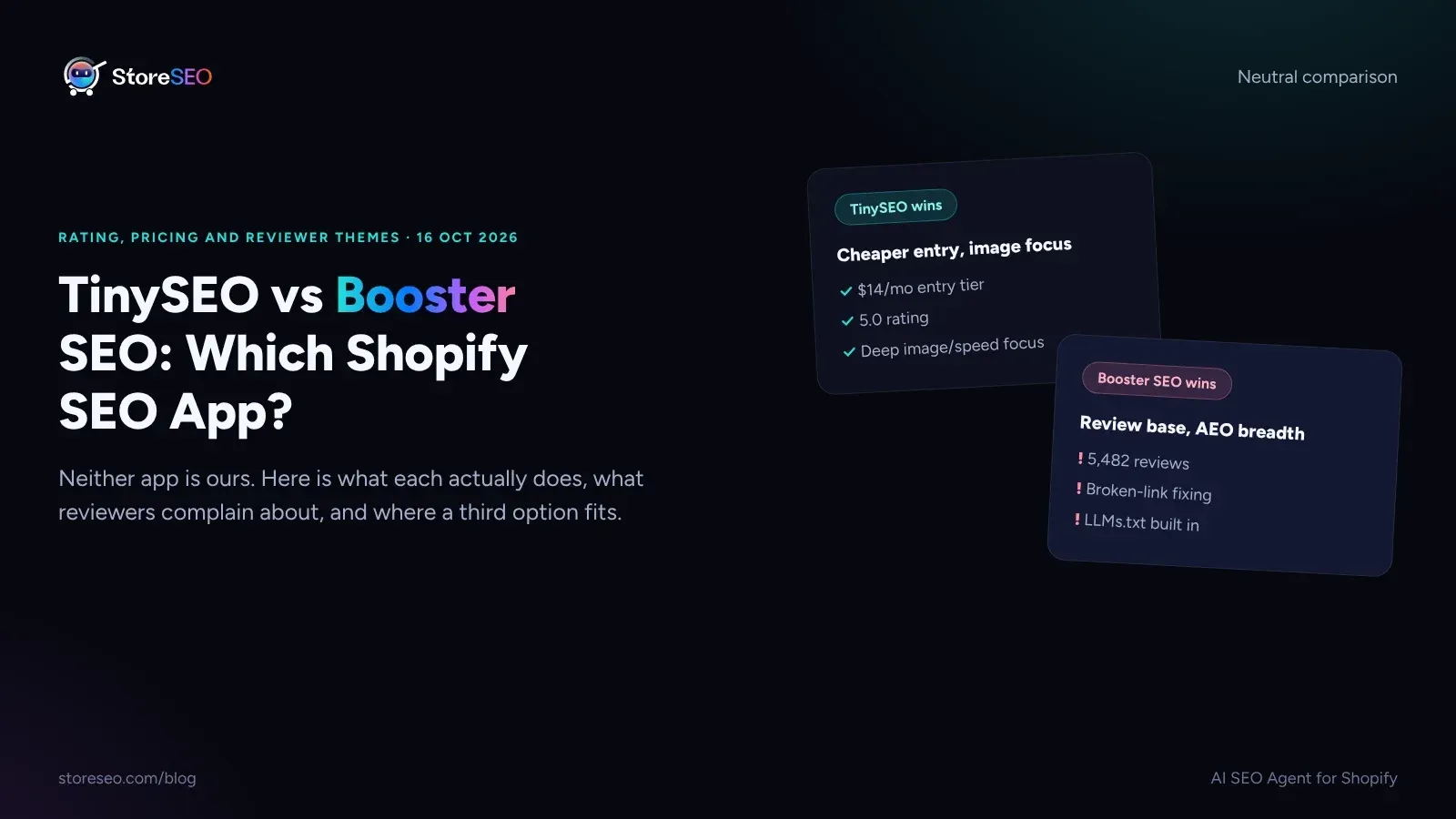
TinySEO vs Booster SEO: Which Shopify SEO App?
TinySEO combines SEO, speed, and AI content optimization and works with Shopify Sidekick; Booster SEO has far more reviews and offers the Autopilot feature.
Read articleActionable guides on SEO, AEO/GEO, and growing your Shopify store, written by the StoreSEO team.
TinySEO combines SEO, speed, and AI content optimization and works with Shopify Sidekick; Booster SEO has far more reviews and offers the Autopilot feature.
Read article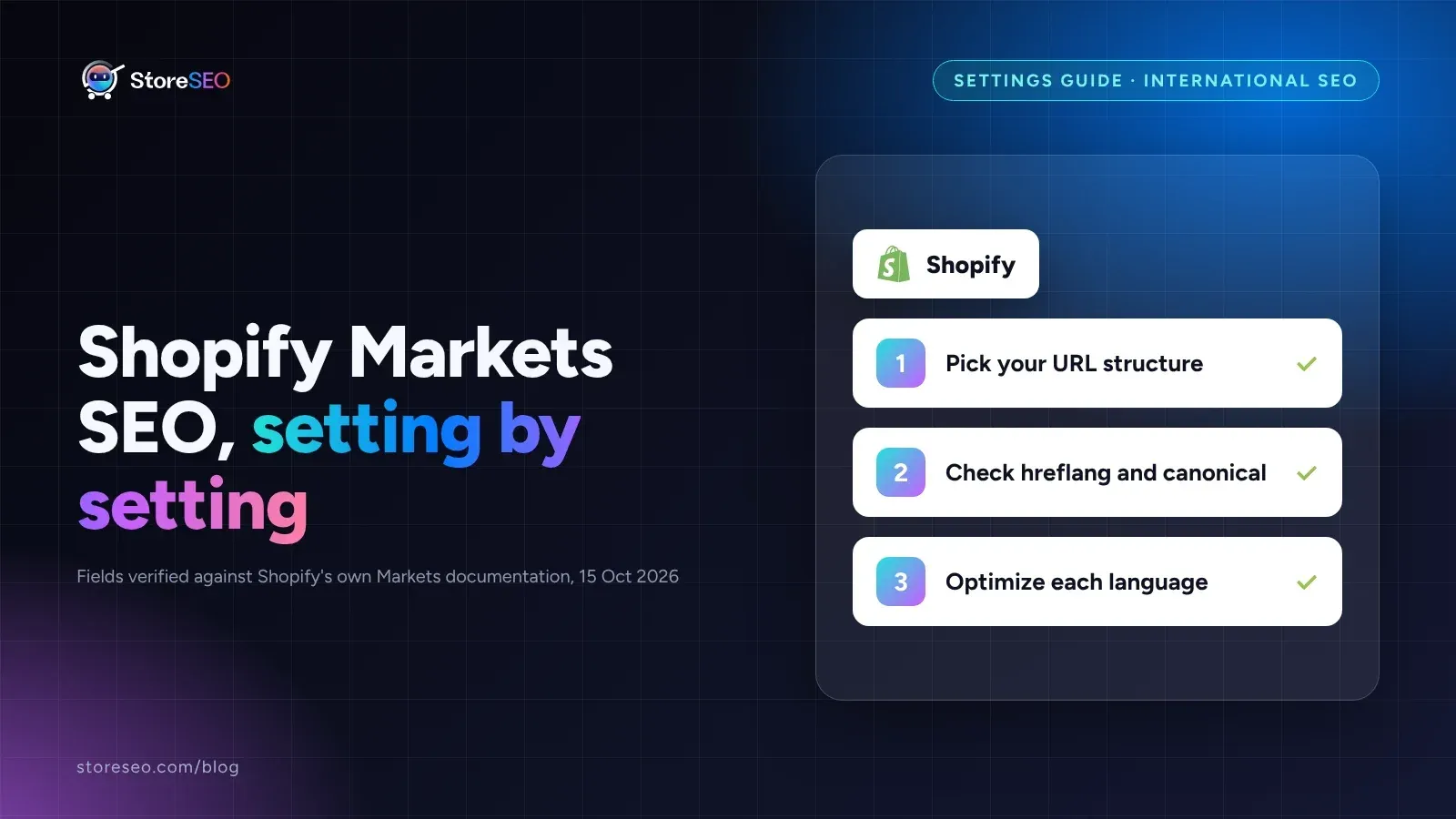
Shopify Markets writes hreflang tags, canonical URLs and sitemaps on its own, but the URL structure you pick for each market still decides its SEO.
Read article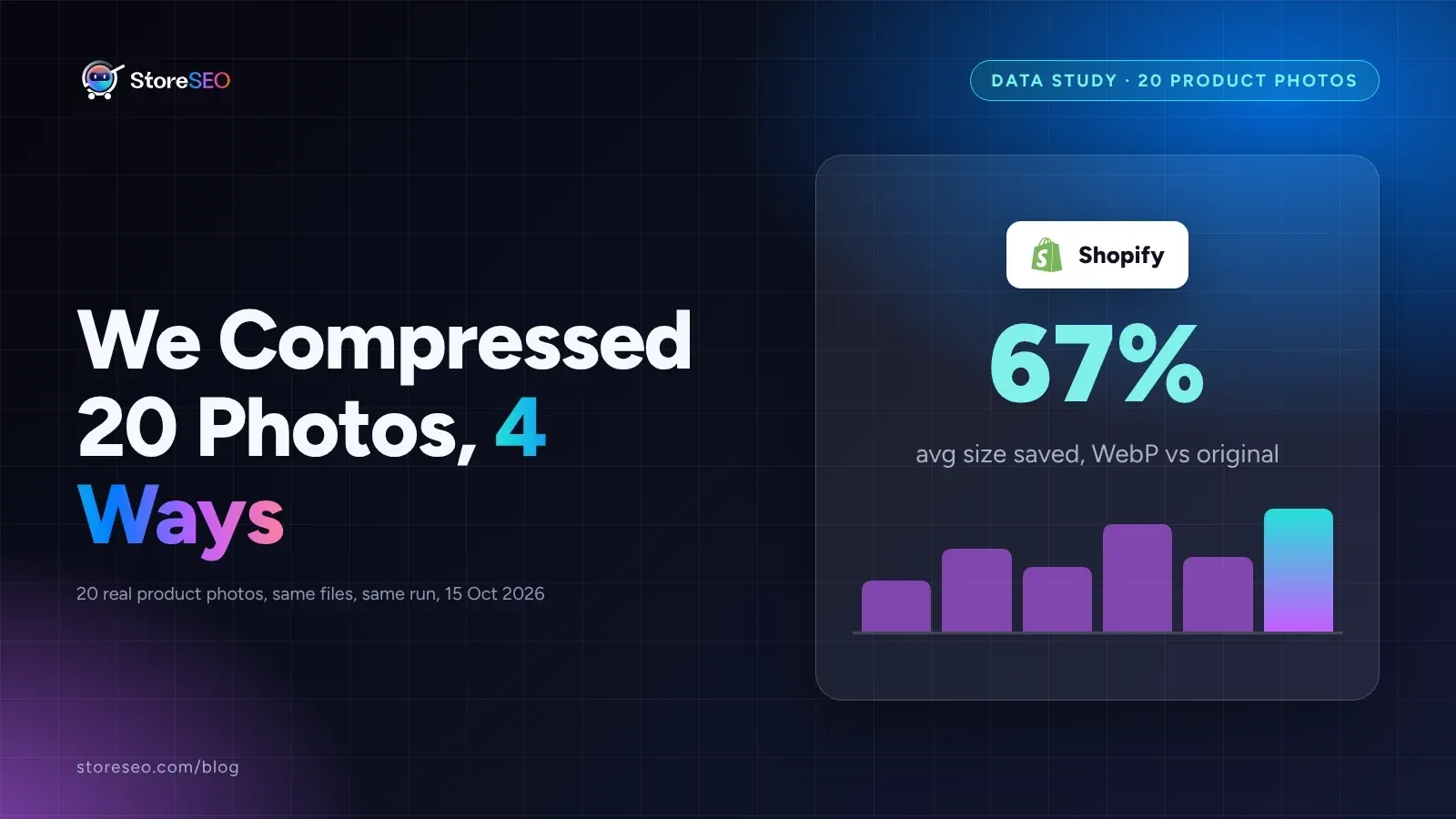
We compressed 20 real Shopify product photos 4 ways and found WebP cuts average file size by 67 percent, the biggest saving of the four we tested.
Read article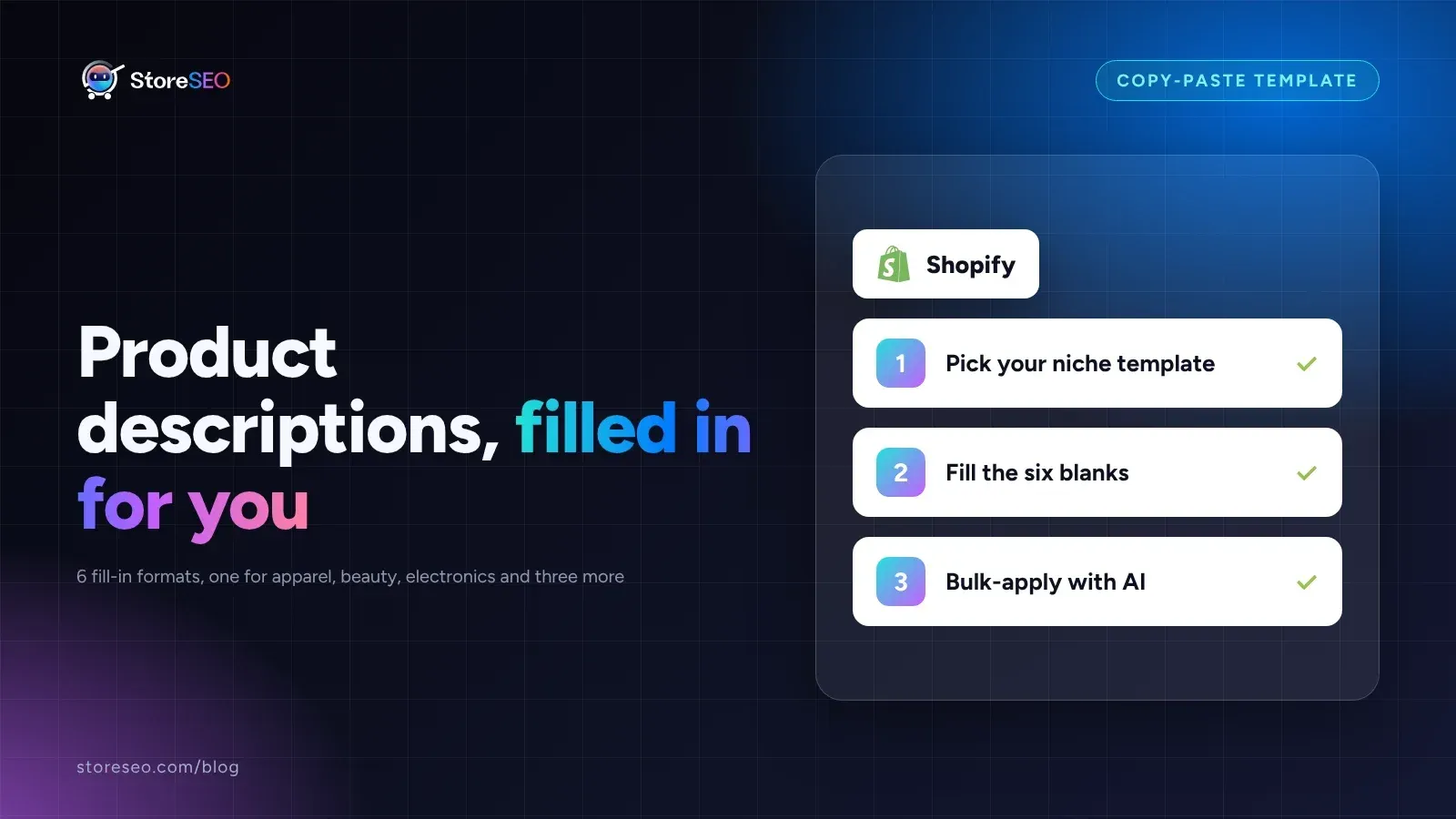
A Shopify product description template is a fill-in-the-blank structure for one niche that keeps every listing consistent, specific and fast to write.
Read article
Shopify SEO means six things done right: technical setup, product pages, structured data, content, fixes and AI visibility, each with a next step.
Read article
Stores with 10,000 or more products hit crawl budget and duplicate URL problems small catalogs never see, and need bulk fixes, not one-by-one edits.
Read article
Changing a Shopify product's URL handle itself rarely hurts rankings, but skipping the redirect checkbox turns a ranked page into a dead link.
Read article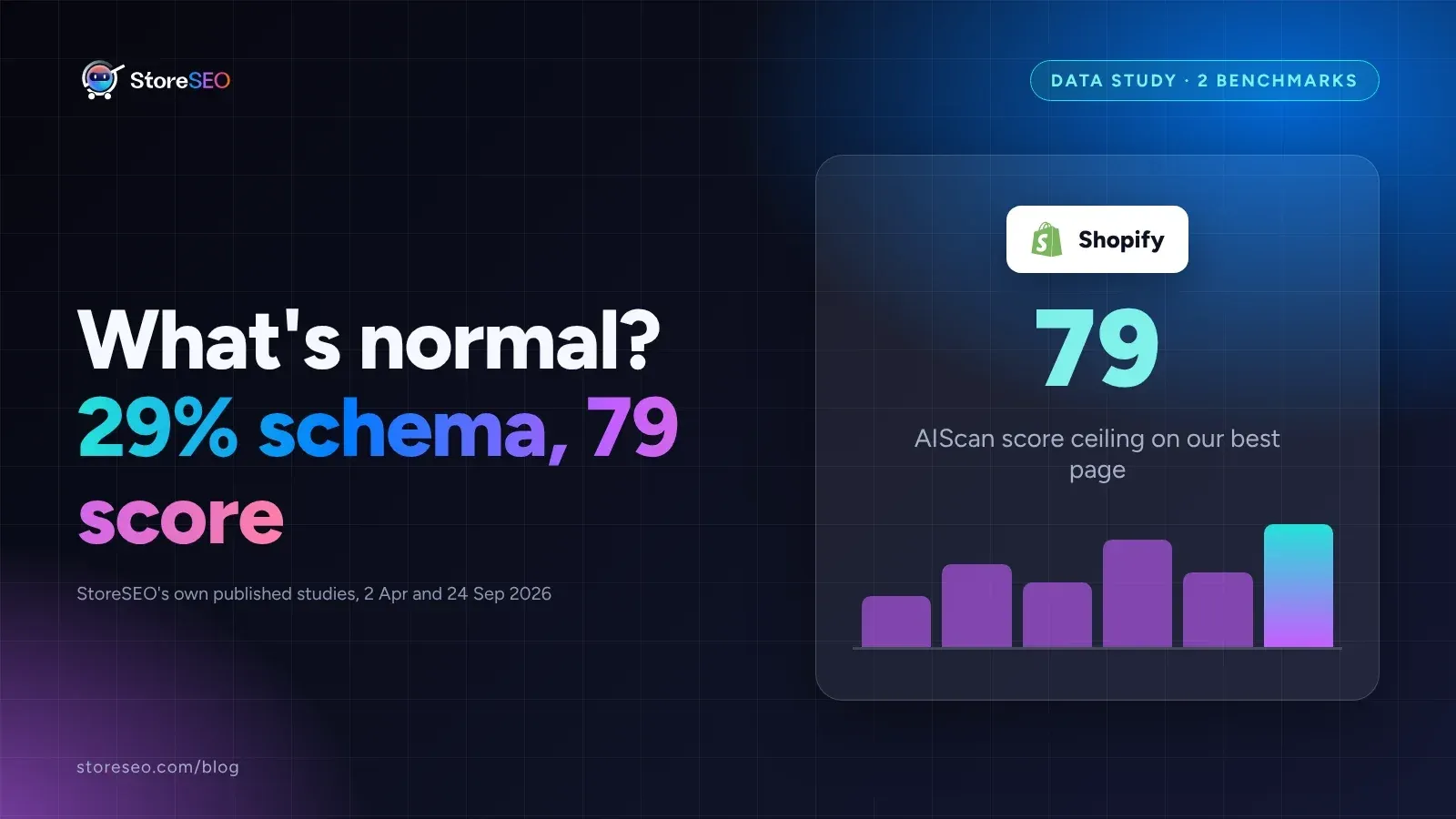
Two public Shopify SEO studies show only 29% of product pages carry complete schema, and a well-optimized page still caps near a score of 79.
Read article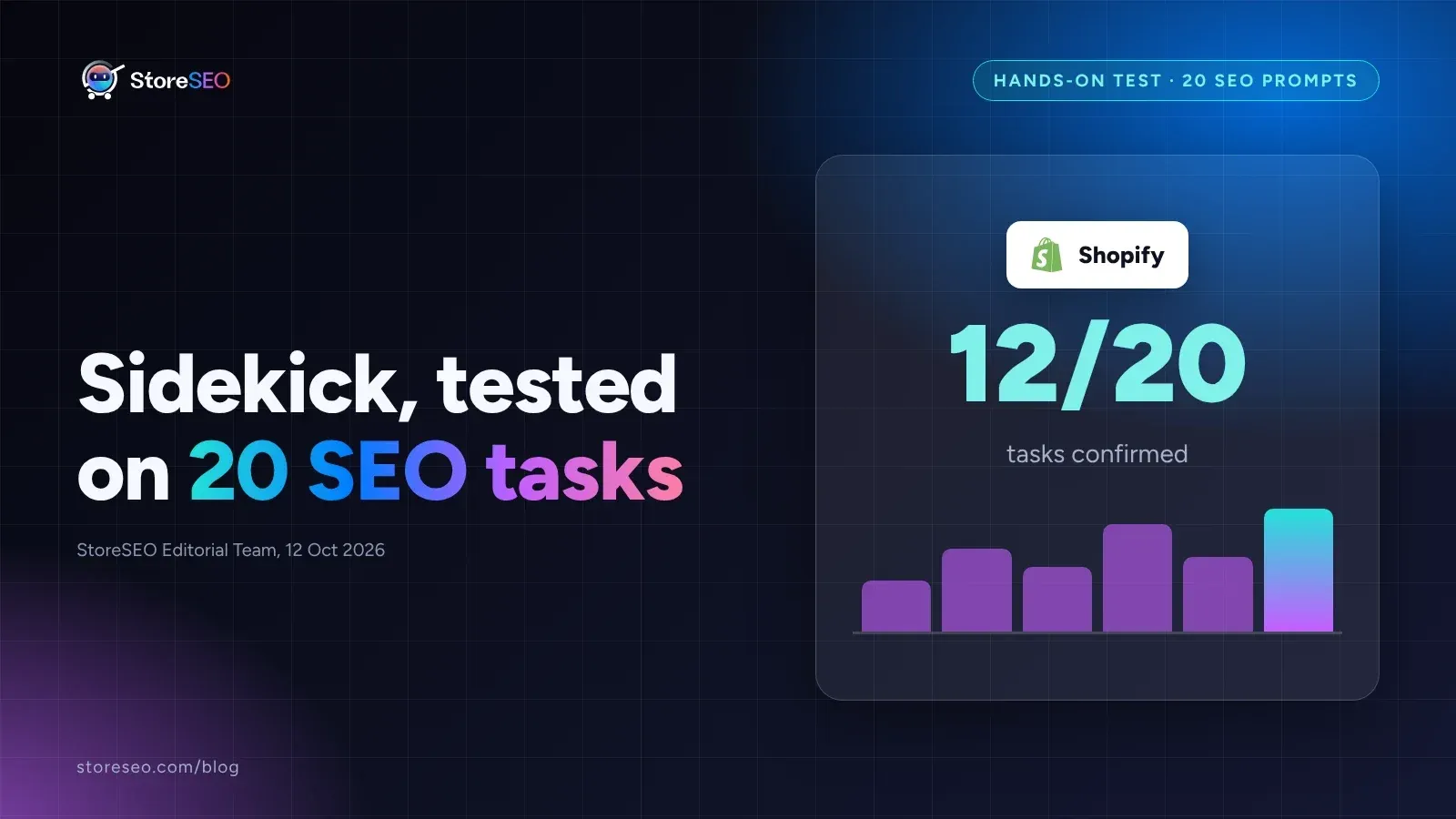
We ran 20 real SEO tasks through Shopify Sidekick against Shopify's own documentation, and most pass, but catalog audits and schema still need an app.
Read articleNo posts found in this category.